
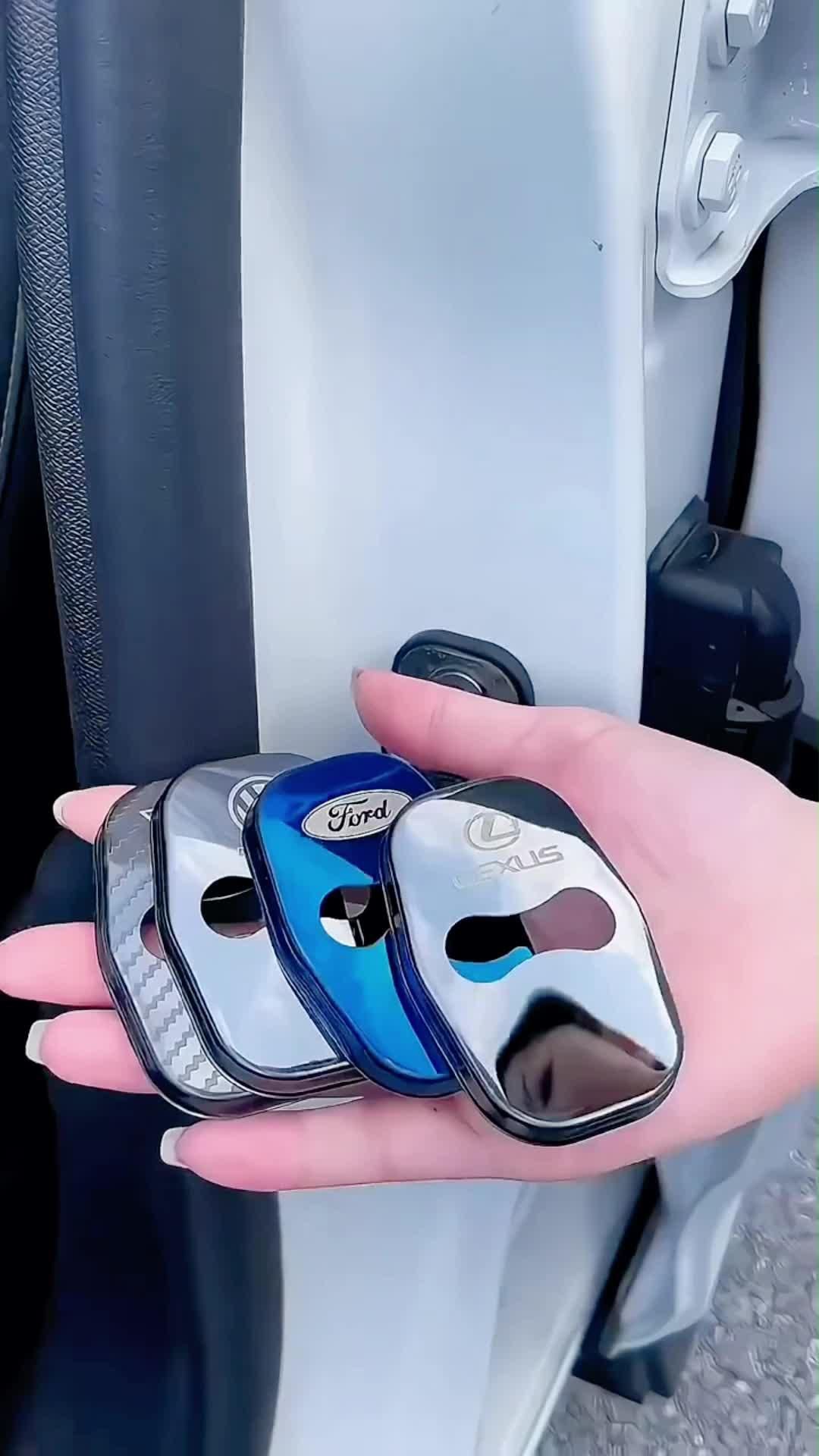
A tiny car-door upgrade that hides exposed hardware and makes the jamb look instantly more finished
These are decorative car door lock striker covers designed to snap over the exposed metal latch loop on a vehicle’s door frame. It is a simple cosmetic accessory, but it solves a very visible detail many drivers overlook: the bare striker plate area that can look unfinished, scratched, or industrial compared to the rest of the car’s interior trim.
The Standout Appeal & Why It Caught Our Attention
What makes this accessory interesting is how it targets a very specific visual weak spot in most vehicles. The door jamb usually exposes a utilitarian metal latch loop and mounting plate, even on premium cars. These covers add a glossy branded faceplate over that area, giving the opening edge of the door a cleaner, more customized appearance.
- Luxury-detail effect: turns a plain latch area into something that feels more intentional and styled.
- Brand-matched personalization: visible examples show finishes themed for Ford, Lexus, Tesla, Mercedes-Benz, and other marques.
- No major modification: the design appears to clip or adhere around the striker area rather than requiring tools or permanent hardware changes.
Key Features & How It Works
From the images, the product appears to be a formed metal or metal-look shell with a central cutout that allows the latch loop to pass through while the cover sits flush against the striker plate area. The outer edge has a dark trim border, likely to soften contact and improve fit against the painted surface.
- Precision center opening: shaped to fit around the U-shaped door striker so the latch mechanism can still operate normally.
- Curved rectangular profile: sized to cover the striker mounting plate without looking bulky.
- Gloss finishes: shown in mirror black, blue metallic, silver, and carbon-fiber-style patterns.
- Logo variants: some versions include etched or printed vehicle branding for a factory-inspired look.
- Low-profile construction: important so the door can close without interference.
- Protective role: besides appearance, the cover may help reduce visible scuffs around the striker mounting area.
The backside shown suggests a snap-on or adhesive-assisted mounting approach. The cover is positioned over the striker, aligned with the latch loop opening, and pressed into place until it sits flat around the hardware.
Practical Everyday Uses
This is a niche accessory, but it makes sense for drivers who care about small finishing details.
- Car enthusiasts and detailers: ideal for people who already use seat-gap fillers, sill protectors, and trim accents and want the door jamb to look equally polished.
- New-car owners: a quick way to preserve the clean look of exposed latch areas before scratches and wear marks build up.
- Ride-share or client-facing vehicles: adds a subtle premium touch when passengers enter and exit frequently.
Things To Consider Before Buying
Fitment matters more here than it may seem. Door striker shapes vary by manufacturer and even by model year, so buyers should verify the exact striker dimensions and plate shape before ordering.
- Check compatibility carefully: universal-looking covers are not always truly universal.
- Avoid latch interference: the cover must not block door closing or rub excessively against the latch mechanism.
- Confirm attachment method: some versions may use adhesive pads, while others rely on a clip shell design.
- Expect mostly cosmetic value: this is primarily a styling accessory, not a security upgrade.
- Logo accuracy: many listings offer multiple brand emblems, so make sure the selected badge and finish match your vehicle.