
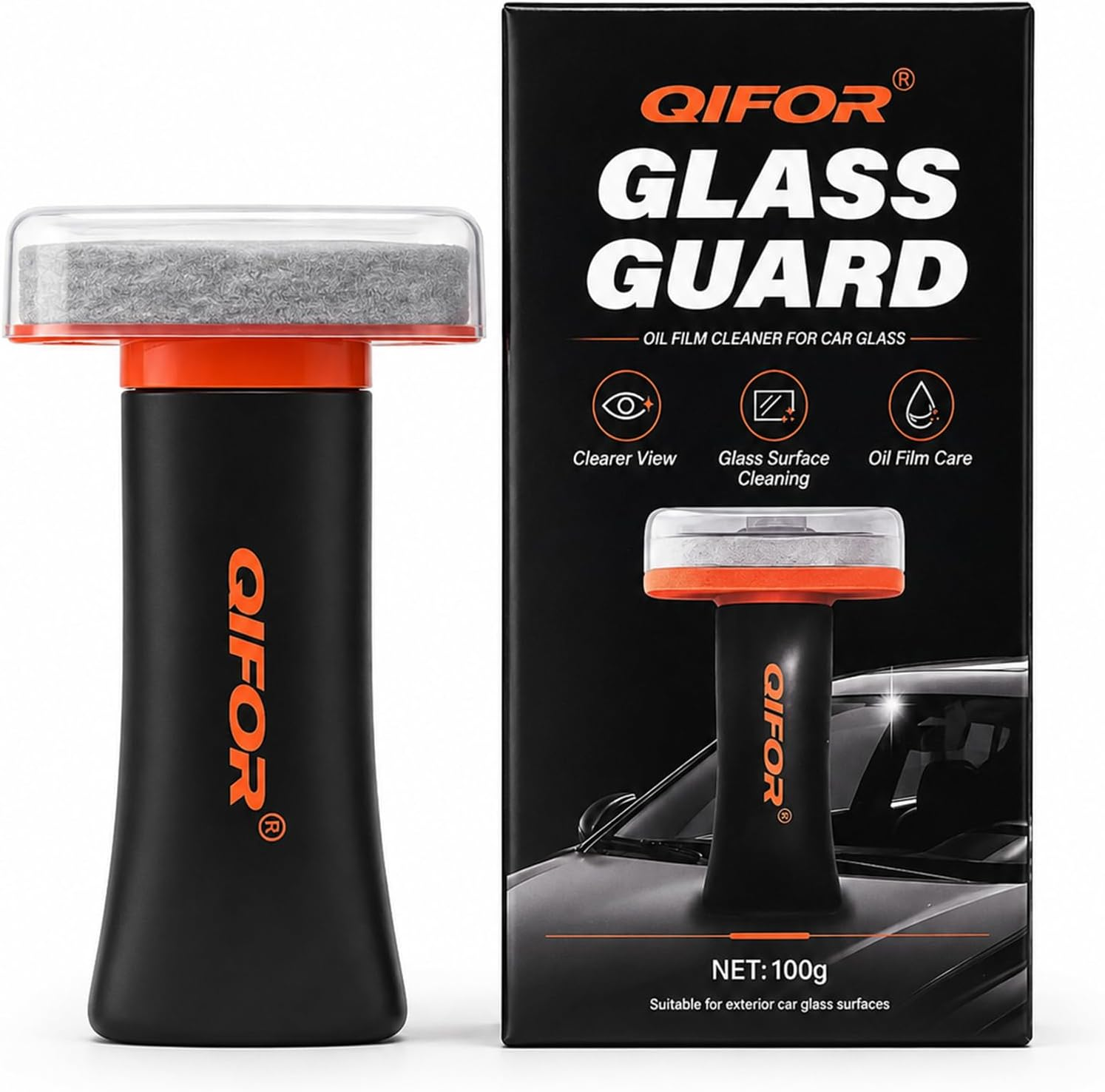
A purpose-built glass treatment that targets the greasy film ordinary glass cleaners often leave behind
The QIFOR Glass Guard Oil Film Cleaner is designed for one very specific but very real driving problem: that stubborn exterior windshield haze caused by road grime, exhaust residue, oily contamination, mineral spotting, and old water marks. Instead of acting like a generic spray-and-wipe cleaner, it combines a built-in applicator bottle with a felt scrubbing head so you can work the cleaning emulsion directly into the glass where contamination bonds most tightly.
The Standout Appeal & Why It Caught Our Attention
What makes this interesting is its integrated format. Rather than juggling a bottle in one hand and a pad in the other, the cleaner and applicator are merged into a single handheld tool. That matters because oil film on automotive glass usually needs more than a light wipe—it needs pressure, repeated passes, and even product distribution across the surface.
In the demo visuals, the product is used on a heavily contaminated windshield with visible sheeting, haze, and residue. The appeal is simple: it is built to restore clarity and water behavior on exterior glass, especially for drivers who notice glare at night, smeary wiper performance, or a windshield that never seems fully clean.
- More specialized than standard glass spray: aimed at bonded road film rather than dust or fingerprints.
- One-piece applicator design: easier to scrub broad windshield sections quickly.
- Useful beyond cars: can also make sense for shower glass, mirrors, and other hard glass surfaces with film buildup.
Key Features & How It Works
The packaging clearly identifies this as an oil film cleaner for car glass, and the product design supports that purpose. It uses a compact bottle-shaped handle with a wide top applicator, allowing the user to press product into the glass while maintaining good palm control.
- Built-in liquid reservoir: the cleaner is stored inside the handle, reducing mess and simplifying application.
- Felt applicator head: the gray pad is meant for direct contact scrubbing, helping break up greasy film, traffic residue, and water spotting.
- Protective clear cap: keeps the applicator clean between uses and prevents the pad from drying out too quickly.
- Wide contact surface: covers more glass per pass than a small sponge or folded towel.
- Exterior-glass focus: especially suited to windshields, side windows, and mirrors where contamination affects visibility.
Typical use is straightforward:
- Rinse the glass first to remove loose grit.
- Remove the protective cap from the applicator head.
- Dispense the emulsion by pressing or squeezing the built-in bottle.
- Scrub in circular or overlapping strokes until the film loosens.
- Rinse or wipe away residue with clean water and a microfiber towel.
According to the provided product context, it may also leave behind a light water-repellent effect, which can help rain bead more readily and reduce future adhesion of grime.
Practical Everyday Uses
This is the kind of tool that becomes useful when normal cleaning stops being enough.
- Night-driving visibility recovery: ideal for drivers dealing with headlight glare, smeary wiper arcs, or a windshield that looks cloudy in rain.
- Quick pre-detail glass reset: useful before applying a dedicated rain repellent or before a full exterior detail, since it removes old film and contamination first.
- Household hard-glass cleanup: can also help on shower doors, bathroom mirrors, and glass partitions where soap film or oily residue builds up over time.
Things To Consider Before Buying
This is a specialized cleaner, so expectations and technique matter.
- Best for exterior glass only: confirm the surface is appropriate before using it on tinted or coated interior glass.
- Prep matters: always rinse away dirt first so trapped grit does not scratch while scrubbing.
- May require multiple passes: severe oil film or mineral buildup often will not disappear in one light application.
- Follow with a proper rinse or microfiber wipe: leftover residue can create streaking if not fully removed.
- Applicator wear is normal: the felt head is a consumable contact surface, so heavy use may eventually require replacement.
For drivers chasing a truly clear windshield rather than a temporarily shiny one, the QIFOR tool stands out because it treats glass contamination as a surface-restoration job, not just a quick wipe-down.