
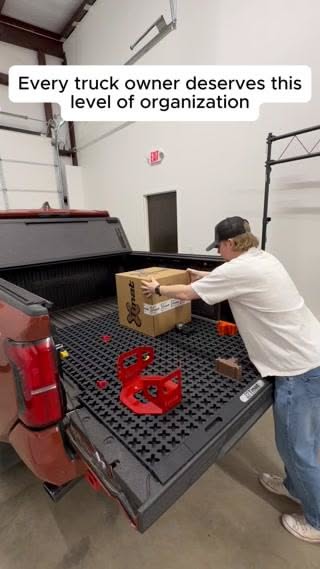
A modular truck-bed floor that turns loose cargo into a locked-in, reconfigurable storage layout
The Tmat Cargo Management System is a clever alternative to fixed bed drawers, tie-down straps, and improvised dividers. Instead of permanently modifying your vehicle, it creates a modular interlocking floor with a dense X-shaped connection grid that accepts blockers, braces, and accessory mounts exactly where you need them. The result is a truck bed, SUV cargo area, van floor, or trailer deck that can be reorganized around the load instead of forcing the load to adapt to the vehicle.
The Standout Appeal & Why It Caught Our Attention
What makes Tmat interesting is that it solves a very familiar hauling problem in a more engineered way than rubber mats or bungee cords. Most cargo systems either reduce usable space, require drilling, or only work for one type of gear. Tmat takes a different approach: build a flat modular base, then add locking accessories into a high-density grid so bins, boxes, coolers, and tool cases stay put.
- No permanent install means it appeals to owners who want organization without committing to a drawer system or bed rebuild.
- The X-grid pattern creates many anchor positions, so the layout can be changed for work gear one day and camping equipment the next.
- The system’s slide-out behavior is especially smart for pickup beds, letting the loaded mat move rearward so deep cargo becomes reachable from the tailgate.
Key Features & How It Works
The system is built around several visible and described components that work together as a physical cargo-control platform.
- Modular base plate panels: Lightweight interlocking sections snap together by hand using dovetail joints. This creates a continuous textured floor without drilling into the vehicle.
- Patent-pending X grid: The repeating cutout pattern acts like a universal track. Standard kits reportedly provide 800+ connection points, giving far more placement flexibility than a few factory tie-down loops.
- Low-friction underside: Rather than gripping the bed permanently, the mat is designed to slide rearward like a drawer, even when loaded, so users can access gear near the cab without climbing in.
- Cargo Blockers: The red accessories shown in the truck bed are rigid blockers that plug into the X-channels and create a physical wall around boxes, totes, or coolers. They appear designed to resist lateral shifting during braking, cornering, or off-road vibration.
- Accessory locking points: Close-up frames show how mounts and braces index into the grid, suggesting a positive mechanical fit rather than simple friction. That matters when securing heavier containers.
- Vehicle versatility: Although demonstrated in a pickup, the same floor concept is intended for truck beds, SUVs, vans, and trailers, which makes it more of a platform system than a single-purpose bed mat.
Practical Everyday Uses
Tmat is most useful for people who carry changing loads and are tired of cargo sliding into a pile by the end of the drive.
- Contractors and mobile trades: Keep toolboxes, parts bins, and jobsite cases separated so they do not slam together on the way to work. Reconfigure the blockers as your loadout changes.
- Weekend truck owners: Haul groceries, sports gear, coolers, and storage totes without everything migrating to one side of the bed. The slide-out access is especially helpful for shorter users or trucks with deep beds.
- Camping and overlanding setups: Build zones for water containers, recovery gear, kitchen boxes, and rotomolded chests, then pull the whole arrangement toward the tailgate for easier access at camp.
Things To Consider Before Buying
This is a smart system, but buyers should still check a few practical details before committing.
- Measure your cargo area carefully: Bed length, wheel-well shape, and tailgate clearance will determine the best kit size and panel layout.
- Think about your typical load weight: The system is designed to manage cargo movement, but buyers should confirm accessory capacity and suitability for especially heavy tool chests or equipment.
- Consider how often you reconfigure: Tmat makes the most sense for users who regularly change layouts. If you always carry the same fixed setup, a dedicated drawer or hard-mounted rack may still be worth comparing.
- Check accessory ecosystem: The base mat is only part of the value. Make sure the blockers, braces, and any specialty mounts you want are available for your use case.