
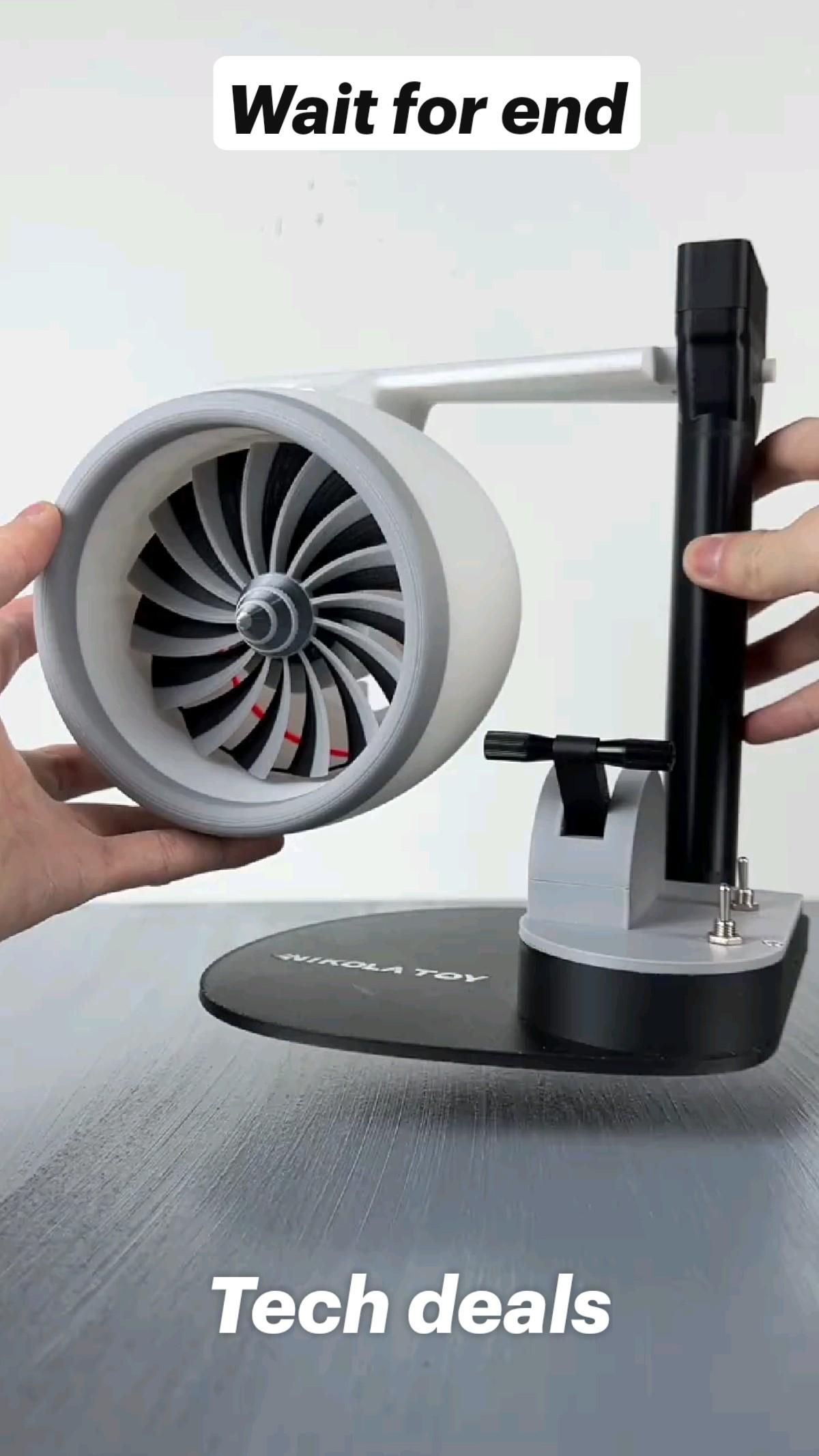
A turbofan-inspired desk piece that actually cools, humidifies, and puts on a miniature engine light show
The NikolaToy Creative Desktop JetFan is one of those rare novelty-forward objects that still earns its footprint on a desk. Styled like a compact aircraft turbofan engine, it combines a desktop fan, ultrasonic humidifier, and red LED turbine effect into a single USB-C powered display piece. Instead of hiding its mechanics, it leans into them: visible fan blades, a rear mist outlet, and a throttle-style control make it feel more like a tiny working engine model than a generic office appliance.
The Standout Appeal & Why It Caught Our Attention
Most desktop fans are purely utilitarian, and most decorative engine replicas do nothing beyond sit on a shelf. This one lands in the much more interesting middle ground. Its appeal comes from how deliberately it translates aviation design language into a practical desk accessory: the nacelle-shaped body, the layered front fan blades, the rear “exhaust” glow, and the manual control lever all reinforce the illusion of a miniature jet engine spooling up.
That design choice matters because it changes how the product is used. It is not just there to move air; it also acts as a conversation-starting desk centerpiece for people who like mechanical objects, aircraft aesthetics, or unusual workspace gear. The humidifier function adds a second layer of usefulness, especially in air-conditioned rooms where a standard fan can make the air feel even drier.
Key Features & How It Works
The images show a thoughtfully staged desktop unit with a suspended engine pod mounted to a vertical stand and base. The product appears to use a 3D-printed outer shell with a visible layered finish, which suits the prototype-like, engineering-display look.
- Dual-function airflow and mist system: It works as a compact fan while also producing humidifying mist from the rear exhaust area, creating a convincing “jet plume” effect.
- Ultrasonic humidifier fill method: The water appears to be added with a syringe into a rear fill port, suggesting a small internal reservoir designed for measured filling rather than open-top pouring.
- Red LED combustion-style lighting: Internal red lighting rings illuminate the engine housing and simulate a turbine afterburn or tail-flame effect, especially dramatic in low light.
- Realistic spinning turbine blades: The front intake shows multi-blade fan geometry that visually mimics a high-bypass turbofan when running.
- Throttle-style control lever: A small push-rod/lever on the base appears to adjust operating intensity, likely affecting fan speed and possibly light output for a more “engine throttle” experience.
- USB-C power input: The base is shown with a wired power connection, and the provided product context identifies it as USB-C powered, making it easy to run from a laptop, wall adapter, or power bank.
- Display stand format: The elevated mount keeps the engine body angled and visible from multiple sides, which is important because this is as much a visual object as a functional appliance.
The overall form is frequently associated with a Rolls-Royce Trent 900-inspired engine silhouette, which explains why it feels more like a scaled aviation display than a generic novelty fan.
Practical Everyday Uses
Despite the theatrical design, this is easiest to appreciate in ordinary daily settings where small comfort upgrades matter.
- Desk setup centerpiece: Ideal for home offices, gaming desks, or studio workspaces where you want a compact fan but do not want another bland plastic appliance in view.
- Dry-room comfort boost: Useful near a monitor, laptop, or bedside table in air-conditioned environments where a little airflow plus light humidification feels more comfortable than fan-only cooling.
- Gift for aviation and engineering fans: A strong fit for people who collect unusual mechanical decor, aircraft memorabilia, or functional desktop curiosities that do more than just light up.
Things To Consider Before Buying
This is a clever hybrid object, but it is worth understanding its scale and purpose before ordering.
- It is a desktop unit, not a room appliance: Expect localized airflow and light humidification rather than whole-room cooling or moisture output.
- Reservoir capacity may be small: The syringe-fill design suggests a compact water chamber, which likely means shorter humidifier runtime and more frequent refills.
- 3D-printed finish is part of the look: If you expect injection-molded consumer-electronics polish, the visible printed texture may feel more workshop-made than mass-market.
- Needs external USB-C power: Check whether a cable or adapter is included, and plan for a nearby USB power source.
- Best for enthusiasts who enjoy the theme: A standard fan may be simpler if you only care about airflow, but this model makes the most sense for buyers who specifically want the mini jet-engine experience.