
A bendable phone stand that adapts to your setup instead of forcing you to adapt to it
This is the kind of accessory that looks almost too simple at first glance: a ribbed silicone strip with a flexible internal structure and a slim support lip. But that minimal design is exactly what makes it clever. Rather than locking you into one viewing angle or one use case, it can be bent into different shapes to hold a phone on a desk, hook over a laptop screen, or create a more stable cradle on uneven surfaces.
The Standout Appeal & Why It Caught Our Attention
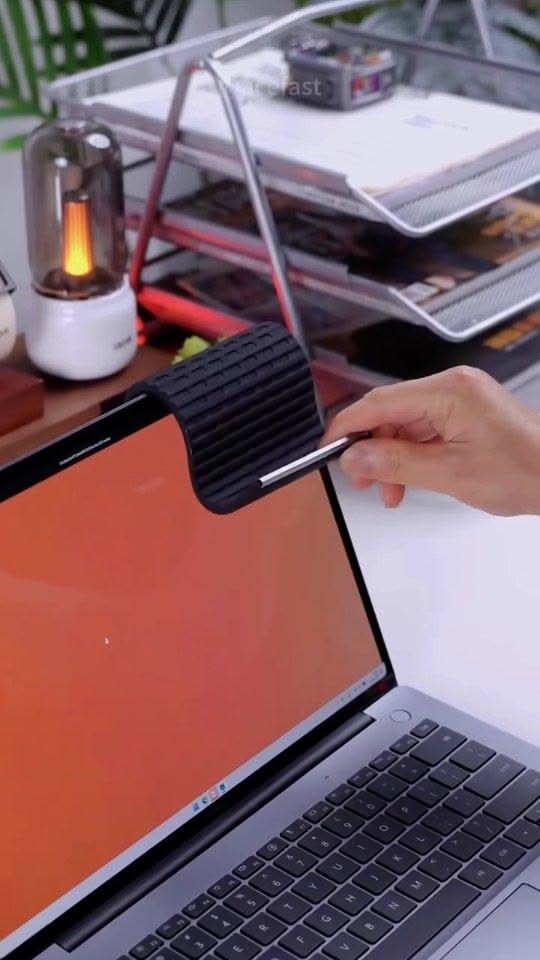
Most phone stands are rigid, bulky, and limited to one position. This flexible silicone stand takes the opposite approach. Its value comes from being moldable, grippy, and flat-pack portable. In the images, it is shown wrapped over a laptop display to create a temporary side-mounted phone holder, then reshaped into a tabletop stand for both a smartphone and a small tablet. That kind of shape-shifting utility is what makes it more interesting than a standard folding kickstand.
- One-piece flexible form means fewer hinges or joints to wear out.
- Ribbed anti-slip surface helps the phone stay planted without clamps.
- Travel-friendly profile lets it slip into a pouch or bag with almost no footprint.
Key Features & How It Works
The stand appears to use a flexible internal core wrapped in textured black silicone, allowing it to hold a bent shape once formed. The parallel grooves across the surface are not decorative; they increase friction so glass-backed phones and tablets are less likely to slide. A slim metal support ledge at the edge acts as the retention point that keeps the device from slipping forward.
- Moldable structure: Can be bent into curved, S-shaped, or tent-like forms depending on where and how you want to place your device.
- Anti-slip ribbing: The raised grooves improve grip against smooth device backs and desk surfaces.
- Laptop-edge mounting: One demonstrated use shows it draped over the top of a laptop screen, with the phone resting on the front ledge for eye-level viewing.
- Desk stand mode: It can be folded into a freestanding cradle for portrait or landscape viewing.
- Tablet compatibility: The wider support area suggests it can also handle smaller tablets, provided the bend is shaped for balance.
- Portable construction: It folds flat and appears soft enough to stash in a small zip pouch.
Practical Everyday Uses
This is a small accessory, but it solves several annoying little workflow problems that add up over time.
- Dual-screen work setup: Hook it over a laptop display to keep your phone at eye level for messages, timers, reference material, or video calls without sacrificing desk space.
- Travel desk companion: In a hotel, café, or coworking space, it gives you a quick stand without carrying a rigid mount.
- Kitchen or bedside viewing: Bend it into a stable tabletop shape for recipes, streaming, alarms, or charging-station use.
Things To Consider Before Buying
This style of stand is versatile, but it works best when its limits are understood. Because it relies on friction and shape retention rather than clamps or magnets, device size, weight, and case texture will affect stability.
- Check device weight: Larger tablets may require careful shaping and may not feel as secure as a phone.
- Consider your phone case: Very slippery cases can reduce grip, while textured cases will usually work better.
- Use caution on laptop screens: It appears suitable for thin-bezel displays, but users should make sure the weight does not stress a lightly hinged screen.
- No charging integration: This is a passive stand, so there are no built-in magnets, power, or wireless charging features.
For people who want a lightweight, shapeable stand that can move between desk, bag, and temporary workspaces, this design makes a strong case for simplicity done intelligently.