
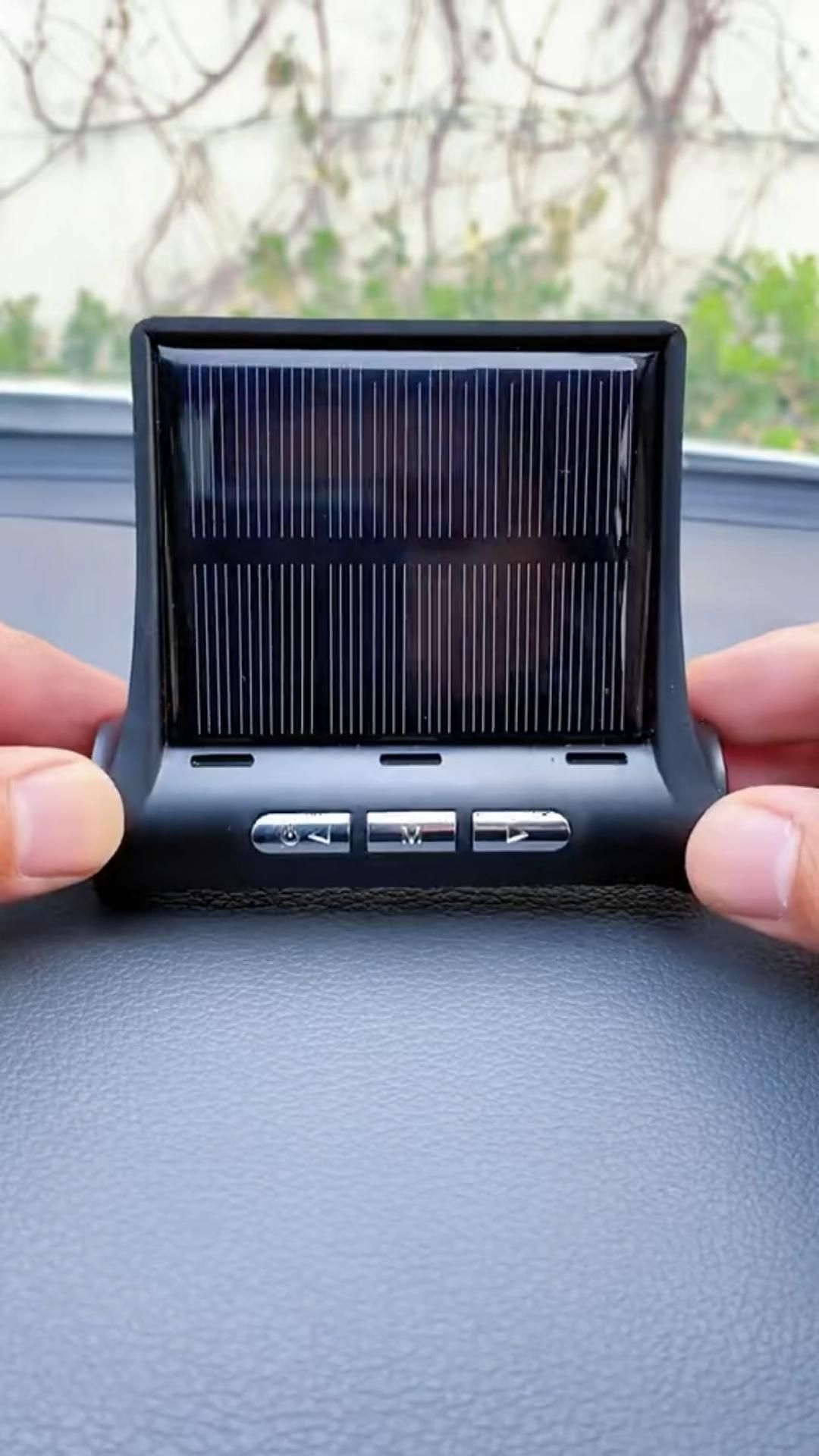
A solar-powered tire monitor that keeps all four wheels visible from the dashboard
This aftermarket TPMS is built for drivers who want a constant, glanceable readout of tire pressure and temperature without digging through service menus or waiting for a factory warning light to appear. The setup pairs a compact solar-charged dashboard display with four external valve-stem sensors, giving you live data from each tire in a format that is easy to check while driving.
The Standout Appeal & Why It Caught Our Attention
What makes this style of tire monitor interesting is how directly it solves a common blind spot in everyday driving: most people only learn about tire trouble after handling changes, fuel economy drops, or a warning appears when the problem is already significant. This unit turns tire health into a real-time dashboard metric.
- Solar-assisted power means the display can sit on the dash without needing a dangling cable in normal daylight use.
- Four-wheel live monitoring gives a more complete picture than a simple low-pressure warning.
- External screw-on sensors make it approachable for DIY installation, with no need to break the tire bead or visit a tire shop.
- The low-profile monitor is designed to be readable at a glance, which is exactly what a safety accessory should be.
Key Features & How It Works
The system uses four compact wireless sensor caps labeled by wheel position, typically FL, FR, RL, and RR. These thread onto the tire valve stems and transmit pressure and temperature data back to the cabin display. The monitor itself appears to use a digital LCD panel with segmented readouts for each tire, plus top-mounted control buttons for setup, unit switching, or alert adjustment.
- Solar panel integrated into the display housing to keep the internal battery topped up during daytime driving.
- Wireless external sensors that replace standard valve caps and continuously report tire status.
- Real-time pressure display for all four tires, letting you spot slow leaks or uneven inflation.
- Temperature monitoring to help identify overheating tires during long highway runs or hot-weather driving.
- Dashboard-mounted form factor with a curved base that sits neatly near the windshield.
- Anti-theft lock hardware appears included, with a small wrench used to secure the sensor caps so they are harder to remove casually.
- Three-button interface for powering on, navigating settings, and confirming adjustments.
In practical terms, once the sensors are installed and paired, the monitor wakes up and shows each tire’s status individually. If one wheel begins losing pressure faster than the others, the difference becomes visible long before the tire looks obviously low from outside the car.
Practical Everyday Uses
This is the kind of accessory that becomes most valuable when you are not thinking about it. It quietly watches the tires in the background and gives you earlier warning than a visual inspection usually can.
- Daily commuting: Ideal for drivers who want to catch a nail puncture or seasonal pressure drop before it affects braking, steering, or fuel economy.
- Road trips and highway driving: Continuous temperature and pressure visibility is especially useful on long drives where heat buildup and underinflation can become more serious.
- Older vehicles or base trims: A smart upgrade for cars that lack a detailed factory tire display, or only provide a generic warning light with no per-wheel information.
Things To Consider Before Buying
As convenient as this style of TPMS is, buyers should check a few practical details before ordering.
- Valve stem compatibility matters: Make sure your wheels and stems can safely support external screw-on sensors.
- External sensors add a little bulk to the valve area, so wheel design and clearance should be considered.
- Battery maintenance for the sensors may be required over time, even if the main display is solar-powered.
- Pressure units and alert thresholds should be configurable to match your vehicle’s recommended tire pressures.
- Not a substitute for manual checks: It is a monitoring tool, not a replacement for occasional gauge verification and regular tire inspection.