
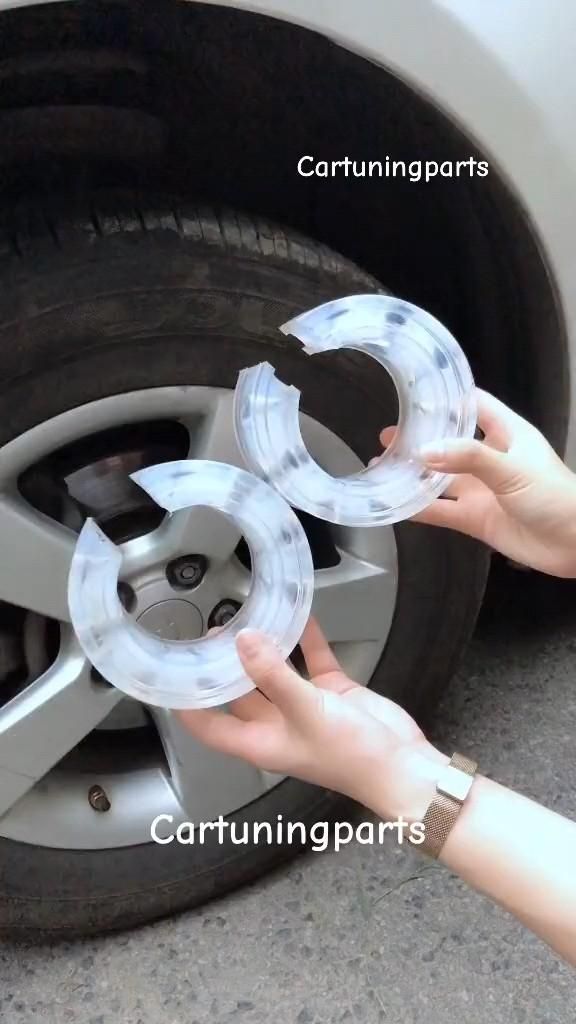
A simple suspension add-on designed to soften harsh bumps while giving low-clearance cars a little more breathing room
These transparent coil spring buffers are fitted directly between the turns of a vehicle’s suspension spring, where they act as a flexible spacer and shock-dampening insert. The concept is straightforward but practical: reduce how violently the spring compresses over potholes, speed bumps, and uneven pavement, while also helping support ride height on vehicles that sag or scrape too easily.
The Standout Appeal & Why It Caught Our Attention
What makes this item interesting is that it targets a very specific annoyance many drivers live with every day: bottoming out, excessive bounce, and nose-dipping over rough roads. Instead of replacing the full suspension system, this accessory adds a cushioning layer right at the spring itself. The transparent construction also makes the material quality and internal structure easy to inspect, which is unusual for car suspension add-ons that are normally hidden in black rubber.
- Low-profile upgrade: aims to improve ride feel without a full spring or strut replacement.
- Visible flexible material: the clear TPE or silicone-style body suggests elasticity rather than rigid hard plastic.
- Useful for clearance-sensitive cars: especially relevant for sedans or heavily loaded vehicles that scrape on ramps and speed bumps.
Key Features & How It Works
The buffer appears as a C-shaped ring that can be inserted into the gaps of a coil spring. Once seated between the spring turns, it limits extreme compression and adds a layer of progressive resistance when the suspension is loaded.
- Transparent TPE or silicone construction: chosen for flexibility, compression resistance, and weather tolerance.
- Direct coil-spring fitment: installs onto the suspension spring rather than the wheel, tire, or bodywork.
- Segmented open-ring design: the split shape allows it to be flexed open and positioned around the spring.
- Molded internal cavities: visible cutouts likely help the buffer compress more gradually instead of feeling overly stiff.
- Ride-height support effect: by reducing full spring collapse, it can help maintain a slightly higher stance under load.
- Impact moderation: intended to reduce the sharp jolt transmitted into the cabin when crossing speed bumps or rough patches.
Practical Everyday Uses
This is the kind of accessory that makes the most sense for drivers who regularly deal with poor roads, passengers, cargo weight, or a car that sits lower than ideal.
- Urban commuting: useful for drivers constantly crossing speed bumps, driveway lips, patched asphalt, and potholes.
- Family or cargo use: can help when the rear suspension squats more than you’d like with passengers, groceries, tools, or luggage onboard.
- Older vehicles: appealing for cars with tired springs that feel softer and more crashy than they used to, especially if a full suspension refresh is being postponed.
Things To Consider Before Buying
Fitment matters more here than with many universal car accessories. Buyers should verify the coil spring spacing, spring thickness, and vehicle type before ordering. These are not a substitute for damaged shocks, broken springs, or worn suspension components, and results will vary depending on vehicle weight and suspension design.
- Measure your springs first: diameter and gap between coils are critical.
- Check compatibility front vs rear: some cars use different spring sizes at each end.
- Expect support, not a miracle fix: this may reduce harshness and sag, but it will not fully repair worn-out suspension hardware.
- Installation access can vary: some vehicles may require lifting the car or unloading the suspension for easier placement.