
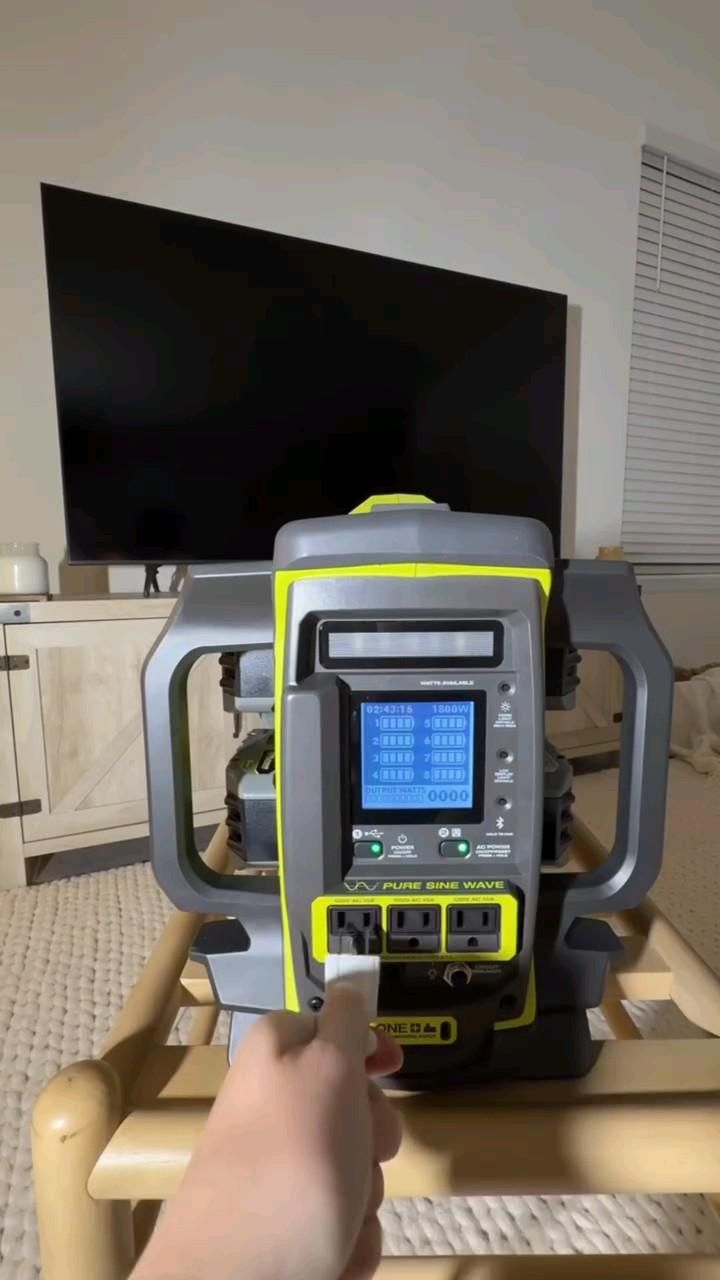
A cordless-tool battery system that doubles as a serious home backup power station
The Ryobi 18V ONE+ 1800-Watt Power Station is one of those rare crossover products that makes immediate sense the moment you see it in use: it turns the same 18V batteries many people already own for drills, lights, and yard tools into a portable, indoor-safe backup power source. Instead of relying on gasoline, pull cords, or a noisy engine, this unit stacks multiple Ryobi batteries into a rugged frame and delivers household-style AC power for outages, job sites, and off-grid convenience.
The Standout Appeal & Why It Caught Our Attention
What makes this unit genuinely interesting is its modular battery-powered generator approach. Traditional portable generators are powerful, but they are loud, fuel-dependent, and usually meant for outdoor use only. Many compact power stations, meanwhile, lock you into a sealed internal battery that eventually ages out. Ryobi takes a different route: if you are already in the ONE+ ecosystem, your tool batteries become the fuel source.
The design is also unusually practical. The body uses a protective cage-style frame with large side handles, a broad stable base, and a top carry handle with a metal grip bar. It looks built to be moved around the house, garage, or campsite without feeling delicate. The bright green and dark gray housing is unmistakably Ryobi, but more importantly, the structure protects the control panel and battery bays from bumps during transport.
Key Features & How It Works
This power station appears designed around both backup power delivery and battery management, which is what separates it from a simple inverter.
- 1800 running watts output: The front panel clearly indicates 1800W, giving it enough capacity for many household essentials and larger electronics that smaller battery packs cannot handle.
- Pure sine wave AC output: The front is labeled PURE SINE WAVE, which matters for sensitive electronics and appliances that prefer cleaner, utility-like power.
- Multiple 120V outlets: The unit provides several standard AC outlets on the front panel, making it easy to plug in a refrigerator, TV, router, chargers, lamps, or small kitchen appliances without adapters.
- Eight-battery architecture: The display shows battery positions 1 through 8, and the body is built with multiple slide-in Ryobi 18V battery bays. This lets the station combine energy from several packs rather than depending on one oversized internal battery.
- Digital status display: The screen shows battery levels by slot, charging status, input watts, and output watts. That is especially useful during outages because you can see exactly how hard the unit is working and which batteries still have reserve capacity.
- Battery charging hub function: When connected to wall power, it can act as a charger for up to eight Ryobi 18V batteries. That means it is not just emergency gear; it can also serve as a central charging station for users with a large Ryobi collection.
- Integrated work light: A bright front light bar is visible above the display, adding utility during blackouts, garage work, or nighttime setup.
- USB charging ports: Side/front ports visible in the images suggest direct charging for phones and smaller electronics without occupying an AC outlet.
- Indoor-friendly backup concept: Because it runs from cordless tool batteries rather than combustion, it offers a cleaner, quieter alternative to gas generators for indoor-adjacent emergency use.
- Rugged carry frame: The oversized side rails and reinforced feet help protect the unit and make it easier to lift, set down, and reposition.
In practical terms, you load compatible Ryobi 18V ONE+ batteries into the bays, power on the inverter system, and plug devices into the AC outlets. When connected to household power, the station can recharge installed batteries, effectively becoming a large-format charging dock.
Practical Everyday Uses
This is the kind of product that becomes most valuable when power is inconvenient, unavailable, or unexpectedly interrupted.
- Home outage backup: During storms or grid interruptions, it can keep a refrigerator, TV, modem, lamps, or phone chargers running long enough to preserve food, maintain communication, and reduce the chaos of a blackout.
- Garage and DIY workflow: If you already own multiple Ryobi batteries, this can function as a central charging and power hub for tools, work lights, and bench electronics without scattering chargers everywhere.
- Camping, tailgating, and mobile setups: For users who want AC power without hauling fuel, it can run small appliances, fans, lights, and entertainment gear in places where a gas generator would be excessive or unwelcome.
Things To Consider Before Buying
This is a smart system, but it makes the most sense for a specific type of buyer.
- Battery investment matters: The unit is most compelling if you already own several Ryobi 18V ONE+ batteries. Its real runtime depends heavily on how many packs you have and their amp-hour ratings.
- 1800W is strong, but not unlimited: It can handle many essentials, but buyers should still check the startup surge and running wattage of appliances like refrigerators, microwaves, coffee makers, or heaters.
- Runtime varies by battery mix: A station loaded with high-capacity packs behaves very differently from one filled with smaller batteries. Capacity planning is important if you are buying this specifically for emergencies.
- Size and weight increase when loaded: The frame is portable, but once multiple batteries are installed, it becomes more of a carryable power hub than a grab-and-go mini pack.
- Ecosystem compatibility is key: This is built around the Ryobi ONE+ platform, so it is best suited to users who want their backup power and tool battery system to work together.