
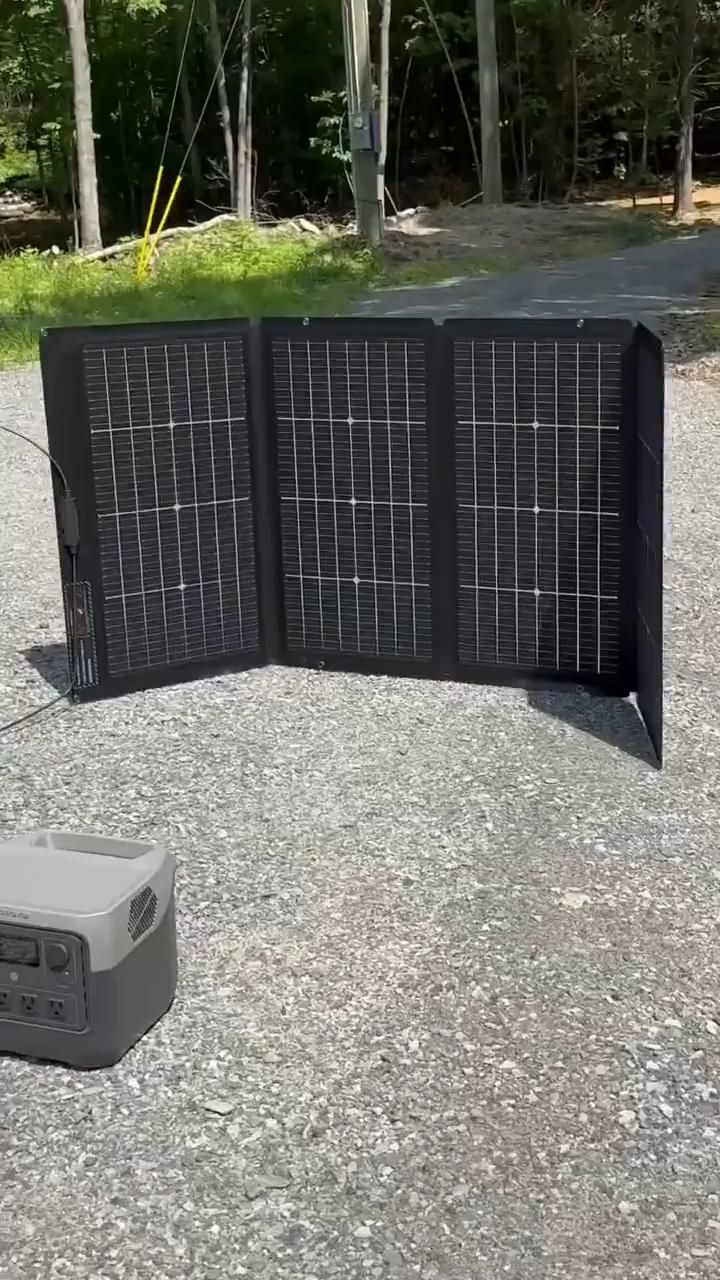
A high-efficiency foldable solar panel built to turn sunlight into usable off-grid power fast
EcoFlow’s 220W portable solar panel is designed for people who want serious charging performance without hauling around a rigid rooftop-style panel. The big draw here is its 23% conversion efficiency, paired with a foldable, travel-ready format that works with solar generators and portable power stations in campsites, RV setups, cabins, and emergency backup situations.
The Standout Appeal & Why It Caught Our Attention
What makes this panel interesting is the way it bridges two worlds: the output expectations of a larger solar setup and the convenience of a portable accessory you can carry by hand. In the images, the panel unfolds into multiple large sections for a broad light-catching surface, then collapses into a slim case-like form with handles for transport. That makes it much more practical than fixed panels for users who move often, chase sunlight, or only need solar power part-time.
- High conversion rate: EcoFlow claims an industry-leading 23% efficiency, which matters because it helps squeeze more charging performance out of limited daylight.
- Portable by design: The folding structure lets you bring meaningful solar capacity to places where rigid panels would be awkward or fragile.
- Power-station friendly: It’s built to plug into compatible solar generators and many other power stations using standard solar connectors.
Key Features & How It Works
Visually, this is a multi-panel fold-out solar array with a black laminated surface, reinforced fabric edging, integrated cable routing, and a carry-case style exterior. A close-up label identifies it as an EcoFlow 220W panel, and the connector shown appears to be the brand’s solar lead for linking to a portable power station.
- 220W rated output: Intended for faster charging than smaller trickle-style camping panels.
- 23% conversion efficiency: Helps improve real-world energy harvest when sun conditions are good.
- Foldable segmented construction: The panel opens accordion-style into several sections, making setup quick while keeping transport manageable.
- Portable carrying format: When folded, it becomes a flat case with stitched handles for easier carrying to a dock, campsite, or roadside stop.
- Solar generator compatibility: The user-supplied info notes it plugs into most power stations with solar connectors, which expands its usefulness beyond one brand ecosystem.
- Outdoor-oriented build: The materials appear chosen for field use, with a durable outer shell and protected panel borders that help during repeated setup and pack-down.
The basic workflow is simple: unfold the panel, angle it toward direct sun, connect the solar cable to a compatible power station, and let the battery system handle incoming charge. Because the panel is large but still portable, it’s especially useful for users who want to reposition it through the day for better output.
Practical Everyday Uses
This is the kind of gear that becomes much more valuable once you leave the house or lose access to wall power.
- RV and van travel: Set it outside while parked to recharge a power station running lights, fans, laptops, or a small fridge without idling a vehicle.
- Camping and lakeside trips: Carry it to a dock, clearing, or campsite and keep phones, cameras, drones, and battery packs topped up from sunlight.
- Emergency home backup: During outages, pair it with a solar generator to slowly replenish essential power for communication devices, routers, lights, or medical small electronics.
Things To Consider Before Buying
Portable solar works best when expectations match conditions. This panel can be highly useful, but buyers should still check the practical details before committing.
- Power station compatibility: Confirm your battery station accepts the panel’s connector type, voltage, and input range.
- Sunlight matters: Output drops in shade, cloud cover, poor panel angle, or high heat, so rated wattage is not a constant all-day figure.
- Size when deployed: It folds down for transport, but once opened it needs a decent patch of clear ground or deck space.
- Weight vs. smaller panels: A 220W class panel is portable, but it’s still more substantial than compact USB solar mats.
- Best for battery charging: This is most useful when paired with a solar generator or power station rather than as a direct plug-in solution for random electronics.