
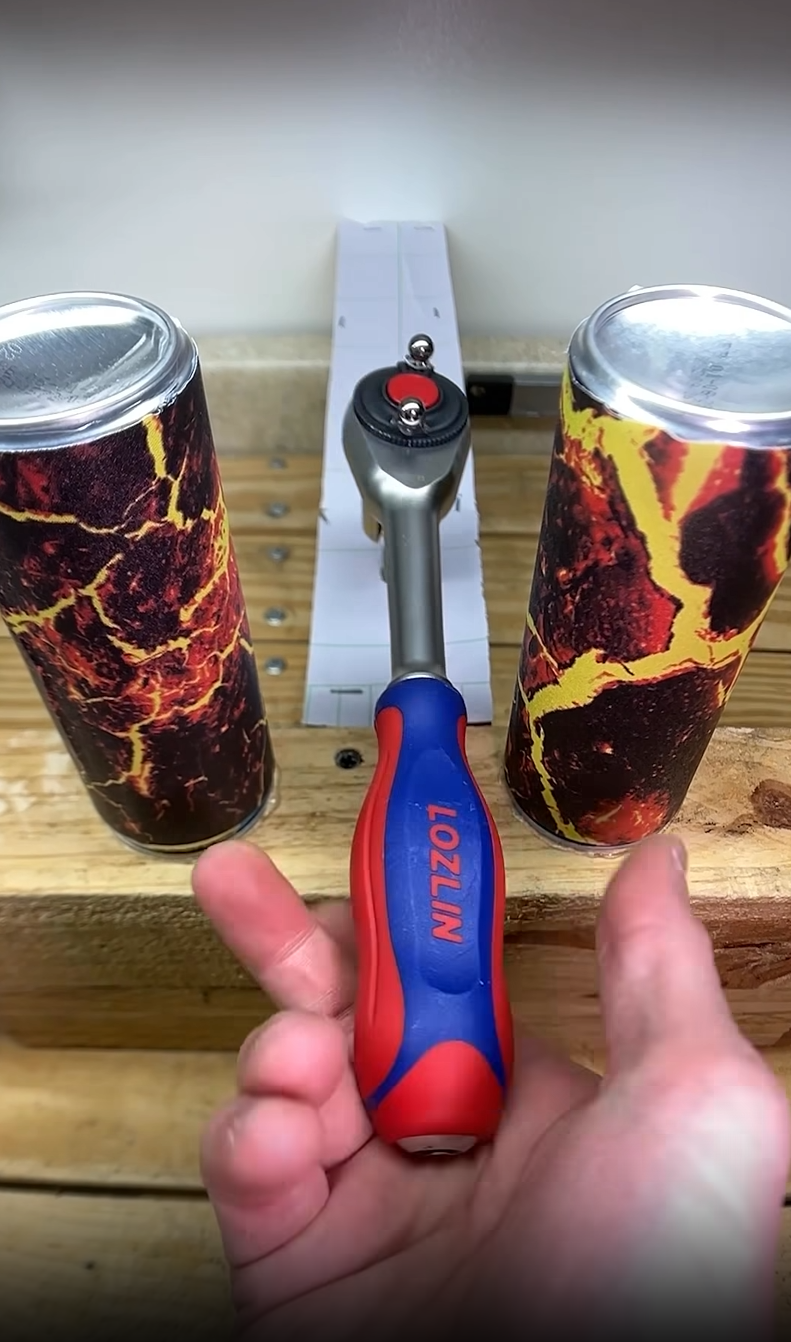
A ratchet that still works when there’s no room to swing it
The LOZLIN 52-Tooth 360° Rotating Ratchet Wrench is built for the exact moment ordinary ratchets become frustrating: when a fastener is buried between obstacles and the handle can barely move. Instead of relying only on a back-and-forth swing, this design lets you twist the handle to turn the socket, giving you a practical way to keep working in cramped spaces. It also keeps the familiar feel of a standard ratchet and adds a drill-drive option at the rear for faster spinning once the fastener breaks free.
The Standout Appeal & Why It Caught Our Attention
What makes this tool interesting isn’t just that it ratchets—it’s that it offers three operating styles in one. You can use it like a normal ratchet, use the twist-action grip when side clearance is nearly zero, or connect a drill to the rear input for powered rotation. That combination solves a very real workshop problem without forcing you into a bulky specialty tool.
- Twist-to-turn mechanism: ideal for narrow channels, recessed bolts, and hardware surrounded by panels or tubing.
- Standard ratchet behavior: when space opens up, it works like the tool you already know.
- Powered rear-drive capability: useful for quickly running nuts or bolts in and out after initial loosening.
Key Features & How It Works
This model is identified as a 3/8-inch drive ratchet with a 52-tooth gear, which translates to a tight 5° swing arc. That already helps in confined areas, but the real trick is the rotating drive mechanism built into the handle system. In the images, you can clearly see the quick-release button on the head, the textured rotating collar area, and the rear drive point that accepts a drill connection.
- 52-tooth ratcheting mechanism: needs minimal handle travel compared with coarse-tooth ratchets.
- Twist handle action: rotating the grip transfers motion to the socket without requiring a full handle swing.
- 360° rotatable head design: improves approach angles and helps align the socket in awkward positions.
- Quick-release button: makes socket changes faster and more secure.
- Chrome Vanadium steel construction: a common heavy-duty choice for hand tools because it balances hardness, toughness, and wear resistance.
- Mirror-finish exterior: adds rust resistance and makes cleanup easier after greasy jobs.
- Ergonomic red-and-blue rubber grip: designed for traction and better control while twisting by hand.
- Rear drill interface: lets you spin the ratchet from the back with a driver for speed, especially on long threaded fasteners.
Practical Everyday Uses
This is the kind of tool that becomes valuable once you work in places where ordinary ratchets constantly hit walls, housings, or neighboring hardware.
- Automotive work: useful around engine bays, battery trays, brackets, hose-routing areas, and interior fasteners where a long ratchet swing is impossible.
- Appliance or equipment repair: handy for fasteners tucked behind guards, between panels, or inside cramped metal frames.
- Garage and home workshop tasks: a smart option for furniture assembly, machinery maintenance, or bench projects where clearance is blocked on both sides.
Things To Consider Before Buying
This is a clever tool, but it makes sense to check whether its format matches the jobs you actually do most often.
- Drive size matters: this version is 3/8-inch, so make sure your sockets and typical fastener sizes match that system.
- Not a replacement for every ratchet: while it is versatile, ultra-high-torque breaking tasks may still be better handled by a dedicated breaker bar or heavy-duty ratchet.
- Drill use requires control: the rear-drive feature is useful, but powered spinning should be done carefully to avoid over-tightening or cross-threading.
- Mechanism complexity: because it has more moving parts than a basic ratchet, buyers should look for solid build quality, smooth engagement, and reliable fitment.
- Space advantage depends on the job: the twist feature shines most when side swing is restricted; in open areas, a normal long-handle ratchet may still be faster for high leverage.