
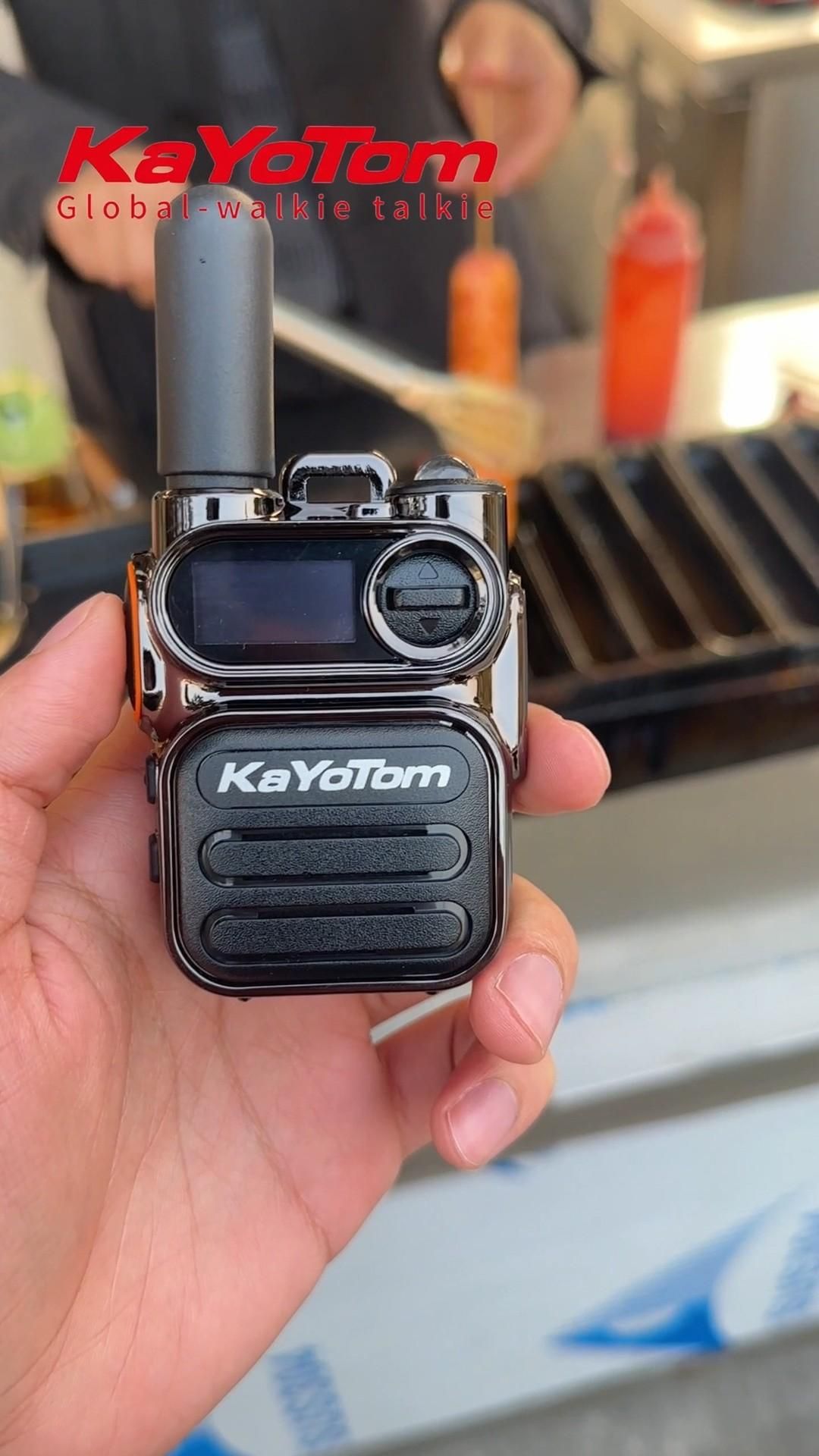
A pocket-size walkie-talkie built for long-distance communication without monthly fees
The KaYoTom Global walkie-talkie takes the familiar handheld radio format and pushes it far beyond short-range campsite use. Based on the transcript and on-screen interface, this is a compact nationwide communication two-way radio designed to keep users connected across cities or even states, while still feeling like a simple grab-and-talk handheld. Its appeal is obvious the moment you see it: a small body, stubby antenna, physical controls, and a bright screen that suggests more than basic analog radio functionality.
The Standout Appeal & Why It Caught Our Attention
What makes this device interesting is the contrast between its classic walkie-talkie form and its claimed country-wide coverage. Traditional walkie-talkies are limited by line-of-sight range and terrain. This one appears positioned as a smarter alternative for people who want the immediacy of push-to-talk communication without relying on conventional short-range radio limits or paying recurring service fees.
- Compact, one-hand design makes it feel more practical than bulky commercial radios.
- Screen-based menu system adds modern usability for group, member, and settings management.
- No monthly fee positioning is a major differentiator if the included network/service model works as advertised.
- Retro-industrial styling with a glossy dark shell and oversized antenna gives it a distinctive, almost collectible look while remaining functional.
Key Features & How It Works
From the images, the KaYoTom unit appears to combine traditional handheld radio ergonomics with a digital interface and charging dock support.
- Front display: A small blue-backlit screen shows menu items such as Operator, Group, Member, and Setting, indicating this is more than a simple channel-only radio.
- Directional control pad: The circular front control with up/down arrows appears to handle menu navigation and likely volume or selection changes.
- Dedicated side button: The orange side key is likely the push-to-talk control, placed for thumb access during one-handed use.
- Integrated speaker grille: The large lower front section is shaped like a speaker area, suggesting strong voice output for noisy environments.
- Stubby antenna: The short, rounded antenna keeps the unit compact and snag-resistant compared with long whip antennas.
- Charging contacts on the back: Two rear pogo-pin contacts strongly suggest dock charging, useful for keeping multiple units topped up in a shop, warehouse, or dispatch setting.
- USB-C port: The bottom is marked TYPE-C, which is a welcome practical detail for direct charging without proprietary cables.
- Lanyard or clip loop area: The top center loop-like structure suggests easy carry attachment for mobile work.
The transcript claims communication across the entire United States and clear inter-state calling. That implies this is likely not a conventional FRS/GMRS radio, but a network-assisted push-to-talk device using a wider-area communication system. The on-screen member/group structure supports that interpretation.
Practical Everyday Uses
This is the kind of communication tool that makes sense for people who need instant voice contact without dialing, waiting, or juggling messaging apps.
- Small business coordination: Food vendors, mobile crews, event teams, and delivery operators can use group-based communication to stay synced throughout the day.
- Family travel and road coordination: If the nationwide coverage claim holds, families in separate vehicles or relatives in different states could use it as a simpler push-to-talk alternative to phone calls.
- Field teams and remote staff: Security workers, property managers, and distributed operations teams may appreciate the fast access to group communication and the dock-friendly charging setup.
Things To Consider Before Buying
Before purchasing, it is worth verifying exactly how this radio achieves its long-distance coverage and what setup is required.
- Confirm the network method: “Global” or nationwide walkie-talkies often depend on cellular or internet-backed push-to-talk systems rather than pure radio transmission.
- Check activation requirements: Even if there is no monthly fee, buyers should confirm whether service is prepaid, bundled, region-limited, or tied to a platform account.
- Review audio performance in noise: The unit looks compact, which is great for portability, but speaker loudness matters if you work in kitchens, markets, or outdoor job sites.
- Ask about pairing and fleet management: If you need multiple units, make sure adding members and groups is straightforward.
- Verify charging accessories: The rear contacts suggest a dock, but confirm whether the charging base is included or sold separately.
For buyers who want the speed of a walkie-talkie with the promise of far wider coverage than ordinary handheld radios, the KaYoTom stands out as a genuinely intriguing hybrid.