
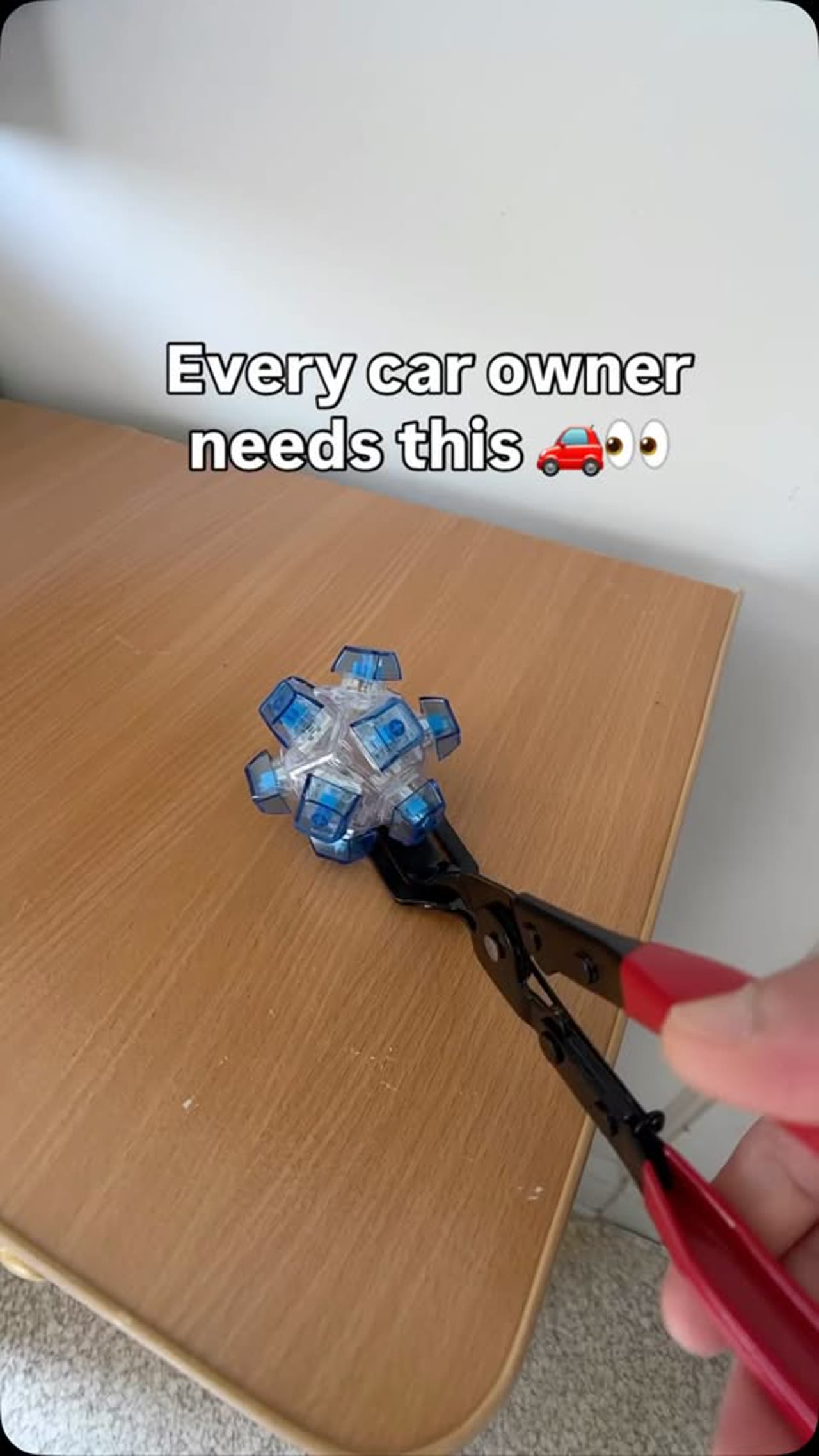
A smarter way to pull stubborn automotive clips without mangling trim
These panel clip removal pliers are one of those deceptively simple car tools that immediately make sense the first time you use them. Instead of prying blindly with a flathead screwdriver and risking scratched paint, bent trim, or broken fasteners, this tool uses a thin forked jaw and leverage-focused plier design to lift plastic clips cleanly from underneath.
The Standout Appeal & Why It Caught Our Attention
What makes this tool interesting is not just that it removes clips, but how it removes them. The forked head slides into narrow gaps where ordinary pliers cannot reach, then the handle geometry multiplies force so clips pop out with far less effort. In the images, it is being used across multiple trim zones including door panels, hood insulation retainers, floor mat anchors, mirror trim, and dashboard pieces, which shows why this style of tool has become a staple for DIY car work.
- Cleaner removal: designed to get under the clip head instead of crushing it from above.
- Less cosmetic damage: the thin, angled jaws reduce the chance of gouging painted or textured surfaces.
- More control: plier-style squeezing feels more precise than twisting a pry tool in tight spaces.
Key Features & How It Works
The tool shown appears to follow the common car clip pliers format widely sold online. It combines a narrow forked tip with a leverage-enhancing body and spring-assisted action for repeated use.
- Thin inclined jaws: typically around 1-2mm at the tip, allowing the fork to slip under upholstery clips, push pins, and trim retainers in tight seams.
- Forked extraction head: the two-prong jaw straddles the stem of a plastic fastener so force is applied under the clip head rather than on the visible trim surface.
- Lever-action geometry: the offset head and long handles increase pulling power, making stubborn clips easier to release in one controlled motion.
- Spring mechanism: many versions include a built-in return spring so the jaws reopen automatically, which speeds up repetitive clip removal.
- Metal construction: commonly made from forged alloy steel or 17-4 PH stainless steel with a black or chrome corrosion-resistant finish.
- Comfort handles: the red vinyl or rubber-dipped grips help reduce hand fatigue and improve grip when working in awkward positions.
In practice, you slide the fork under the fastener head, center the clip stem between the jaws, and squeeze. The tool converts that squeeze into a lifting action that pulls the retainer upward with much less twisting and prying than a screwdriver-based approach.
Practical Everyday Uses
This is the kind of tool that becomes useful far beyond one repair job.
- Interior upgrades: ideal for removing door cards, A-pillar trim, dashboard panels, and mirror covers when installing speakers, ambient lighting, dash cams, or sound deadening.
- Routine maintenance: handy for popping hood liner clips, splash shield retainers, trunk trim fasteners, and access panels during bulb changes or engine bay work.
- Cleaning and detailing: useful when lifting floor mat anchors or trim sections to deep-clean hard-to-reach areas without chewing up plastic hardware.
Things To Consider Before Buying
These pliers are highly useful, but a few details matter before you add one to your toolbox.
- Check jaw thickness: thinner jaws are better for modern tight-gap interiors, but very thin tips can flex more on heavy-duty clips.
- Know the limitation: this tool is made for plastic retainers and trim clips, not for every hidden fastener. Some panels still use screws or metal clips that need a different approach.
- Surface protection matters: even with a trim-safe design, working slowly around piano black trim, painted panels, or soft plastics is still wise.
- Brand variation is common: many listings look similar, so compare steel quality, spring tension, handle comfort, and coating durability rather than assuming all versions perform the same.
For anyone who works on their own car even occasionally, this is a small tool that can prevent a surprising amount of frustration, broken clips, and cosmetic damage.