
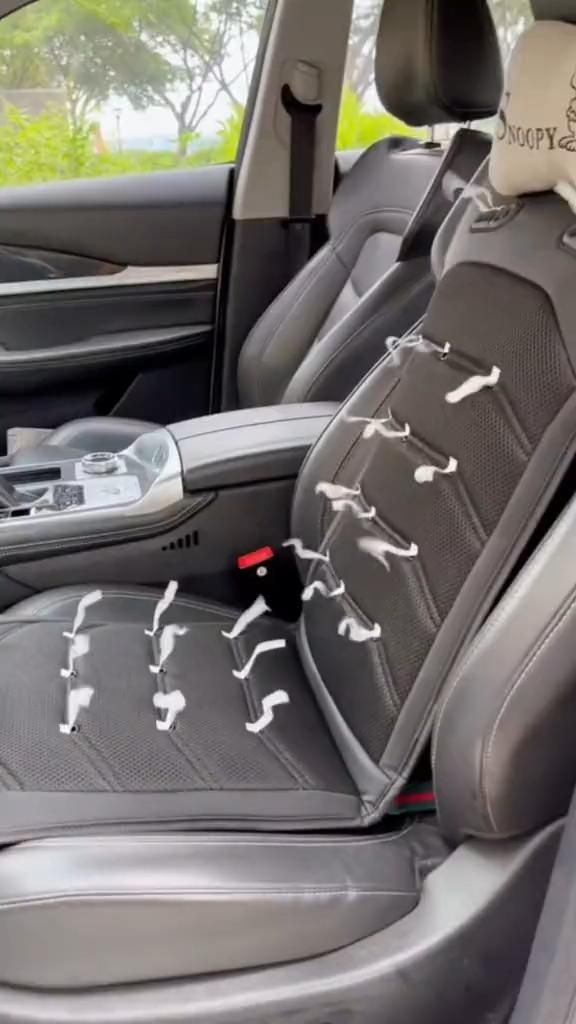
A fan-powered seat cushion that tackles the sticky, sweaty side of summer driving
Most car seats trap heat exactly where drivers feel it most: along the back, hips, and thighs. This ventilated car seat cushion takes a smarter approach by actively pushing airflow through a breathable padded surface, helping reduce that hot-seat buildup that leather and dense foam seats are known for. Instead of waiting for the cabin AC to slowly catch up, it creates direct circulation right at the contact points between your body and the seat.
The Standout Appeal & Why It Caught Our Attention
What makes this style of seat cooler interesting is its localized cooling strategy. Rather than cooling the whole cabin first, it focuses on the part of the car that usually stays warmest after parking in the sun: the seat itself. The design appears to combine a mesh airflow panel with internal fans and distributed outlet holes, so moving air can travel across both the seat base and backrest.
That matters because traditional car seats, especially synthetic leather or tightly padded sport seats, tend to hold heat and moisture. A ventilated overlay like this adds a breathable layer between you and the upholstery, which can make long drives feel noticeably less clammy.
Key Features & How It Works
This cushion appears to be built as a full-length seat-and-back cooling pad that straps onto an existing car seat and draws power from the vehicle.
- Integrated fan cooling system: The user-supplied context indicates this is a car seat cooler using fans. The visible airflow graphics suggest internal fans push air through channels in the cushion.
- Breathable mesh contact surface: The black perforated or honeycomb-style center panels are designed to let air pass through instead of trapping body heat.
- Air outlet distribution across back and seat: The visible vent points appear spread over the backrest and seat base, which helps target the upper back, lower back, hips, and thighs rather than just one zone.
- 12V car power connection: One frame shows a plug being inserted into the vehicle power socket, indicating a cigarette-lighter/12V accessory power setup rather than a battery-powered design.
- Quick-release mounting straps: The buckle and adjustable webbing suggest a simple strap-on installation around the seat, helping keep the pad from sliding during entry, exit, and cornering.
- Slim profile: The cushion looks relatively thin, which is important because bulky seat add-ons can interfere with driving posture.
- Full-seat coverage: Unlike small clip-on fans, this format cools the exact surfaces your body presses against.
Practical Everyday Uses
This is the kind of car accessory that becomes most useful in situations where cabin heat and seat contact are the real problem, not just air temperature.
- Hot-weather commuting: If your car sits outside at work or in an open parking lot, this can make the first 10 to 20 minutes of driving much more comfortable, especially with dark upholstery.
- Long-distance driving: Drivers covering highway miles often deal with back sweat and leg heat buildup. Continuous airflow under the torso and thighs can make extended seat time less fatiguing.
- Ride-share, taxi, or delivery use: People who spend hours in the driver seat every day may appreciate a cooling layer that helps reduce heat retention through repeated stop-and-go trips.
Things To Consider Before Buying
As useful as these cooling cushions can be, buyers should check a few practical details before ordering.
- Power source compatibility: Make sure your vehicle has an accessible 12V socket, or confirm whether a USB-powered version exists if that matters for your setup.
- Seat fit: Bucket seats, heavily bolstered sport seats, and extra-wide SUV seats can all fit differently. Check the cushion dimensions and strap reach.
- Noise level: Fan-based cooling pads usually produce some audible airflow or motor sound. It is worth checking whether the unit has multiple speed settings.
- Seat height and posture: Any add-on cushion slightly changes seating position. Drivers who are very particular about steering wheel reach or headroom should keep that in mind.
- Cleaning and maintenance: Mesh surfaces are practical for airflow, but they can collect dust and lint over time, especially in daily-use vehicles.
- Not the same as refrigerated cooling: This type of product typically improves comfort through air circulation, not ice-cold air conditioning. Its strength is reducing trapped heat and moisture.