
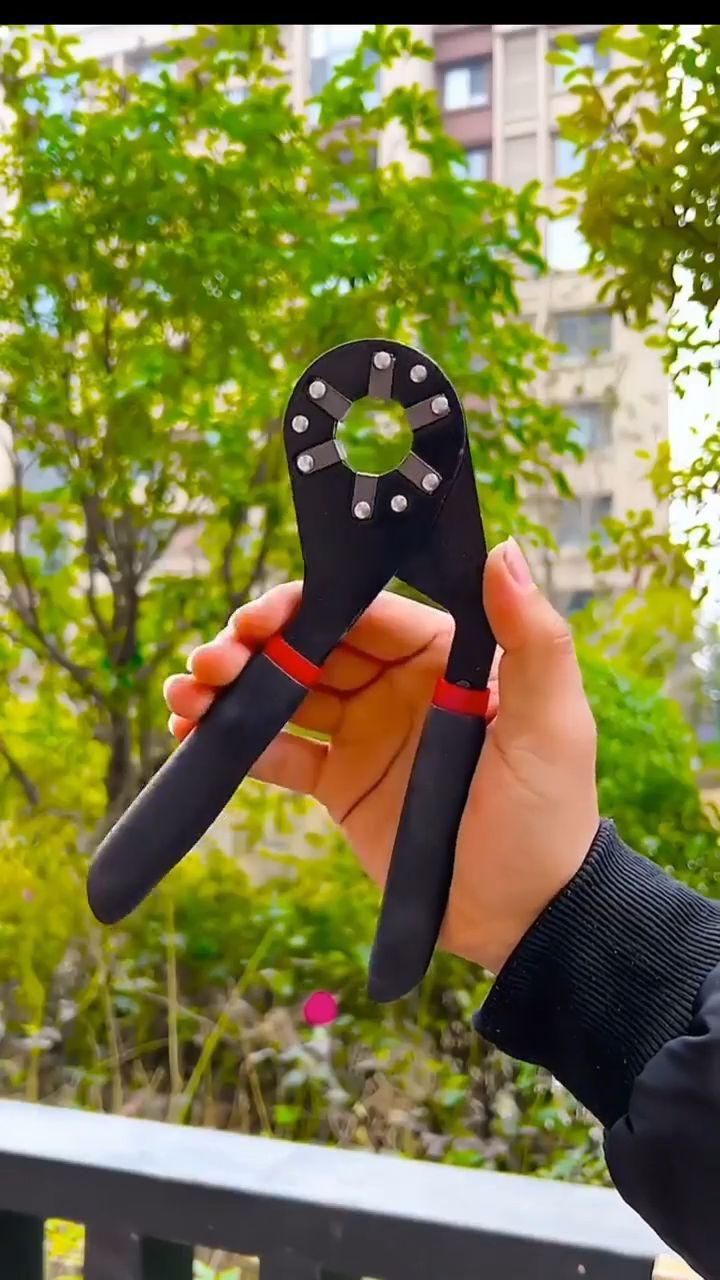
A self-adjusting wrench that grips multiple fastener sizes without swapping tools
This is the widely sold universal bionic wrench, sometimes called a magic wrench: a plier-style hand tool built to automatically conform around different nuts, bolts, and irregular fastener shapes. Instead of carrying a full stack of open-end and box wrenches, the design uses multiple spring-loaded gripping jaws to wrap around the hardware and spread force more evenly, which helps reduce slipping and corner rounding.
The Standout Appeal & Why It Caught Our Attention
What makes this tool interesting is that it tries to solve one of the oldest annoyances in basic repair work: stopping mid-job to hunt for the exact wrench size. The circular head uses several independent metal jaws that move inward as pressure is applied, creating a self-sizing grip around the fastener. That gives it a more forgiving, all-around hold than a standard open-end wrench, especially when working on mixed hardware sizes during quick repairs.
- Multi-size convenience: one tool can cover a range of common bolt and nut sizes.
- All-side contact: the jaw layout grips around the fastener rather than only contacting two flats.
- Useful for awkward jobs: especially handy when you do not know the exact fastener size in advance.
Key Features & How It Works
From the images, the wrench has a black metal body with rubberized black handles and red accent collars near the pivots. The head contains multiple short steel jaws arranged radially in a ring. As the handles are squeezed and turned, those jaws shift to match the outer shape of the nut or bolt head.
- Self-adjusting jaw cluster: several pivoting metal tabs close around hex heads and similarly shaped fasteners automatically.
- Pliers-style leverage: the long handles provide clamping force before torque is applied.
- Corner-friendly grip: because force is distributed across more contact points, it can be gentler on fastener corners than a loose open-end wrench.
- Non-slip handle coating: the thick grips appear designed for better control with sweaty or greasy hands.
- Compact single-tool format: easier to toss into a bike kit, car trunk, or home utility drawer than a full wrench set.
It is best understood as a universal gripping wrench rather than a precision replacement for every spanner in a toolbox. Its strength is adaptability and speed.
Practical Everyday Uses
This is the kind of tool that earns its keep in small repair situations where speed and flexibility matter more than workshop-level specialization.
- Bicycle repair: useful for axle nuts, accessory mounts, and quick adjustments when you do not want to carry several wrench sizes.
- Home maintenance: handy for tightening furniture hardware, plumbing-adjacent fittings, or miscellaneous nuts and bolts around the house.
- Automotive and garage tasks: convenient for light-duty jobs in the trunk or garage where mixed fastener sizes are common.
Things To Consider Before Buying
Before picking one up, it is worth treating this as a versatile general-purpose tool, not a total substitute for sockets or fixed-size wrenches.
- Check the size range: universal wrenches vary, so confirm the minimum and maximum fastener sizes it can actually grip.
- Best for external fasteners: it is designed for nuts and bolt heads, not recessed fasteners where a socket is required.
- Torque limits matter: for seized, heavily rusted, or high-torque automotive hardware, a dedicated socket or box wrench may still work better.
- Jaw quality varies by seller: look for solid steel construction and tight pivots, since cheaper versions can have inconsistent grip strength.
For people who want one compact tool for bike maintenance, home fixes, and light automotive work, the universal bionic wrench is a clever shortcut that prioritizes adaptability over tool-box purity.