
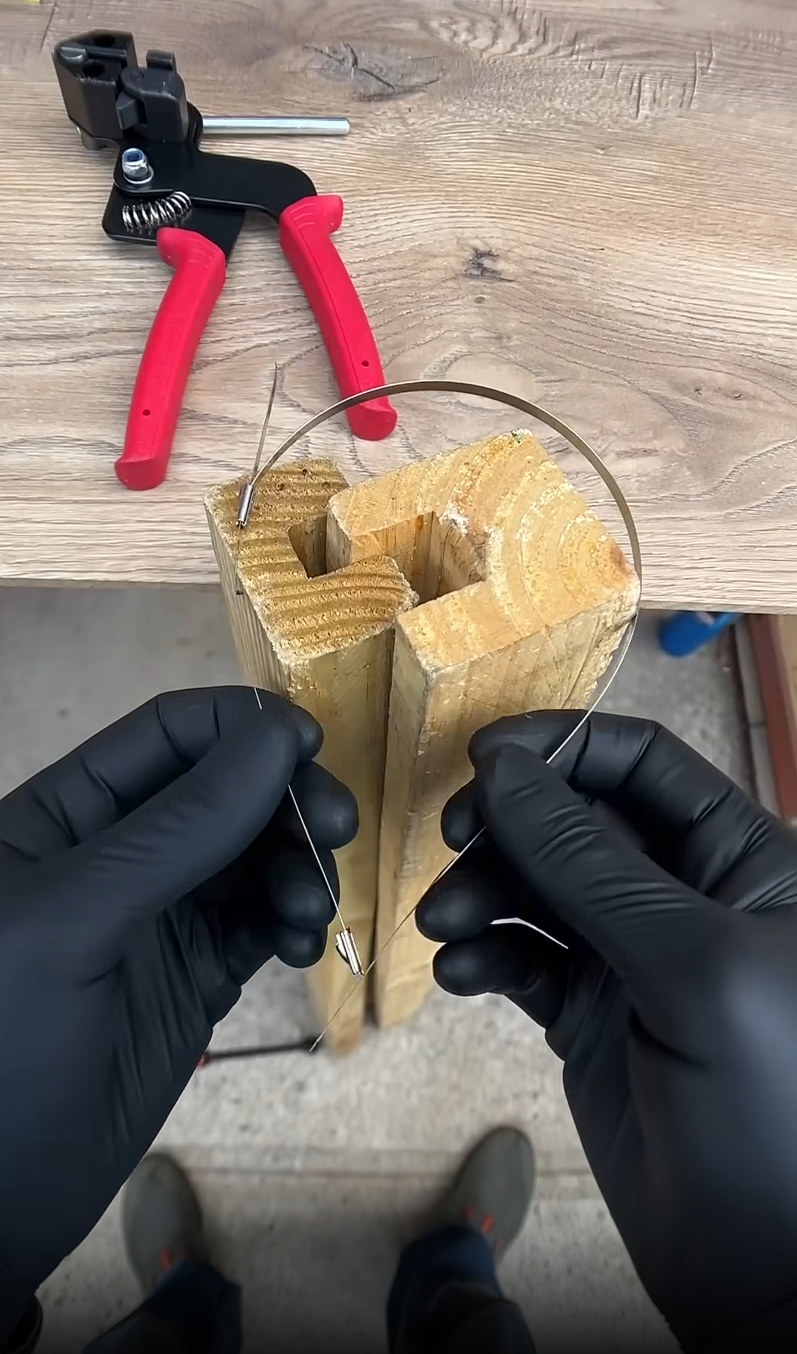
A metal zip-tie kit built for repairs that need to survive weather, heat, and time
Plastic zip ties are convenient until they live outdoors, sit near heat, or carry real load for months at a time. This kit swaps that disposable mindset for stainless steel cable ties and a dedicated tensioning and flush-cut tool, turning a quick fix into something much closer to a permanent fastening solution.
The Standout Appeal & Why It Caught Our Attention
What makes this setup interesting is not just that the ties are metal, but that the kit solves the two biggest frustrations with heavy-duty fastening: getting the tie truly tight and trimming it safely. Standard hand-tightening usually leaves slack, and cutting metal tails can leave sharp edges. Here, the included tool is designed to pull the tie down under tension and cut the excess tail flush in one motion, which is exactly the kind of practical engineering detail that makes a rugged product actually usable.
- Outdoor-ready fastening: meant for places where UV, rain, heat, and cold quickly age plastic ties.
- Repair-first design: ideal for fence fixes, pipe bundling, bracket retention, and other jobs where failure means redoing the work.
- Cleaner finish: the flush-cut action helps avoid the razor-like leftover tail common with improvised snips.
Key Features & How It Works
The images and transcript show a kit containing 100 stainless steel ties plus a specialized hand tool labeled for stainless steel cable tie tensioning. The ties appear to use a self-locking metal head: you wrap the band around the object, feed the tail through the locking head, then insert the tail into the tool. Squeezing the handles tensions the band, and the tool then cuts the excess.
- Stainless steel construction: better suited than nylon for sun exposure, moisture, and high-temperature environments.
- Approx. 200-pound rating: positioned for heavier-duty retention than ordinary household zip ties.
- Rust-proof and UV-resistant use case: especially relevant for outdoor fencing, rooftop runs, trailers, sheds, and engine-bay organization.
- Tensioning tool with winding/pull mechanism: the metal side rod and jaw assembly are there to draw the tie tight before cutting.
- Flush-cut finish: reduces snagging and makes the final install look more deliberate and safer to handle.
- Red-grip plier format: gives more leverage than trying to cinch steel ties by hand.
Practical Everyday Uses
This is the kind of kit that makes sense for people who are tired of “temporary” fixes becoming repeat chores.
- Outdoor fence and gate repairs: reattach chain-link sections, secure posts, or hold hardware in place where plastic ties would crack after a season.
- Automotive and garage work: useful around engine bays, exhaust wrap, hoses, heat shielding, or shop storage where heat resistance matters.
- Property and workshop bundling: strap conduit, pipes, lumber, or metal stock together for transport or storage with a more durable hold.
Things To Consider Before Buying
This is a tougher fastening system, but it is not a universal replacement for every zip tie.
- Less forgiving than plastic: stainless ties are stronger, but they are also stiffer and less ideal for delicate cables or surfaces that scratch easily.
- Tool-dependent convenience: while the ties can often be started by hand, the cleanest and tightest results come from using the included tensioning tool properly.
- Measure tie length and width: check that the included ties fit the diameter of your intended pipes, posts, fencing, or wraps.
- Mind the edges: even with flush cutting, metal ties should be installed carefully and with gloves if you’re doing repeated jobs.