
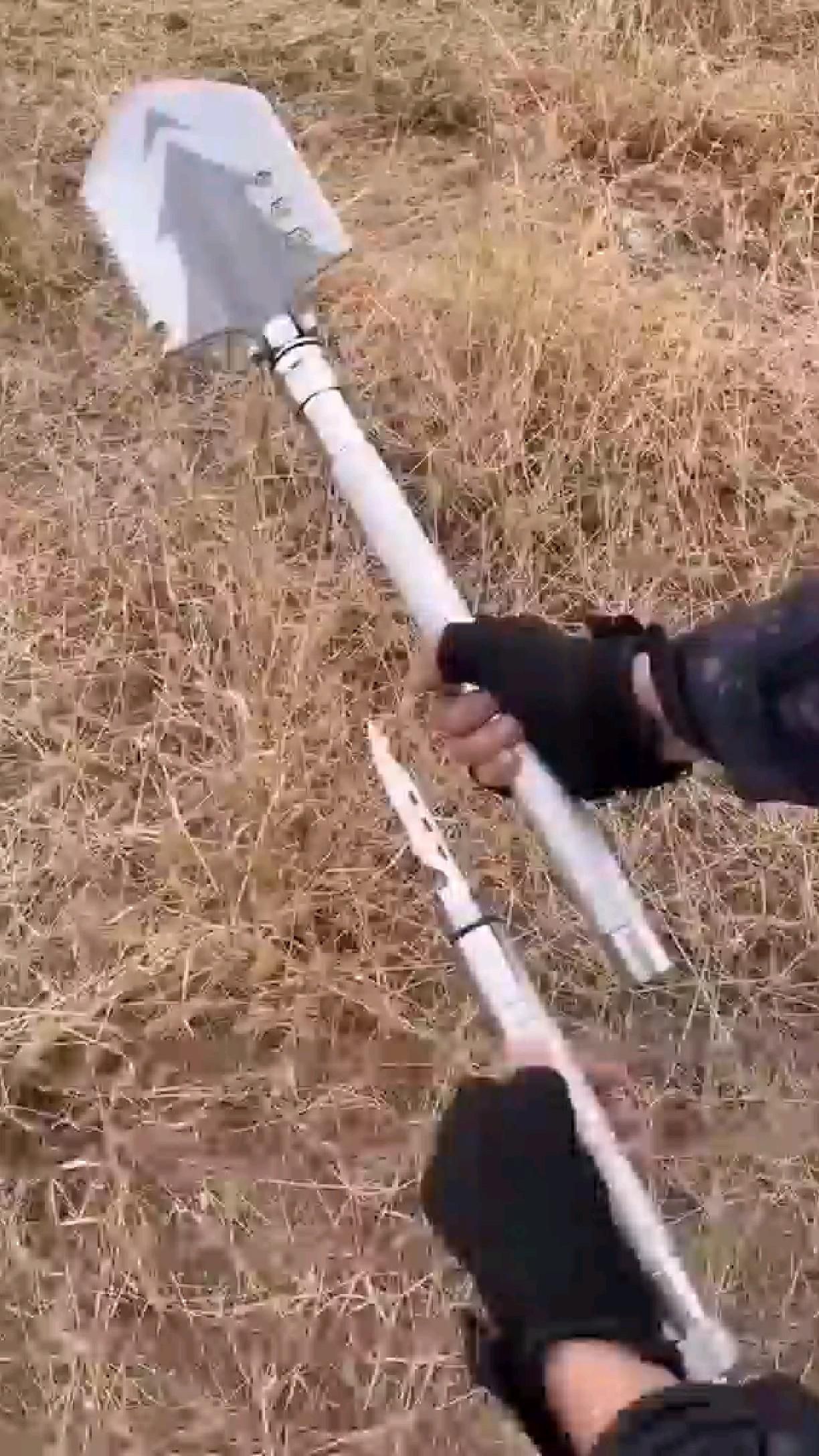
A compact shovel that doubles as a field tool kit for digging, chopping, sawing, and camp-duty work
This is the kind of outdoor tool designed for people who want more capability than a basic camp trowel without carrying a full-size spade, hatchet, and saw separately. The collapsible survival shovel format combines a sharpened digging blade, reinforced handle sections, and extra utility features into one packable tool that can move from trail work to emergency use surprisingly quickly.
The Standout Appeal & Why It Caught Our Attention
What makes this style of shovel interesting is its multi-role design. Instead of being limited to digging, the head is shaped to work as a shovel, scraper, cutter, and light chopping edge, while the handle appears to break down or extend for easier transport. In the images, the blade includes a serrated edge, cutout holes, and an angular profile that suggests it is meant to do more than move dirt. That matters in real outdoor use, where one tool often ends up handling roots, kindling, fire prep, trenching, and campsite clearing.
- More versatile than a standard folding shovel thanks to the aggressive blade geometry
- Pack-friendly because the shaft appears modular or collapsible
- Useful in off-grid situations where carrying separate tools is impractical
Key Features & How It Works
Based on the visuals and the provided product context, this is a multifunctional survival shovel with a heavy-duty metal blade and a segmented metal handle. The blade appears to be made from stainless steel or manganese steel, which is common for tactical shovels because it balances corrosion resistance with impact durability.
- Collapsible or modular handle: The shaft sections appear to screw together, letting the tool shift between compact storage and longer working length.
- Sharpened shovel head: The blade has a pointed, angular front edge for penetrating compact soil and cutting into roots.
- Serrated side edge: One side of the head includes saw-like teeth for light wood cutting, root trimming, or scraping.
- Reinforced neck and locking joint: The connection between blade and handle looks thick and braced, which is critical on tools that take twisting force while digging.
- Integrated utility cutouts: The hex-shaped holes in the blade may function as wrench cutouts or weight-reduction features while preserving rigidity.
- Hammer or striking end: The butt end of the handle appears capped with a hardened metal tip, useful for pounding stakes or breaking compacted ground.
- Convertible accessory section: One frame shows a secondary attachment or fold-out piece, consistent with survival shovels that add functions like a knife, saw, or fire-starting component.
The overall idea is simple: one compact tool replaces several camp and emergency implements. You extend or assemble the handle, lock the head into position, and use the blade angle and edge type depending on the task.
Practical Everyday Uses
This tool is most useful for people who spend time in places where the ground, brush, and weather are unpredictable.
- Camping and overlanding: Dig a fire pit, clear a tent perimeter, chop small roots, move hot cookware carefully, or prepare a drainage trench around camp in wet conditions.
- Hiking and survival kits: Carry it as a compact emergency tool for trail clearing, shelter setup, or digging out a stuck wheel or buried gear.
- Vehicle and roadside use: Keep it in a trunk for mud, sand, snow-edge digging, stake driving, or basic recovery work when a full-size shovel would take too much space.
Things To Consider Before Buying
Multifunction shovels are useful, but they work best when matched to realistic expectations. They are more capable than a small trowel, but they are still a compromise compared with dedicated full-size tools.
- Check the steel type: Higher-grade stainless or manganese steel will matter if you expect repeated chopping, prying, or rocky-ground digging.
- Look at the locking mechanism: A survival shovel is only as good as its joint strength. Loose threads or weak pivots can reduce confidence under load.
- Consider packed size vs. working length: Shorter tools are easier to carry, but longer handles provide better leverage for real digging.
- Know the legal and safety implications: Sharpened edges, saw teeth, and tactical styling may require careful storage and transport.
- Be realistic about use: It is excellent for portable utility, but if you regularly dig deep holes or split thick wood, a dedicated shovel or hatchet will still outperform it.