
A walking cane that unfolds into a stable seat in seconds
The Ta-Da Chair is one of those rare mobility products that solves two problems at once: it gives you everyday walking support, then quickly converts into a compact tripod seat whenever standing becomes tiring. Instead of carrying both a cane and a folding stool, this design merges them into a single, highly portable tool that stays slim while walking and becomes genuinely useful the moment you need a rest.
The Standout Appeal & Why It Caught Our Attention
What makes this design so compelling is its transforming mechanism. In cane mode, it remains narrow and easy to place on the ground like a standard support stick. In seat mode, the hidden legs swing outward and the folded seat panel opens up into a perched resting platform. That means the product is not just a novelty hybrid—it is a practical answer for people who often need frequent short breaks but do not want to carry bulky seating.
- Dual-purpose mobility aid: combines walking support and portable seating.
- Fast deployment: the seat and tripod legs appear through a simple unfolding action rather than a complicated assembly process.
- Space-efficient form: folds into a compact cane-like profile that is easier to store than a separate stool.
Key Features & How It Works
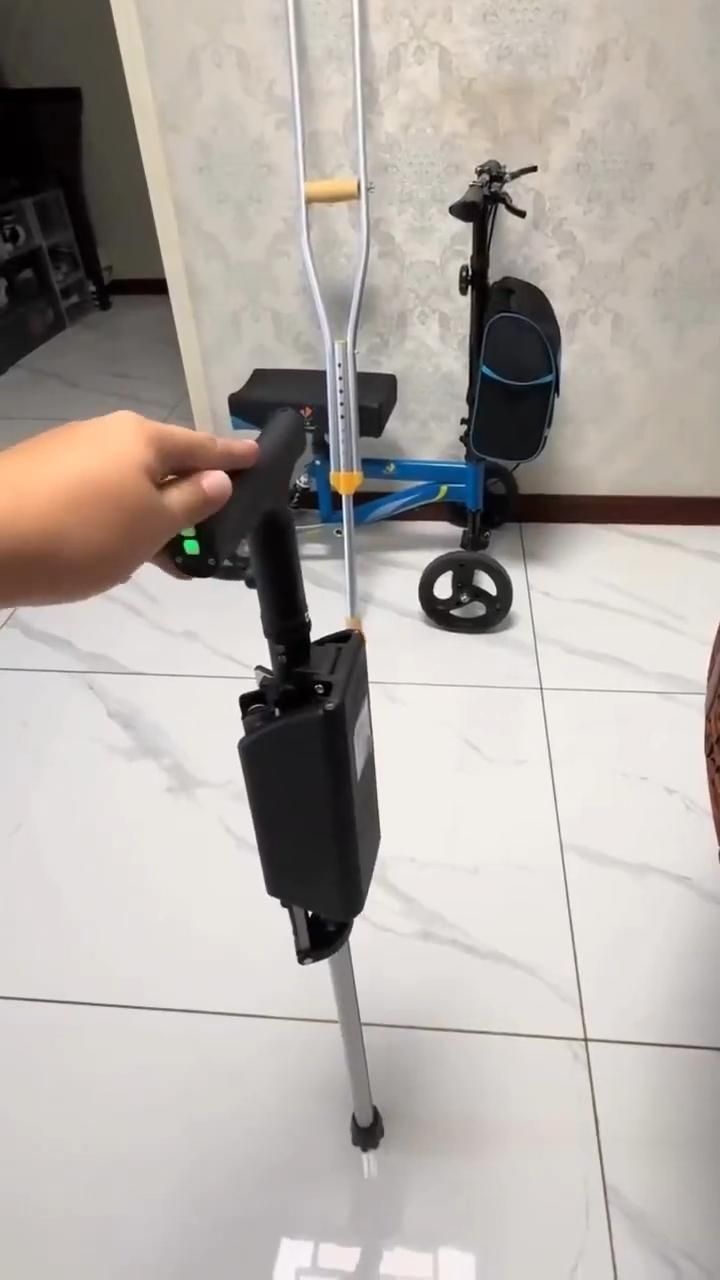
From the visuals, the Ta-Da Chair uses a lightweight metal frame with a black molded handle, a central shaft, and a compact folded housing that contains the seat structure. The lower section appears to use a rubber cane tip for traction in walking mode, while the deployed configuration creates a three-point base for seated stability.
- T-handle grip: designed for one-handed support and leverage during walking.
- Integrated folding seat: the black seat panel folds flat against the body when not in use.
- Tripod leg deployment: the support legs swing outward from the central hub to create a wider footprint.
- Perch-style seating geometry: intended more for resting than lounging, which helps keep the product compact.
- Metal construction: likely aluminum or a similar lightweight alloy to balance portability with load-bearing strength.
- Mechanical hinge system: the transformation appears to rely on linked pivots and locking joints rather than removable parts.
Practical Everyday Uses
This is the kind of product that becomes especially valuable in situations where walking is manageable, but standing still for long periods is the real challenge.
- Travel and sightseeing: useful for museum lines, guided tours, transit waits, or theme parks where benches are not always nearby.
- Daily errands: ideal for grocery queues, pharmacy visits, outdoor markets, or waiting for rides.
- Events and outdoor use: handy for parades, community gatherings, fishing spots, or spectator situations where a quick seat makes a big difference.
Things To Consider Before Buying
As clever as the design is, buyers should treat it as a support cane plus emergency resting seat, not a full replacement for a medical walker or a large camp chair. It is also important to match the product to your body size and intended use.
- Check weight capacity: this matters more than with a normal cane because the frame must support seated body weight.
- Confirm height fit: cane height and seat height should both suit the user for safe walking and comfortable perching.
- Use on stable ground: tripod seating works best on flat, non-slippery surfaces.
- Expect a perched sit: the seat is compact and functional, not cushioned lounge seating.
- Practice the folding action: users should get comfortable opening and closing it at home before relying on it outdoors.