
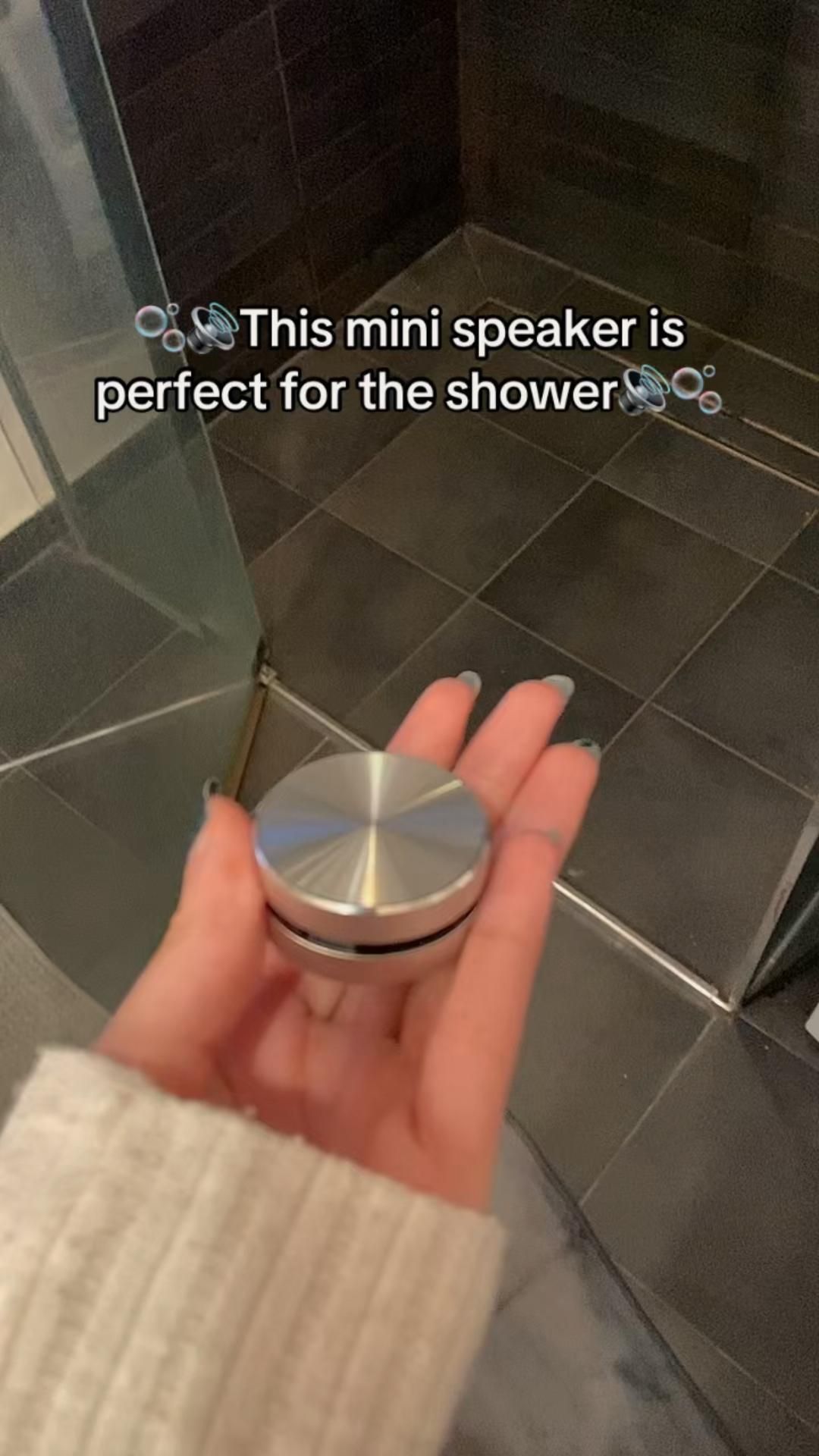
A palm-sized speaker that turns your shower glass into the sound system
This compact bone conduction vibration speaker does something ordinary Bluetooth speakers cannot: instead of relying only on a traditional outward-facing driver, it transfers sound as mechanical vibration into the surface it is attached to. In the bathroom, that means a thin glass panel, mirror, or acrylic shower wall can become the amplifier itself, creating a surprisingly room-filling effect from a puck-sized unit.
The Standout Appeal & Why It Caught Our Attention
What makes this style of speaker interesting is that the surface becomes part of the audio system. The small metal puck design is intentionally minimal because the real acoustic body is not inside the speaker housing at all. Once attached to glass, wood, plastic, or even cardboard, the object underneath changes the tone, resonance, and perceived loudness. That gives it a playful experimental side, but it is also genuinely practical in places where a bulky speaker is inconvenient, especially around the shower.
- Much smaller than a normal bathroom speaker, yet capable of sounding larger when mounted to the right surface.
- Different materials create different sound signatures, so users can tune the experience by placement rather than EQ alone.
- Clean industrial design with a brushed metallic circular face that looks more like a magnetic puck than a conventional speaker.
Key Features & How It Works
Based on the visuals and the known product type, this is a mini resonance speaker with a circular metal housing and a compact, disc-like form factor designed to press firmly against flat surfaces. Rather than pushing air through a large cone, it uses an internal transducer to convert audio into vibration.
- Bone conduction / resonance audio output: the internal driver vibrates the contact surface, which then radiates sound outward.
- Brushed metal top cap: the visible machined finish suggests a rigid outer shell that helps the unit feel durable and premium in hand.
- Compact puck shape: easy to place on shower glass, windows, mirrors, desks, storage bins, or hollow containers.
- Surface-dependent acoustics: glass tends to sound bright and spacious, wood often adds warmth, while hollow plastic or boxes can exaggerate bass and volume.
- Bathroom-friendly use case: the video shows it mounted directly to glass near the shower, where the panel acts as a broad resonating plate.
- Wireless convenience: products in this category are typically Bluetooth-based and rechargeable, which suits temporary placement around the home.
The black ring visible around the body likely separates the outer shell sections and may also help with grip or sealing. The key to performance is firm contact on a smooth, stable surface; the better the coupling, the stronger the resonance effect.
Practical Everyday Uses
This is the kind of audio accessory that makes the most sense for people who want sound in awkward spaces without adding another bulky speaker to the room.
- Shower listening: attach it to a glass shower panel or bathroom window so the whole surface helps project podcasts, playlists, or white noise while keeping the speaker itself tiny and out of the way.
- Desk and home office experiments: place it on a wooden desk, cabinet, or shelf to create a more immersive near-field sound effect from a very small footprint.
- Travel or small-room use: use a suitcase shell, storage box, or bedside table as an improvised amplifier when you want more sound without packing a larger speaker.
Things To Consider Before Buying
This is a clever alternative to a normal portable speaker, but it works best when buyers understand its limitations.
- Sound quality depends heavily on the surface; not every wall or panel will produce the same volume or bass.
- Smooth, rigid materials work best; textured, soft, or unstable surfaces reduce the resonance effect.
- It is not the same as a waterproof floating speaker; if using it in a bathroom, check the actual water-resistance rating and avoid direct soaking unless specifically rated for it.
- Mounting method matters; some versions rely on adhesive pads, magnets, or pressure contact, so confirm what is included.
- Expect novelty plus utility, not hi-fi precision; the appeal is creative amplification and compactness rather than audiophile-grade stereo imaging.