
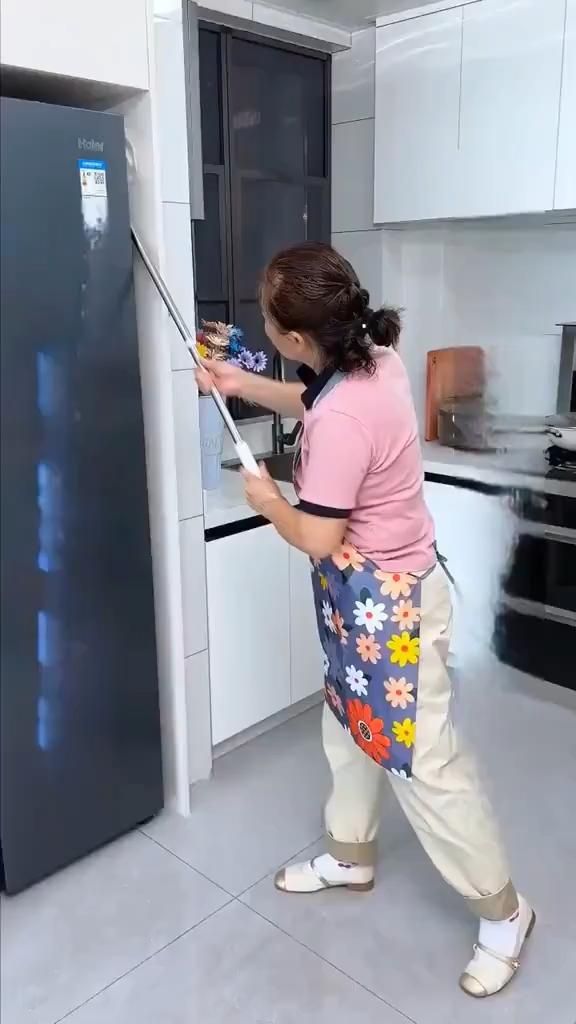
A compact mop that turns everyday wipes, towels, and old rags into a zero-touch cleaning tool
The Snap Grip Mini Mop is built around a simple but genuinely clever idea: instead of relying on proprietary mop pads, it lets you clamp common household cloths directly onto a small flat head, then release the dirty material without handling the mess. That makes it especially useful for bathrooms, kitchen grease, sink edges, cabinet fronts, and all the awkward places where a full-size mop feels oversized and a hand rag feels unhygienic.
The Standout Appeal & Why It Caught Our Attention
What makes this design interesting is its mix of upcycling practicality and touch-free cleanup. The mop head is intentionally much smaller than a standard floor mop, so it behaves more like a precision cleaning tool than a broad sweeping one. In the images, it is used on toilet edges, countertops, glossy tile floors, cabinet faces, and narrow gaps beside appliances—exactly the kind of spaces where people usually crouch down with a disposable wipe in hand.
Its appeal is not just convenience. It also solves two common frustrations:
- Waste from single-purpose refills by accepting face towels, wet wipes, paper towels, and thin rags.
- Direct contact with dirty cloths thanks to a push-button or slide-release mechanism that drops used material straight into the trash.
That combination gives it a smart middle ground between a disposable wipe and a traditional mop.
Key Features & How It Works
The visible design shows a flat rectangular cleaning plate, a lightweight multi-section metal handle, and a central locking mechanism on the mop head. The system appears designed to tension a cloth across the base so it stays flatter and more controlled than simply wrapping a rag around a stick.
- Quick-release cloth lock: A central slider/button on the mop head secures the cloth in place, then releases it with one press for no-touch disposal.
- Universal cloth compatibility: It works with thin materials such as disposable face towels, kitchen wipes, paper towels, and cut-down old garments rather than requiring branded refill pads.
- Compact mop head: The smaller footprint helps it reach toilet sides, sink rims, backsplash corners, window ledges, and the narrow gap beside refrigerators or cabinets.
- Extendable long handle: The segmented pole gives enough reach for high cabinet doors, wardrobe panels, shower walls, and dusting above eye level.
- Wet or dry cleaning: Use it dry for hair, lint, and dust, or damp with a towel for water spots, grease film, and bathroom residue.
- Flat-edge wiping geometry: The straight head shape is useful for pushing into edges and cleaning flush against flat surfaces like mirrors, cabinet fronts, and tile.
In practice, this is less of a heavy-duty mop for large wet floors and more of a detail-cleaning tool for fast daily maintenance.
Practical Everyday Uses
This mop makes the most sense in homes where quick wipe-downs happen constantly and users want more reach than a hand towel provides.
- Bathroom touch-up cleaning: Clamp on a disposable face towel to remove hair around the toilet base, wipe sink splashes, and clean the outer edges of the toilet lid without kneeling.
- Kitchen grease and cabinet maintenance: Use a damp kitchen wipe to clean backsplash tiles, range hood surrounds, cabinet doors, and the narrow side panel between appliances and walls.
- Dusting with old fabric: Repurpose worn T-shirts or soft cloth scraps for wardrobe doors, wall panels, baseboards, and high corners where a bulky mop head would be awkward.
It is especially useful for apartment dwellers, older users who want less bending, and anyone who already keeps disposable wipes or old towels around for cleaning.
Things To Consider Before Buying
Before ordering, it is worth treating this as a specialized small-area cleaner rather than a full replacement for a standard mop.
- Cloth thickness matters: It works best with thin, flexible materials. Thick bath towels or bulky fabrics may not clamp evenly.
- Best for detail work, not large rooms: The compact head is excellent for corners and fixtures, but slower for cleaning an entire floor.
- Mechanism quality can vary by seller: Many versions are sold under different names, so check whether the handle sections, lock slider, and hinge look sturdy.
- No built-in water tank: You will need to pre-wet the cloth or use a separate cleaner if you want spray-mop style operation.
- Disposable vs reusable use: If your goal is maximum convenience, disposable wipes are easiest; if your goal is lower waste, keep a stack of cut cloths sized for the head.
For buyers who want a nimble, low-contact way to clean tight household surfaces with materials they already have, this is a surprisingly thoughtful little tool.