
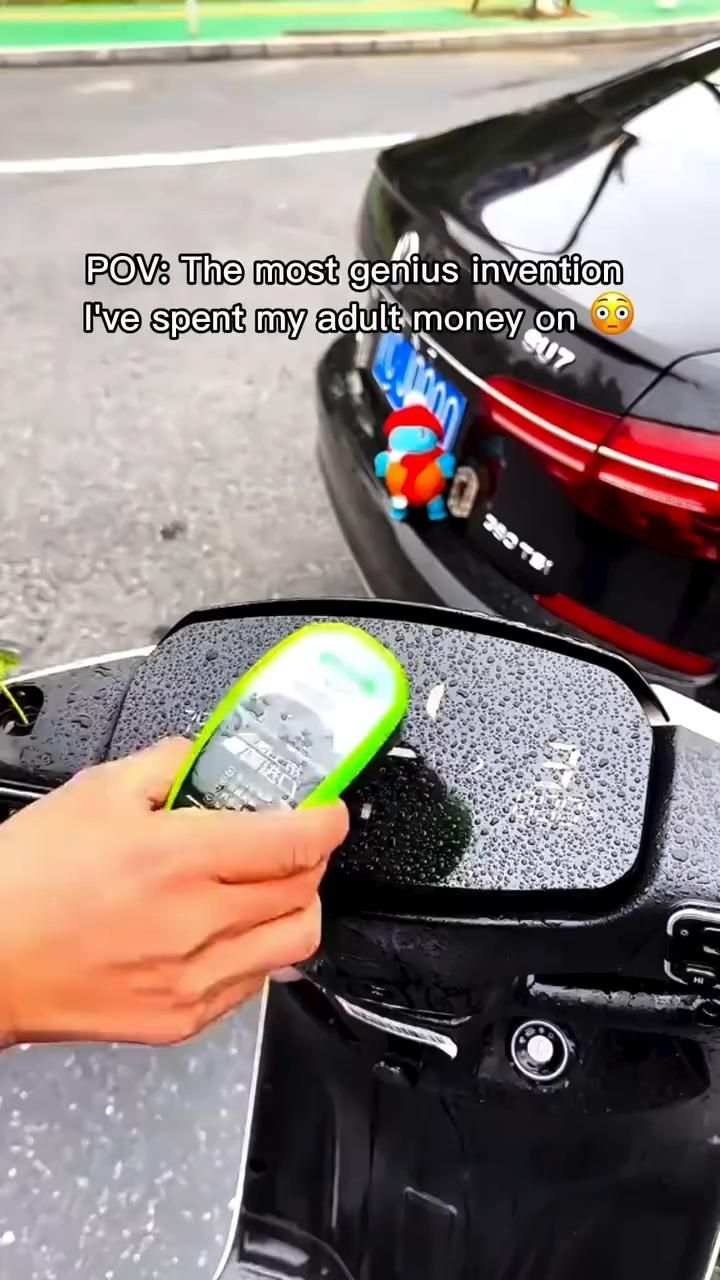
A compact brush designed to break up oily road film so water finally sheets off glass and glossy panels
The Oil Film Brush 2.0 is a handheld detailing tool made for one of the most annoying car-care problems: that stubborn greasy film that makes mirrors, windows, instrument covers, and painted surfaces stay smeared even after a rinse. From the visuals, it’s being used on wet vehicle surfaces where ordinary water alone would bead, haze, or leave a cloudy layer behind. Its appeal is simple but smart: apply pressure by hand, scrub with a purpose-built pad, then rinse away loosened grime and residue for a clearer, more water-friendly finish.
The Standout Appeal & Why It Caught Our Attention
What makes this tool interesting is that it targets oil film rather than treating every dirty surface like it just needs more soap. Road grime often contains traffic film, exhaust residue, skin oils, wax buildup, and environmental fallout that cling to glass and glossy plastics. A dedicated brush like this gives users a more controlled, localized way to remove that layer without dragging around a full wash mitt or machine polisher.
- Compact palm-sized format makes it easy to work on mirrors, rear glass, scooter dashboards, and tight trim areas.
- Manual scrubbing control helps focus pressure exactly where visibility problems or water spotting are worst.
- Useful on wet surfaces as shown in the images, where the tool is worked directly over rainwater and cleaner residue.
Key Features & How It Works
Based on the images, the Oil Film Brush 2.0 appears to use a rectangular scrubbing face mounted to an ergonomic body with a bright green outer shell and dark top surface. The shape gives it more contact area than a sponge corner, while still being small enough for one-handed use.
- Flat brush/pad head helps maintain even contact across glass, mirrors, and smooth painted panels.
- Ergonomic handheld body improves grip when working in rain or during rinsing.
- Designed for degreasing film on exterior glass and glossy surfaces where visibility and water behavior matter.
- Rinse-and-repeat workflow: wet the surface, apply cleaner if needed, scrub in overlapping passes, then rinse to reveal whether the film has been lifted.
- Precision detailing size makes it more practical than a large wash brush for side mirrors, rear windows, and motorcycle or scooter display covers.
The visible cleaning demonstrations suggest the tool is especially effective when paired with a dedicated oil film remover, glass cleaner, or detailing solution rather than used completely dry.
Practical Everyday Uses
This is the kind of tool that becomes useful when a vehicle looks clean from a distance but still performs poorly in rain, at night, or under parking-garage lighting.
- Side mirror recovery: If mirrors stay blurry or streaky in wet weather, this brush gives you a fast way to scrub off the greasy layer that causes poor visibility.
- Rear and side glass maintenance: Great for drivers dealing with water sheeting issues, traffic film, or hazy glass after commuting in urban conditions.
- Scooter and motorcycle displays: The compact size suits instrument covers and smaller glossy panels where a full-size wash tool feels clumsy.
Things To Consider Before Buying
Like many detailing tools, results will depend on technique and the cleaning liquid used with it.
- Check pad material compatibility before using on delicate tinted film, soft plastics, or freshly coated surfaces.
- It is a targeted cleaning tool, not a full replacement for washing, polishing, or ceramic coating maintenance.
- Use lubrication such as water or a suitable cleaner to reduce the chance of dragging grit across the surface.
- Inspect the pad regularly and rinse it often, especially if you are working on heavily contaminated glass.
- Expect best results on smooth surfaces like mirrors, windows, glossy trim, and display covers rather than textured plastics.