
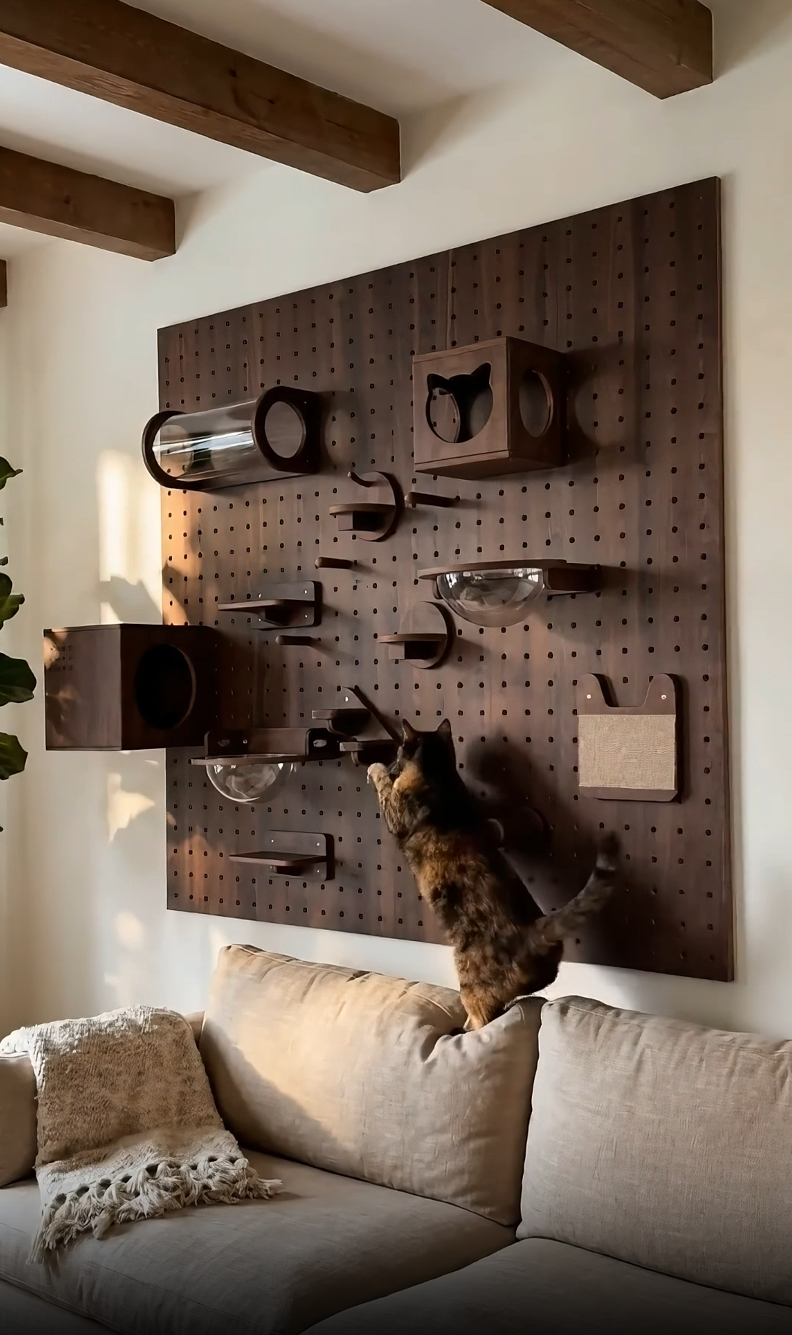
A reconfigurable cat climbing wall that lets you redesign the layout without redrilling your room
This is a modular wall-mounted cat playground built around a large wooden pegboard back panel. Instead of permanently fixing every shelf, step, bed, and hideout directly into drywall, the main board mounts once and the individual cat elements slot into the perforated grid. The result is a much cleaner way to build an indoor climbing zone for cats while keeping the setup flexible as your pet’s habits change.
The Standout Appeal & Why It Caught Our Attention
Most cat walls are either visually chaotic or frustratingly permanent. This system stands out because it treats cat furniture more like architectural storage: a unified dark-wood wall panel that can be rearranged into new paths, rest spots, and climbing routes. It looks intentionally designed for a living room rather than like a random collection of shelves.
- Single backboard concept: the main pegboard centralizes mounting, so layout changes happen on the board instead of across your wall.
- Modular enrichment: you can mix sleeping pods, stepping shelves, enclosed condos, scratching sections, and tunnels into one connected route.
- Interior-friendly styling: the walnut/dark oak look, rounded parts, and clear acrylic elements feel closer to modern furniture than typical carpeted cat trees.
Key Features & How It Works
From the images, this setup uses a large perforated wooden wall panel with evenly spaced holes that accept removable mounted components. The included accessories appear to lock or peg into selected positions, allowing a custom climbing path from left to right and up or down the panel.
- Solid wood construction: thick stained boards with a dark finish, likely designed for better rigidity and a more premium furniture appearance.
- Pegboard mounting grid: the perforated back panel acts as the structural base, letting owners reposition modules without drilling new anchor points for every change.
- Enclosed cat condo: a cube house with a stylized cat-head entrance cutout provides a sheltered perch and hideaway.
- Clear acrylic capsule perch: a transparent bowl-style bed lets cats curl up while still keeping sightlines open in the room.
- Transparent tunnel module: an acrylic transit tube with wooden end supports creates a bridge-like route and encourages exploration.
- Step and shelf assortment: small perches, larger landing shelves, and angled staircase pieces help create routes for agile cats or gentler climbs for cautious ones.
- Scratching element: a mounted sisal or textured scratching panel adds claw maintenance without needing a separate floor scratcher nearby.
- Large-format installation: the visual scale suggests a multi-panel or oversized board setup, similar to the large 47-inch to 94-inch class modular kits often sold online.
The real engineering advantage is that the path design is adjustable. If your cat ignores one route, prefers lower steps, or starts favoring hidden spaces, you can shift the modules around and test a better arrangement.
Practical Everyday Uses
This kind of system is especially useful for cat owners who want to reclaim floor space while giving indoor cats more vertical territory.
- Small-home enrichment: in apartments or living rooms where a bulky cat tree would dominate the floor, the wall system turns unused vertical space into climbing, lounging, and scratching territory.
- Multi-cat route planning: owners can create several stop points, hideouts, and pass-through zones so cats can perch at different heights instead of competing for one top platform.
- Design-conscious pet furniture: for homes with modern wood interiors, exposed beams, neutral sofas, or built-in styling, this works as both functional pet furniture and a statement wall installation.
Things To Consider Before Buying
This is a more serious installation than a simple cat shelf, so buyers should think through structure, scale, and pet behavior before ordering.
- Wall strength matters: confirm the mounting surface can safely support a large pegboard plus the dynamic weight of jumping cats. Stud placement and hardware quality are critical.
- Room clearance: check width and height carefully, especially if placing it above a sofa or near windows, curtain panels, or artwork.
- Cat size and agility: large cats may need wider shelves and stronger spacing logic, while older cats may benefit from shorter vertical intervals between steps.
- Module count varies by kit: some listings include a full layout with tunnels, bowls, condos, and steps, while others may sell the backboard and attachments separately.
- Finish and maintenance: dark wood and clear acrylic look refined, but acrylic bowls and tunnels will show fur, paw prints, and dust more quickly than opaque materials.