
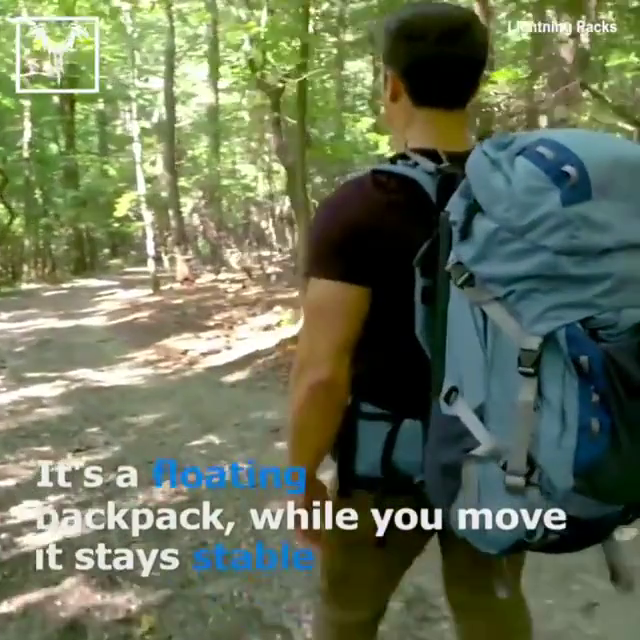
A backpack that actively softens the punishment of heavy loads
The HoverGlide is not just another hiking pack with extra straps. Its defining trick is a Suspended Load Technology frame that lets the bag move vertically in a controlled way, helping reduce the jarring up-and-down impact that normally travels from a loaded backpack into your shoulders, spine, hips, knees, and ankles. For hikers, trekkers, and anyone carrying weight over long distances, that changes the feel of movement in a very tangible way.
The Standout Appeal & Why It Caught Our Attention
Most backpacks try to solve comfort with thicker padding, better ventilation, or improved weight distribution. HoverGlide takes a more engineering-driven route: instead of only cushioning the wearer, it attempts to decouple the load from the body’s vertical bounce. That means the pack can remain more stable while your body moves underneath it.
- Impact-focused design: built to reduce repetitive shock rather than simply hold gear.
- Noticeably different frame architecture: the external suspension rails and harness structure are the real story here, not just the fabric shell.
- Useful beyond hiking: the concept also makes sense for fast walking, stair climbing, rucking, and long urban carries.
It stands out because it treats backpack discomfort as a motion problem, not just a padding problem.
Key Features & How It Works
Based on the provided context and visuals, this tactical beige HoverGlide pack uses a vertical sliding frame system mounted behind the wearer. The bag appears attached to a guided suspension structure that allows controlled up-and-down travel while the harness stays anchored to the body.
- Suspended Load Technology: the pack floats vertically relative to the harness, helping smooth out the impact spikes created during walking, jogging, or descending stairs.
- Claimed force reduction: marketed as reducing impact forces on the body by up to 86%, especially relevant when carrying heavier loads over time.
- External frame rails: visible black support members behind the back suggest a rigid track or guided suspension assembly rather than a conventional internal frame.
- Stabilized harness system: shoulder straps and a substantial waist belt keep the wearer-side structure secure while the load moves independently.
- Tactical-style bag body: the beige version shown uses a structured rectangular pack with compression straps, multiple zip compartments, and MOLLE-style webbing for modular attachment options.
- Large-capacity format: suitable for bulkier loads such as trail gear, extra layers, food, camera equipment, or training weight.
The practical idea is simple: when your body rises and falls with each step, the backpack’s suspended mechanism helps prevent the full load from slamming in sync with you. That can translate to less fatigue and less cumulative stress on joints during long wear sessions.
Practical Everyday Uses
This is a niche product, but in the right situations it can be far more meaningful than a standard pack.
- Long-distance hiking and trekking: useful for people covering uneven trails, descents, and extended mileage where repetitive impact becomes more exhausting than the static weight itself.
- Rucking and fitness training: if you intentionally carry heavy loads for conditioning, reducing harsh bounce can make movement feel more controlled and less punishing.
- Urban stair-heavy carry: photographers, commuters, field workers, or travelers moving through stations, steps, and long walking routes may appreciate the reduced jolt compared with a normal heavy backpack.
It is especially compelling for users who already know that a heavy pack doesn’t just feel heavy—it feels hammering after enough steps.
Things To Consider Before Buying
Because the HoverGlide uses a specialized suspension frame, it is worth thinking beyond raw storage capacity.
- Bulk and profile: the external floating frame adds structure and depth, so it may feel larger and less low-profile than a conventional daypack.
- Best use case: the technology makes the most sense when carrying moderate to heavy loads over distance; for light everyday carry, the complexity may be unnecessary.
- Fit matters: torso length, waist belt placement, and harness adjustment will be especially important since the suspension system depends on stable body-side anchoring.
- Movement style: users should expect a different feel than a rigid pack. Some may love the floating sensation immediately, while others may need a short adjustment period.
- Trail and travel compatibility: if you frequently squeeze into tight transport spaces or prefer minimalist gear, the frame design may be less convenient than a standard soft pack.
For buyers who prioritize joint stress reduction and load comfort over simplicity, this is a genuinely inventive alternative to the traditional backpack formula.