
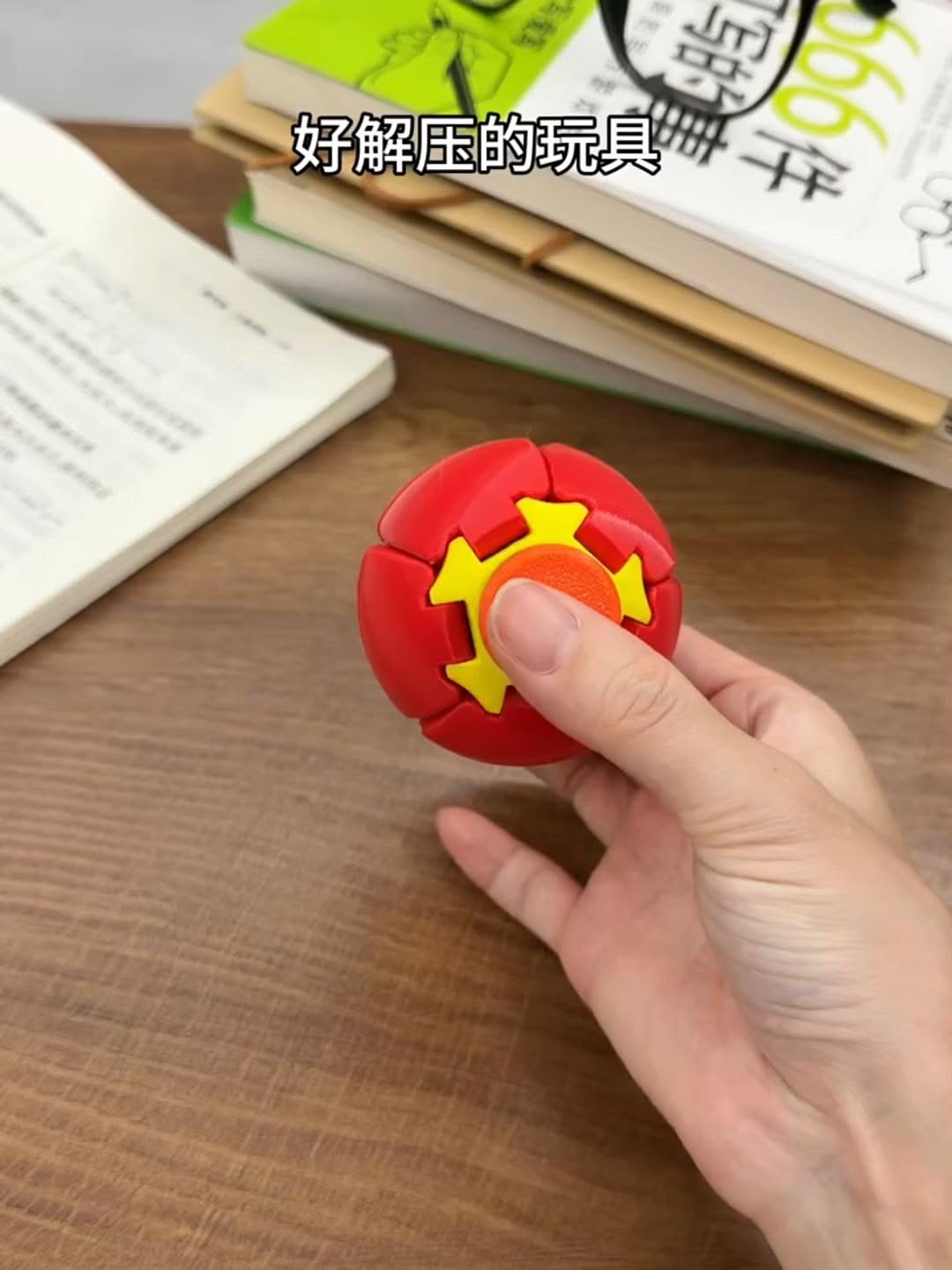
A pocket-size stress toy that transforms a thumb press into a satisfying tabletop spin
The HelixCore – Press-to-Spin Squishy Ball blends two calming behaviors into one compact object: soft squeezing in the hand and gyroscopic-style spinning on a desk. Instead of acting like a standard foam stress ball or a basic fidget spinner, it uses a compressible segmented shell and a central press point to shift from squishy tactile toy to spinning kinetic object in seconds.
The Standout Appeal & Why It Caught Our Attention
What makes this design interesting is its hybrid interaction. Most fidget toys do one thing well: they click, spin, stretch, or squish. This one appears built around a more dynamic routine. You can press the center, compress the body, and then set it into motion, creating a more engaging sensory loop than a static stress reliever.
- Dual-mode play: functions as both a soft hand-held stress toy and a spinning desk toy.
- Compact spherical form: easy to palm, carry, and use one-handed during work or study breaks.
- High-contrast design: the red outer shell, yellow inner structure, and orange press caps make the moving parts visually obvious and more fun to watch while spinning.
Key Features & How It Works
From the visuals, the HelixCore uses a layered ball construction with red outer segments that open slightly under pressure, revealing a yellow inner core. The center appears to feature pressable end caps on opposite sides, likely used to grip, compress, or initiate the spin. Once released onto a flat surface, the rounded body rotates like a top, with the segmented shell creating a visible motion effect.
- Segmented squishy shell: the outer body is divided into curved sections, allowing the ball to flex rather than behave like a rigid top.
- Central thumb press zone: designed for repeated pressing, giving the toy a tactile focal point instead of requiring a full-hand squeeze every time.
- Spin-ready geometry: the ball can be balanced and rotated on a tabletop, adding a kinetic visual payoff after the squeeze.
- Soft-touch handling: the matte, rubbery-looking exterior suggests a grippy feel that is easier to control than hard plastic fidget toys.
- Quiet sensory use: unlike clickers or ratcheting toys, this style appears better suited to shared desks, classrooms, or reading spaces.
Practical Everyday Uses
This is the kind of object that fits naturally into short, repetitive moments throughout the day, especially when your hands need something to do without pulling you fully away from the task in front of you.
- Desk decompression during work: keep it beside a keyboard for quick thumb presses and short spins between emails, calls, or meetings.
- Study break focus reset: useful for students who want a brief physical reset while reading, revising, or working through problem sets.
- Travel or waiting-room fidgeting: small enough to carry in a bag or pocket when you want a quieter alternative to noisy fidget toys.
Things To Consider Before Buying
Because this is a tactile novelty item, the experience depends heavily on how much you value texture, resistance, and motion rather than pure utility. It is also worth checking the exact size and material firmness before ordering.
- Surface matters: spinning performance will be better on smooth, flat desks than on soft fabric or uneven tables.
- Firmness may vary: some users may want a very soft squeeze, while others may prefer a more resistant press-to-spin action.
- Not a high-speed spinner: this appears designed more for calming tactile play than for long-duration precision spinning.
- Check dimensions: if you want true pocket carry or child-sized handling, verify the ball diameter before buying.