
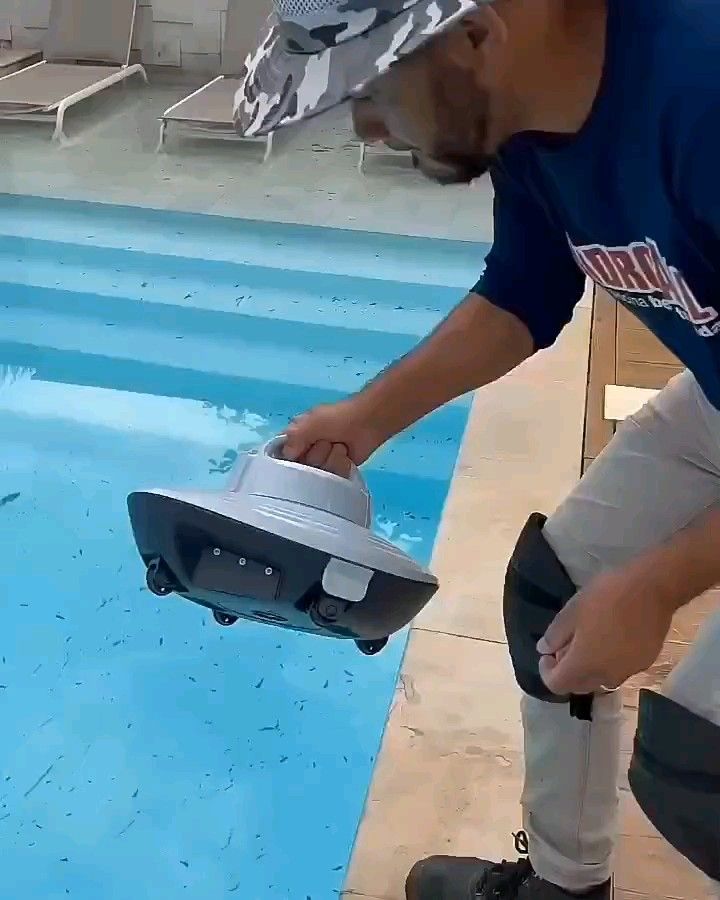
A cordless pool robot that quietly handles floor debris without hoses, booster pumps, or manual vacuuming
The GRENNIX Robot Pool Cleaner is built for one very specific job: roaming the bottom of a pool and collecting the grit, leaves, and fine organic debris that usually turn pool maintenance into a chore. From the visuals, its low-profile saucer-like body, integrated carry handle, and simple underside access all point to a design focused on easy drop-in cleaning and fast post-run rinsing rather than complicated setup.
The Standout Appeal & Why It Caught Our Attention
What makes this cleaner interesting is how much pool upkeep it removes from the routine with a surprisingly compact form factor. Instead of relying on a hose tether or your pool’s pump system, it uses an internal battery and onboard motor to move independently across the floor. That makes it especially appealing for people with flat-bottom above-ground pools or smaller in-ground pools who want a cleaner they can simply switch on, place in the water, and retrieve later.
- Cordless operation means no floating hose to drag around the pool.
- Self-parking behavior helps bring the unit toward the pool edge when battery runs low, reducing the usual fishing-around process.
- Low, wide body shape appears intentionally designed for stability on flat pool floors and for gliding into corners more effectively than bulkier cleaners.
Key Features & How It Works
The user-supplied specifications align well with what is visible in the images: a compact robotic cleaner with underside wheels, a removable lower debris compartment, and a washable internal mesh filter system.
- Up to 6000Pa suction from a high-speed brushless motor helps pull in sand, small leaves, algae, and settled debris from the pool floor.
- Dual suction inlets improve pickup coverage by drawing debris from more than one intake path as the robot moves.
- High-density mesh filtration is visible in the removable internal screen assembly, which is designed to trap debris while still allowing water flow.
- 65-90 minute runtime is suited to routine maintenance cycles in pools up to about 50 feet, provided the floor is flat.
- 2.5-4 hour recharge time keeps turnaround fairly manageable between cleaning sessions.
- Integrated top handle makes it easy to lower into the water and lift out once the cycle is done.
- Simple underside access allows the bottom shell to be opened so leaves and sludge can be removed and the filter rinsed with a hose.
- Retrieval hook compatibility is shown in the images, letting users snag it with a standard pool pole instead of reaching into the water.
Mechanically, this is a floor-only cleaner rather than a wall-climbing robot. It travels along the bottom, vacuums debris into its internal chamber, and then needs to be opened and rinsed after use.
Practical Everyday Uses
This is the kind of pool tool that makes the most sense for owners who want to reduce weekly maintenance friction rather than fully automate every aspect of pool care.
- Above-ground family pools: Drop it in before guests arrive or before a weekend swim to clear the fine leaf bits and dirt that settle overnight.
- Routine maintenance between deep cleans: It can handle the day-to-day debris load so you don’t need to manually vacuum as often.
- Homes with nearby trees or windblown debris: If your pool constantly collects small organic matter on the floor, this robot saves repeated hand-vacuum sessions.
Things To Consider Before Buying
This cleaner is useful, but it is not universal. Buyers should match it to the right pool type and cleaning expectations.
- Flat-bottom pools only: It is designed for flat-bottom above-ground or in-ground pools, not steep slopes or wall-climbing performance.
- Floor cleaning focus: It targets settled debris on the bottom, so it will not replace skimming surface leaves.
- Battery-limited runtime: Larger or dirtier pools may require more than one cycle.
- Regular filter rinsing is essential: Performance depends on cleaning out the mesh screen after use, especially if the pool has lots of leaves or algae.
- Check pool size and debris type: It is well suited to sand, leaf fragments, and light organic debris, but very heavy debris loads may require more frequent emptying.