
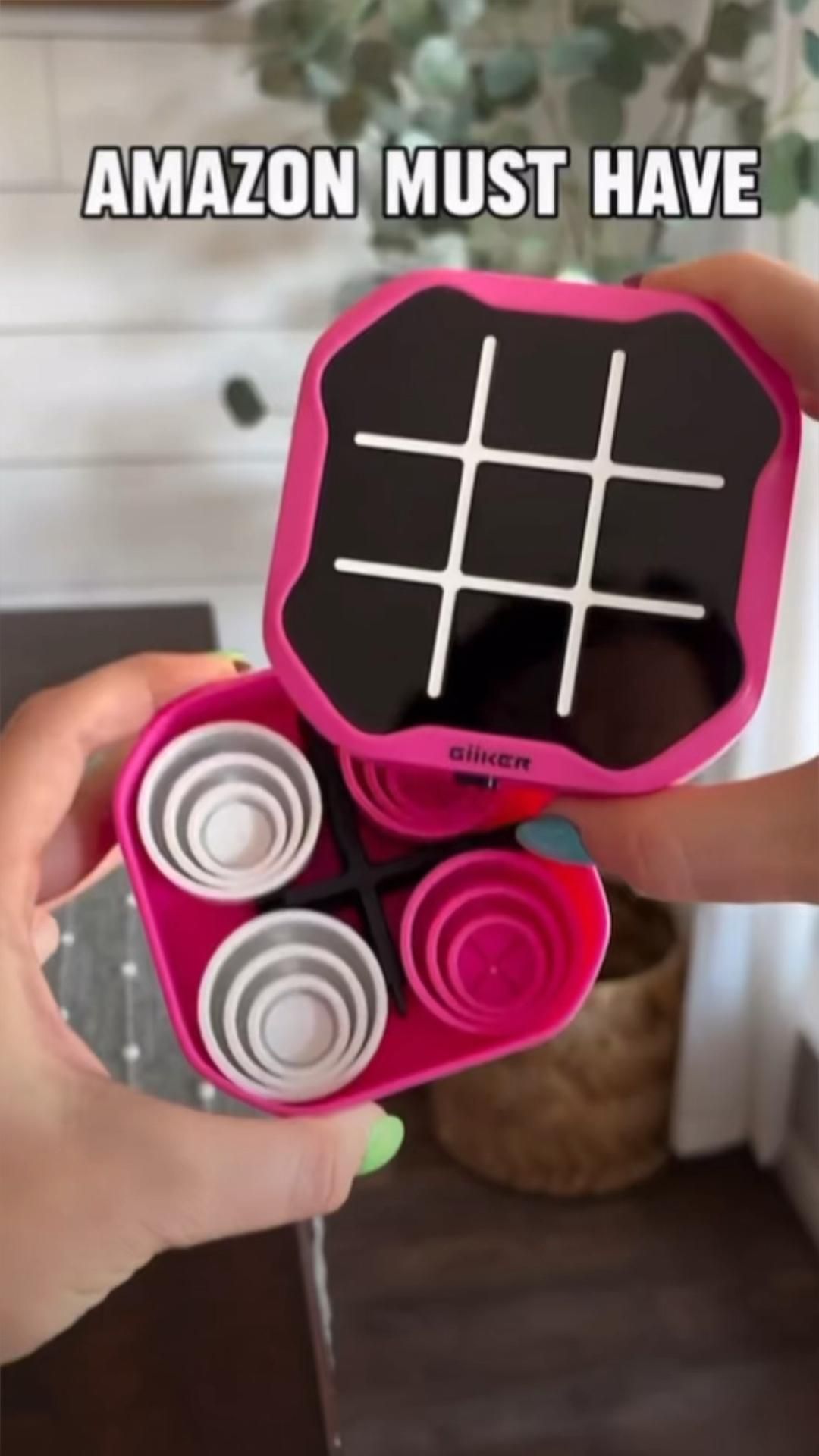
A compact 3-in-1 tabletop game that turns tic-tac-toe into a fast, replayable challenge
This bright pink Giiker game cube combines three different play modes in one small handheld unit: a fading tic-tac-toe mode, a standard manual tic-tac-toe mode, and a memory game mode, plus a physical tic-tac-toe board built into the base.
The Standout Appeal & Why It Caught Our Attention
What makes this item interesting is that it takes a game most people already know and adds speed, memory, and tactile play without making the format complicated. Instead of a single static board, it behaves more like a mini arcade-style puzzle toy: one mode pressures players to move quickly before pieces fade, another keeps the familiar turn-based format for two-player play, and the memory mode adds a developmental layer that feels more like a brain-training toy than a simple board game.
The design also stands out visually. The hot pink shell, black top surface, and high-contrast white grid make it easy to read at a glance, while the stacked, rounded form factor gives it a toy-like presence that’s easy for kids to pick up and carry around.
Key Features & How It Works
This is a multi-mode electronic tic-tac-toe unit with a physical game component. Based on the visuals and transcript, it appears to include:
- Fading tic-tac-toe mode where moves disappear or time out, forcing faster decision-making.
- Manual tic-tac-toe mode for classic head-to-head play.
- Memory mode designed to support recall, pattern recognition, and concentration.
- Physical tic-tac-toe pieces stored in the lower section, giving the toy a hands-on board-game feel.
- A compact clamshell-style body with a visible switch and small front controls for mode selection.
The top surface uses a simple 3×3 grid layout, which keeps the interface intuitive for younger players. The lower compartment appears to hold the game pieces, and the separate black cross-shaped divider pieces suggest the toy is built around modular, reusable components rather than disposable paper play. That makes it more durable and more engaging than a printed board.
Practical Everyday Uses
This kind of toy fits naturally into short, repeatable play sessions where attention spans are limited but interaction matters. It can be useful for:
- After-school downtime when kids want something quick, screen-free, and easy to start without setup.
- Family game time because the manual mode lets siblings or parents play a familiar game in a more portable format.
- Travel or restaurant waiting since the compact body and self-contained pieces make it easier to bring along than a full board game.
The memory mode also gives it a stronger educational angle, making it appealing for parents who want a toy that feels playful but still supports focus, recall, and pattern learning.
Things To Consider Before Buying
Before choosing this game, it’s worth checking a few practical details. Because it appears to be an electronic toy, buyers should confirm the power source and whether batteries or charging are required. The fast-paced fading mode may also be more challenging for very young children, so age fit matters if the goal is frustration-free play. Since the unit is compact, it’s great for portability, but the small pieces mean it should be stored carefully if used around toddlers. Finally, if you’re expecting a traditional board-game experience, keep in mind that the electronic modes make this more of a hybrid puzzle toy than a standard tic-tac-toe set.