
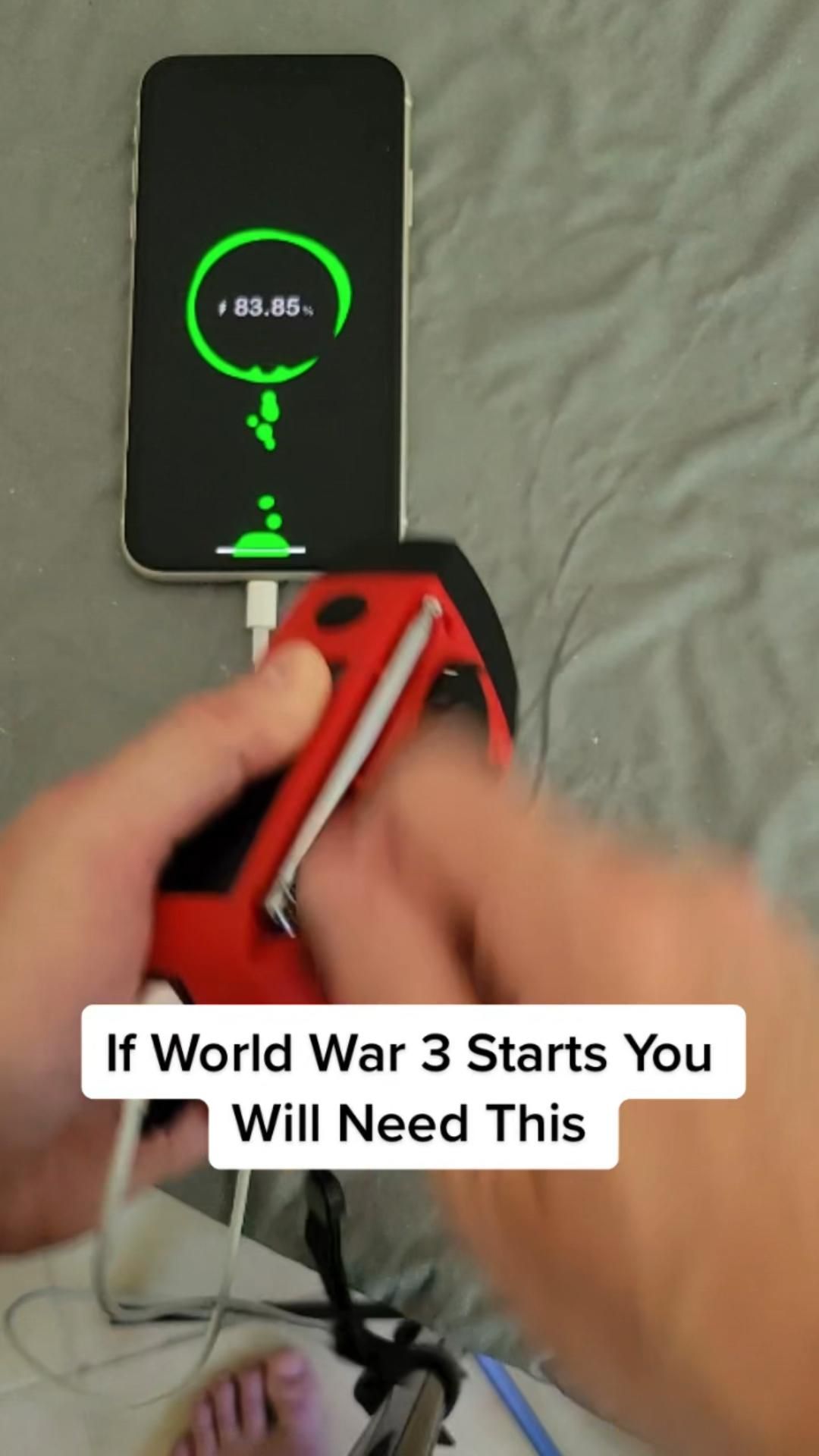
A pocketable hand-crank charger that can generate power when outlets, batteries, and backup plans run out
This compact emergency charger is built around a simple but highly practical idea: manual power on demand. From the images, it appears to be a rugged hand-crank power bank with a fold-out crank handle, USB output, and a body shaped for one-handed use while the other hand turns the generator. It is the kind of tool that becomes relevant not during everyday convenience charging, but during outages, travel disruptions, camping, and emergency kits where even a small amount of phone power can matter.
The Standout Appeal & Why It Caught Our Attention
Most backup batteries are only useful if you remembered to charge them beforehand. This design flips that logic by letting the user create electricity mechanically with a rotating crank. That makes it especially interesting as a resilience tool rather than just another power bank.
- Grid-independent charging: useful when wall power, car power, or solar conditions are unavailable.
- Compact emergency format: small enough to stash in a drawer, glove box, bug-out bag, or camping tote.
- Immediate utility: even partial charge generation can be enough for a call, text, GPS check, or emergency authentication code.
What makes it compelling is not raw charging speed, but the fact that it still works when many modern charging solutions do not.
Key Features & How It Works
Based on the visuals, this is a manual dynamo-style charger housed in a red and black shell with a fold-out crank arm and a wired phone connection.
- Fold-out hand crank: the side-mounted handle appears to rotate a small internal generator that converts motion into electrical output.
- USB charging connection: the phone is connected by cable, indicating direct output to mobile devices or to an internal battery buffer.
- Angular protective housing: the body looks impact-conscious, with a chunky shape that is easier to grip during cranking.
- Portable emergency form factor: it appears small enough for handheld use rather than tabletop operation.
- Likely internal battery support: many products in this category combine hand-crank generation with a small built-in battery for storing some charge between uses, though that should be verified on the exact listing.
The core mechanism is straightforward: turning the crank spins an internal generator, which produces current that can be routed to a connected device. In practice, this usually means slow but functional emergency charging, not fast charging comparable to a wall adapter.
Practical Everyday Uses
This is a niche tool, but in the right situation it can be genuinely valuable.
- Power outage backup: if your phone is nearly dead during a blackout, hand-cranking can provide enough energy for messages, flashlight use, or checking emergency alerts.
- Car and travel emergency kit: useful to keep in a vehicle in case your phone dies and your main battery pack is empty.
- Camping and preparedness setups: a good last-resort charging option for hikers, campers, and anyone building a low-tech emergency kit.
It is especially relevant for people who prioritize self-powered gear over convenience-first electronics.
Things To Consider Before Buying
Manual chargers are practical, but buyers should go in with realistic expectations.
- Charging speed will be limited: these are typically meant for emergency top-ups, not full phone recharges.
- Check output compatibility: confirm the USB output standard and whether it supports your phone’s charging requirements.
- Verify cable and connector type: make sure it works with USB-C, Lightning, or whatever your device needs.
- Look for battery capacity details: some units are direct-crank only, while others include a small internal battery or flashlight.
- Expect physical effort: generating meaningful charge manually takes time and repeated cranking.
If you treat it as a last-resort power source rather than a daily charger, the concept makes a lot more sense.