
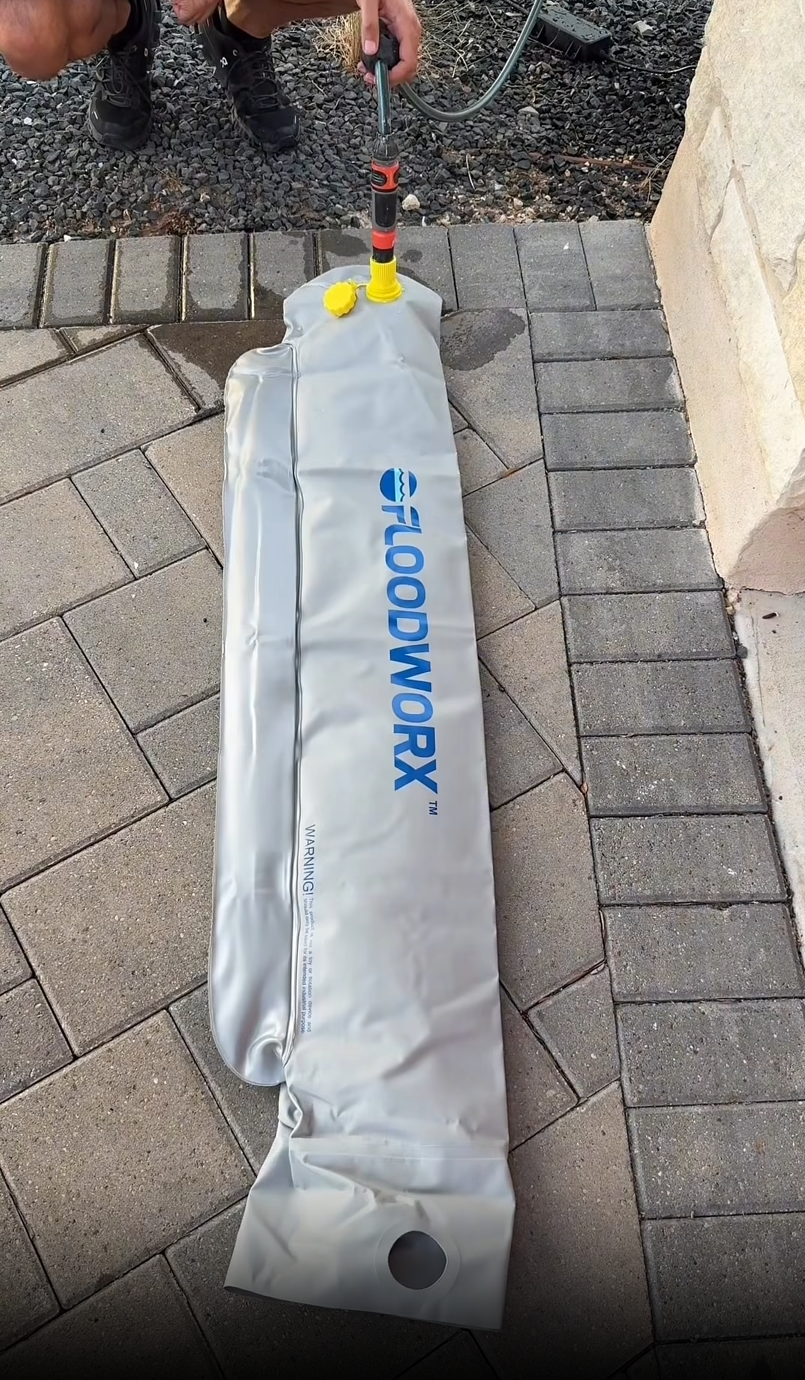
A water-filled flood barrier that replaces messy sandbags with a fast, reusable defense line
The FLOODWORX Reusable Flood Barrier and Water Diverter is a practical storm-prep tool built for people who want something faster, cleaner, and easier to deploy than traditional sandbags. Instead of hauling heavy fill material, you lay it in place, connect a standard garden hose, and let water become the weight that anchors the barrier. The result is a compact emergency barrier that can help redirect shallow floodwater away from doors, garages, patios, and other vulnerable entry points.
The Standout Appeal & Why It Caught Our Attention
What makes this design interesting is its use of water as both the setup medium and the stabilizing mass. That sounds simple, but it solves several old problems at once: storage bulk, labor, cleanup, and disposal. Traditional sandbags are effective but inconvenient to store, heavy to move, and messy after use. FLOODWORX takes a more engineered approach with a dual-chamber layout that helps the barrier stay planted instead of rolling or shifting under pressure.
- Cleaner than sandbags: no sand spills, no ripped sacks, and no muddy cleanup afterward.
- Fast deployment: fill on-site with a hose rather than sourcing and lifting heavy fill material.
- Reusable storm prep: drain it, fold it flat, and keep it ready for the next heavy rain event.
Key Features & How It Works
The barrier shown uses a long, heavy-duty inflatable-style body made from 0.5mm industrial tarpaulin, a material chosen for tear resistance and outdoor durability. Each unit measures roughly 4 feet long, 9 inches wide, and 6 inches high, making it manageable for residential use while still substantial enough to create a low-profile water diversion wall.
- Dual chamber construction: the lower chamber acts like a built-in brake, filling with water to stabilize the barrier and reduce rolling on sloped surfaces.
- Upper diversion chamber: the larger main body forms the raised wall that helps redirect incoming water.
- Integrated yellow check valve: accepts a standard garden hose for straightforward filling and helps simplify setup.
- Interlocking design: patented tabs allow multiple barriers to connect end-to-end for longer runs or stack for added height.
- Scalable protection: a single layer can divert up to 6 inches of water, while a stacked double layer can protect up to 1 foot.
- Compact storage: once drained, it folds down far flatter than filled sandbags or rigid flood panels.
In the images, you can see the barrier positioned directly against a doorway threshold, where the lower chamber helps it sit securely against the ground while the upper chamber creates the actual diversion edge. That low, elongated profile is important: it spreads weight across the surface rather than relying on a narrow tube that could shift more easily.
Practical Everyday Uses
This is the kind of product that matters most before a storm, but it is also useful for recurring nuisance water problems around the home.
- Front doors and patio entries: ideal for homes where wind-driven rain or pooling runoff tends to push water toward thresholds.
- Garage and workshop protection: useful for diverting shallow flash runoff away from low garage lips, storage areas, or utility rooms.
- Driveways, walkways, and side gates: helpful for creating a temporary channel that redirects water around vulnerable access points during heavy rain.
It is especially appealing for homeowners who want a deployable seasonal flood-prep tool without dedicating permanent space to bulky barriers or stacks of sandbags.
Things To Consider Before Buying
This barrier is smart, but it works best when matched to the right type of flooding scenario.
- Best for shallow water diversion: it is designed for low-level floodwater and runoff, not deep or fast-moving flood conditions.
- Measure your openings: each unit is 4 feet long, so wider garage doors or long patio spans may require multiple linked barriers.
- Surface matters: flatter, cleaner surfaces generally help the barrier seat more effectively against the ground.
- Plan your drainage path: diverting water only works if there is somewhere safe for that water to go.
- Storage prep: after use, drain and dry it properly before folding for long-term storage.
For homeowners in storm-prone areas, the FLOODWORX approach stands out because it turns flood prep into something faster, cleaner, and realistically repeatable. It is less about replacing major flood infrastructure and more about giving you a practical first line of defense when water starts heading toward the house.