
A packable cooler that floats, folds down small, and still brings real outdoor utility
The coolAIR inflatable drink cooler is built for the exact moment when a hard-sided cooler becomes more burden than benefit. Instead of hauling a bulky plastic box to the lake, beach, campsite, or riverbank, this design gives you an insulated cooler that inflates for use and collapses for storage, while also adding practical extras like cup holders, a drain, carry handles, and even a bottle opener.
The Standout Appeal & Why It Caught Our Attention
What makes this cooler interesting is not just that it is inflatable, but that it rethinks what a cooler should do in outdoor settings. Traditional coolers are rigid, awkward to transport, and take up trunk or garage space even when empty. The coolAIR approach turns that equation around: large when needed, compact when not. From the visuals, it is clearly designed to work both on land and on water, which makes it especially appealing for paddle trips, floating hangouts, and minimalist camping setups.
- Space-saving format: the product appears to roll or fold into a much smaller packed size than a conventional cooler.
- Water-friendly design: it is shown floating beside kayaks and near shore, suggesting it is meant for lake and river use, not just patios or picnics.
- Multi-function lid: the top includes molded cup holders, turning the cooler into a floating beverage station rather than just cold storage.
Key Features & How It Works
The images reveal a surprisingly feature-rich construction for an inflatable cooler. The body uses air-filled vertical chambers for structure, helping it hold a boxy shape while remaining lightweight. Inside, there is a reflective insulated liner that helps retain cold and separates drinks from the outer shell. The lid appears padded and fitted, with recessed drink holders molded into the top surface.
- Inflatable body: the cooler can be inflated quickly and later deflated within seconds for transport or storage.
- Insulated interior compartment: the silver reflective lining suggests thermal insulation intended to slow ice melt and keep cans cold longer than a simple pool float would.
- Built-in cup holders: multiple recessed holders on the lid make it useful as a floating tabletop.
- Rubber-grip handles: visible side handles improve carrying comfort when the cooler is loaded with ice and drinks.
- Integrated bottle opener: one frame shows a metal opener attached to the side, a small but genuinely useful campsite detail.
- Drain port: the cooler includes a bottom drain so melted ice water can be emptied without flipping the whole unit.
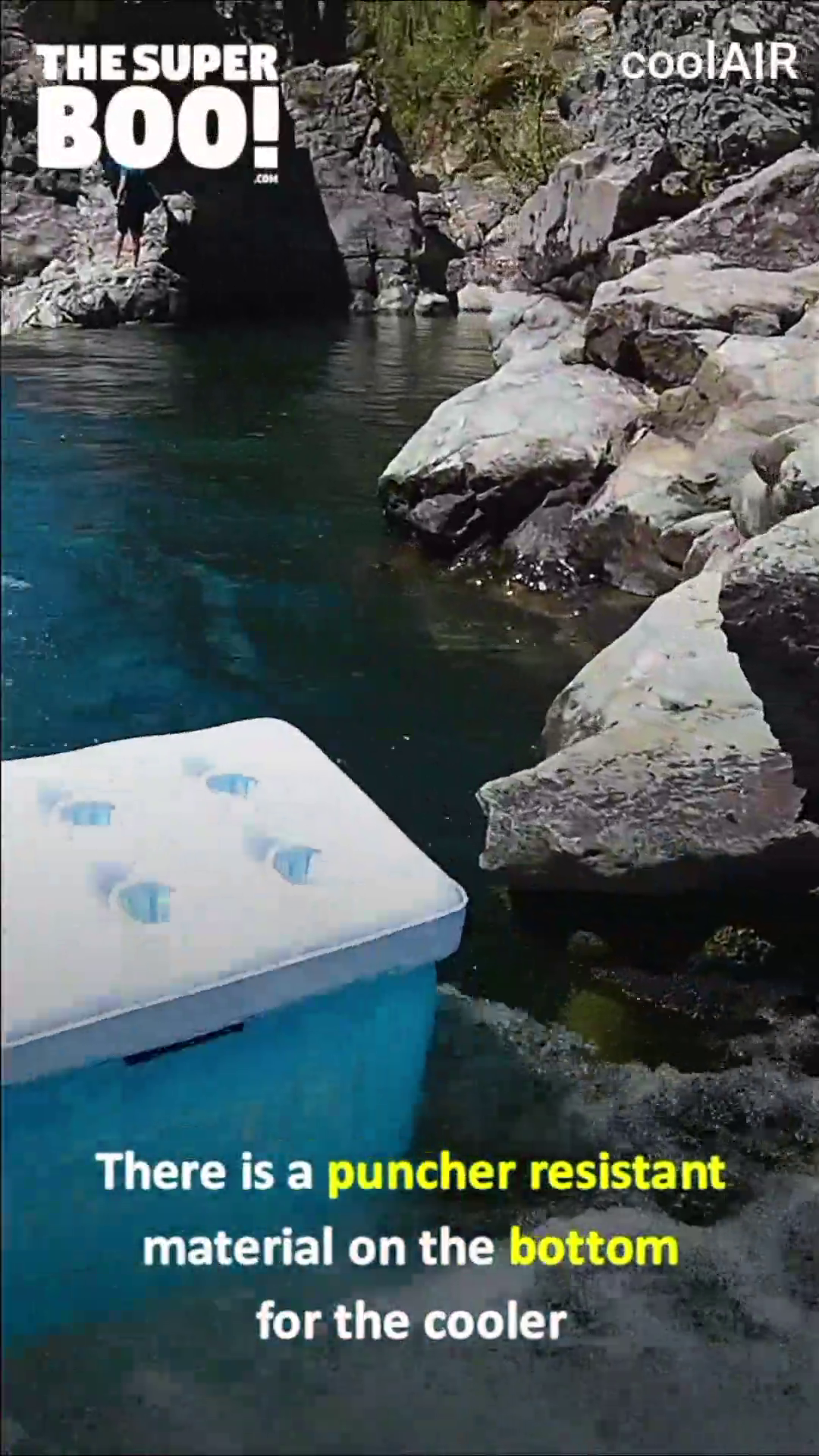
- Puncture-resistant bottom: the video text indicates reinforced material underneath, which matters when setting it down on rocks, docks, gravel, or rough shoreline.
- Floating capability: shown on the water beside a kayak, indicating the structure is buoyant enough to serve as a floating cooler.
- Carry bag portability: one image shows the deflated unit packed into a long shoulder bag, making it much easier to hike in than a rigid cooler.
Practical Everyday Uses
This is the kind of product that becomes most valuable when mobility matters more than maximum ice retention. It is especially well suited to casual outdoor trips where carrying convenience and compact storage are major priorities.
- Lake and river days: ideal for tying alongside a kayak, paddleboard, or float setup so drinks stay accessible without returning to shore.
- Camping and road trips: useful when trunk space is limited and you do not want a hard cooler occupying space before and after use.
- Backyard gatherings and pool parties: the cup-holder lid turns it into a compact beverage station that can sit poolside or float nearby.
Things To Consider Before Buying
As clever as the design is, buyers should think about how they plan to use it. An inflatable cooler trades some of the brute durability and long-term ice retention of rotomolded hard coolers for portability and convenience.
- Cooling expectations: the insulated liner helps, but this is still best viewed as a portable recreational cooler rather than an expedition-grade ice chest.
- Surface conditions: the reinforced bottom helps, but sharp rocks, hooks, and abrasive terrain still require care.
- Inflation setup: check whether a pump is included or if manual inflation is expected.
- Capacity needs: make sure the internal volume matches your typical group size, especially if you plan to carry both ice and full-size bottles.
- Water use: if you plan to float it regularly, confirm how it secures to kayaks, docks, or tubes so it does not drift away.