
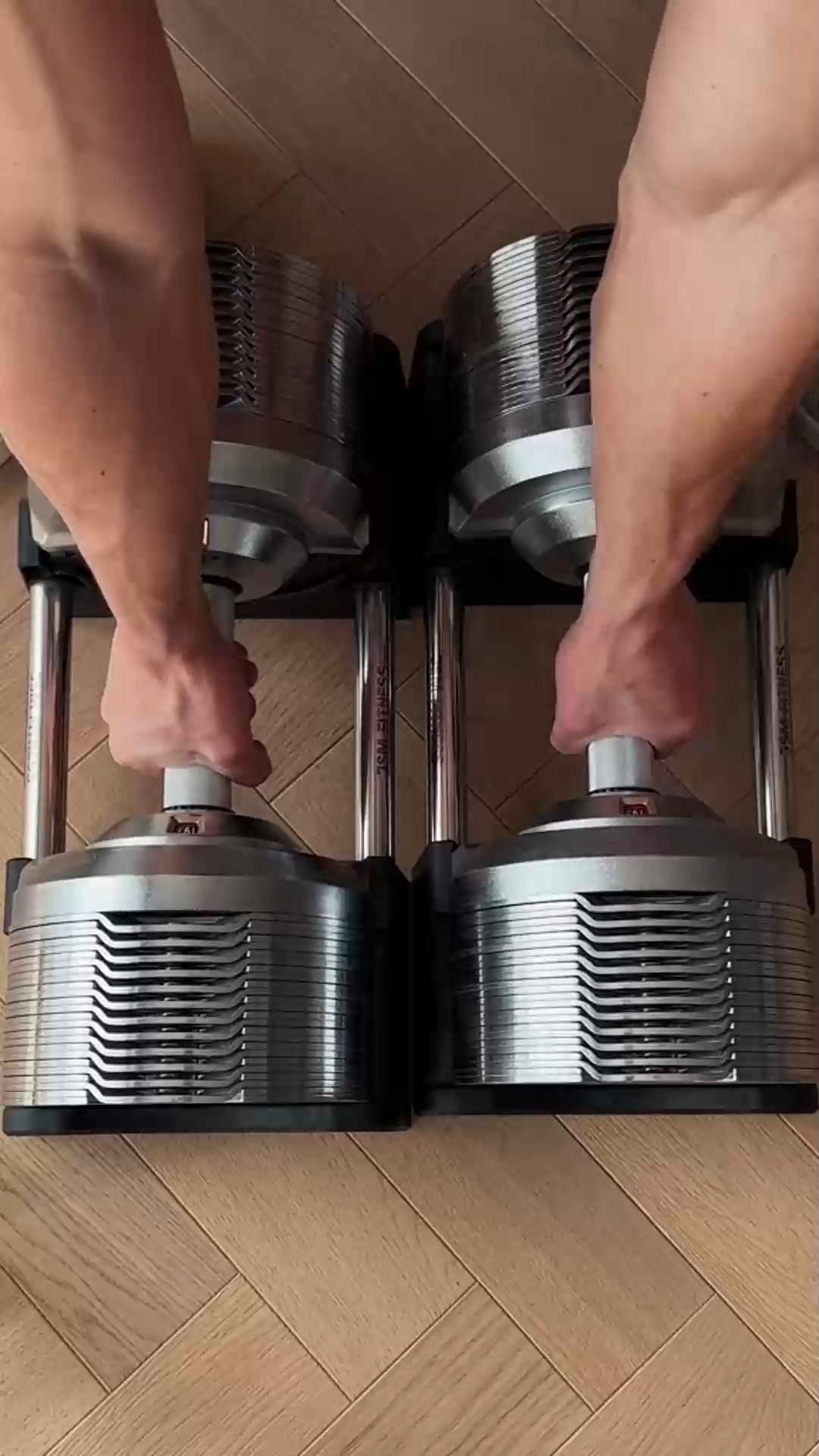
A twist-handle adjustable dumbbell system that feels far closer to real gym weights than typical home-fitness space savers
These commercial-style adjustable dumbbells stand out because they solve two common home gym frustrations at once: clutter from multiple fixed dumbbells and the awkward feel of many blocky adjustable designs. Instead of using a side dial or selector pin, the weight changes by twisting the handle while the dumbbell sits in its base cradle, letting the internal mechanism lock onto the chosen stack of steel plates.
The Standout Appeal & Why It Caught Our Attention
What makes this design especially interesting is how intentionally it tries to preserve the balance, shape, and training feel of a traditional fixed dumbbell. The round, chrome-heavy construction looks and behaves more like commercial gym equipment than the plastic-heavy adjustable sets many people know from home use.
- More natural lifting feel: The circular plate layout keeps the dumbbell from feeling overly boxy during presses, curls, rows, and goblet work.
- Fast transitions: Twisting the handle in the cradle is quicker and cleaner than manually loading plates or dealing with collars.
- Premium all-metal impression: The stacked steel plates, polished guide rails, and dense base assembly suggest a product built for repeated use rather than occasional workouts.
- Flat-edge stability: Even with the rounder gym-style profile, the design still appears stable in its dock and more controlled than loose plate systems.
Key Features & How It Works
The visible mechanism centers around a rotating handle selector. While the dumbbell is seated in its tray, turning the handle changes which internal locking points engage with the steel plates. When lifted, only the selected plates come with the handle, while the rest remain in the base.
- Twist-to-adjust mechanism: Weight selection is integrated into the handle itself, reducing extra knobs or side-mounted controls.
- Dedicated base cradle: The dumbbell must rest in its tray for adjustment, which helps keep plate alignment precise and reduces accidental misloading.
- All-steel plate stack: The visible plate array appears densely machined and tightly nested for compact storage.
- Chrome-finish construction: The polished metal surfaces give it a commercial aesthetic and may appeal to buyers who want their home gym to feel less consumer-grade.
- Guide-rod support structure: The side rails help organize the plate stack and keep the system tracking smoothly in and out of the base.
- Incremental progression: These models are commonly offered in 23.5kg, 32.5kg, or 41.5kg max versions, typically increasing in 1.5kg or 2.5kg steps, which is useful for progressive overload without needing a full rack.
Practical Everyday Uses
For the right user, this kind of dumbbell can replace a surprising amount of equipment while keeping workouts efficient.
- Apartment or spare-room home gyms: Instead of storing multiple pairs of fixed dumbbells, one pair can cover warm-ups, accessory work, and heavier compound movements in a much smaller footprint.
- Time-efficient strength sessions: Ideal for supersets or drop sets where you need to move from one weight to another quickly without breaking rhythm.
- Lifters who dislike plastic adjustable sets: If you want a more serious, gym-like hand feel for presses, rows, lunges, and curls, this design is a more convincing alternative.
Things To Consider Before Buying
These are premium-style adjustable dumbbells, so the benefits come with a few practical tradeoffs worth checking before you commit.
- Measure your floor space: The base cradles are compact compared with a full dumbbell rack, but they still need a dedicated, level area.
- Check the maximum weight carefully: Choose the version that matches your training level, especially if you plan to use them for heavy rows, presses, or lower-body work.
- Expect substantial mass even unloaded: The all-steel build is a strength, but it also means the units themselves are not especially light to reposition.
- Use on protective flooring if possible: A rubber mat is a smart idea for both noise control and floor protection.
- Confirm increment size: Smaller jumps are better for gradual progression, while larger jumps may be fine for experienced lifters but less ideal for rehab or beginner programming.