
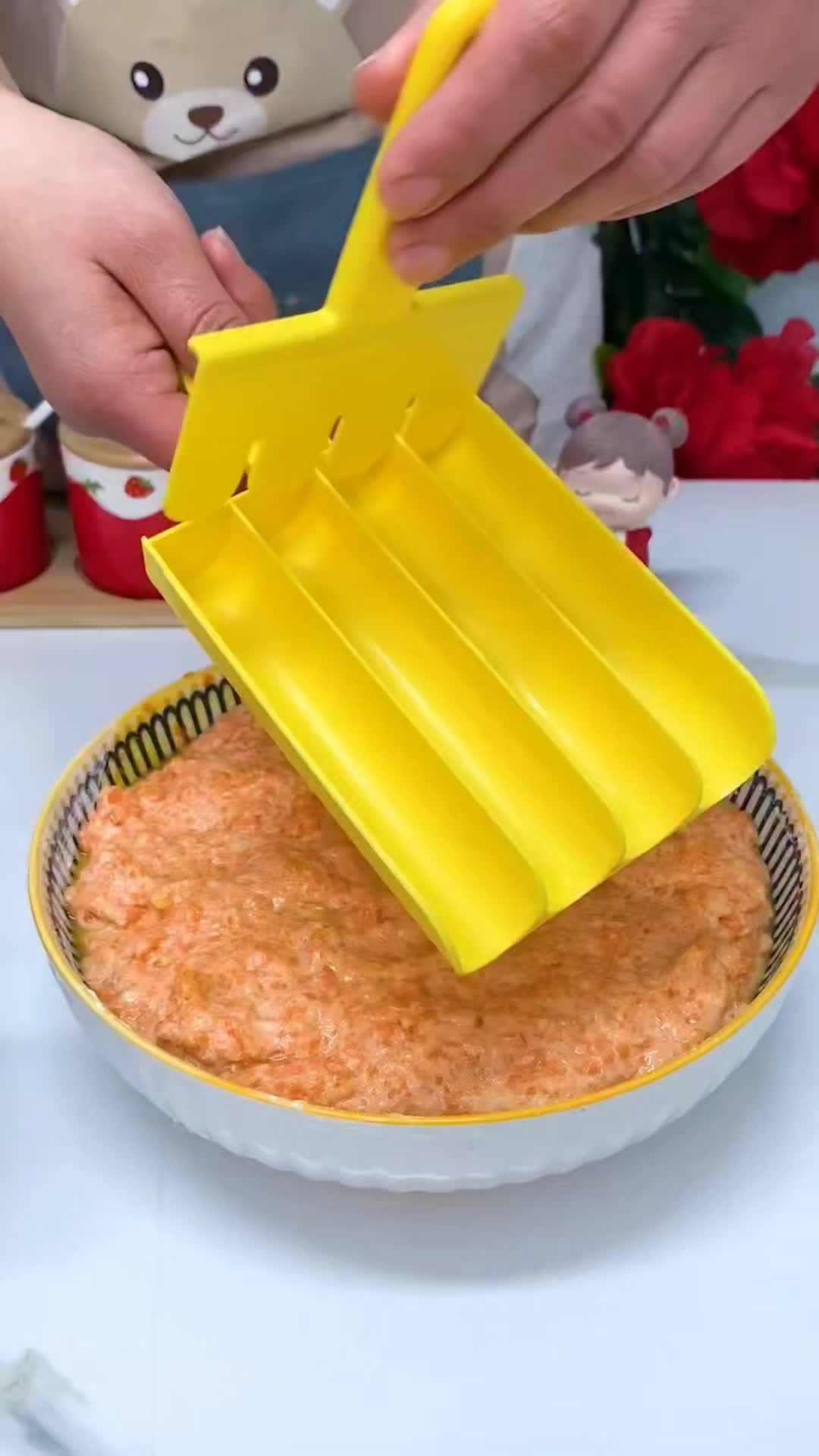
A fast, low-mess way to shape evenly sized meatballs straight over the pan
This manual meatball maker turns a sticky, repetitive prep job into a quick press-and-slide motion. Instead of rolling each portion by hand, the tool uses three rounded channels and a matching sliding press plate to portion soft meat or fish paste into uniform pieces that can be dropped directly into hot oil, broth, or a cooking pot with far less mess.
The Standout Appeal & Why It Caught Our Attention
What makes this tool interesting is its very practical design logic: sticky mixtures like fish paste, seasoned minced meat, or shrimp filling are awkward to portion consistently by hand. This scoop-style former creates repeatable shapes while keeping your hands cleaner and your batch size more consistent. It is especially clever for cooks making large quantities, because the multi-lane layout speeds up production without needing electricity, springs, or complicated moving parts.
- Uniform shaping: helps produce similarly sized balls for more even frying or boiling.
- Less direct handling: useful when working with wet, oily, or highly seasoned mixtures.
- Simple manual action: no motor, no setup, and very little to clean compared with larger prep tools.
Key Features & How It Works
From the images, this appears to be a food-grade plastic manual forming tool with a bright yellow body, a broad handle, and a detachable or integrated press/scraper section. The base has three long semicircular troughs that hold the mixture, while the top press aligns with those channels to push the filling forward and out in measured portions.
- Three-channel mold tray: lets the user load multiple rows of mixture at once for faster batch shaping.
- Rounded trough geometry: encourages the mixture to form into compact, ball-like portions as it is pushed out.
- Sliding press plate: acts like a scraper and plunger, moving the filling through the channels in one controlled motion.
- Wide handle: gives better leverage when pressing dense meat mixtures.
- Smooth plastic surfaces: easier to rinse clean and less likely to trap residue than textured tools.
- Direct-to-pan workflow: the formed portions can be released straight into hot oil or water, reducing transfer steps.
In use, the cook scoops or loads the meat mixture into the channels, levels it, then pushes with the press section so portions emerge from the front edge. In the cooking frames, the tool is used over a frying pan, where the formed pieces drop in quick succession and cook into evenly browned balls.
Practical Everyday Uses
This is the kind of kitchen tool that becomes most useful when speed, consistency, and cleaner handling matter more than artisanal hand-rolling.
- Family meal prep: ideal for making meatballs, fish balls, shrimp balls, or croquettes in larger batches for soups, hot pot, noodles, or frying.
- Party and snack cooking: helpful when preparing many bite-size fried appetizers that need to cook at roughly the same rate.
- Freezer batch sessions: useful for portioning a large bowl of seasoned mixture into repeatable sizes before cooking or pre-freezing.
Things To Consider Before Buying
As with most manual forming tools, performance depends on the texture of the mixture and the size you want. It is best suited to soft, cohesive fillings rather than chunky mixtures with large vegetable pieces or very dry mince.
- Mixture consistency matters: overly loose filling may slump, while very stiff filling may require more force to press.
- Size is fixed by the mold: check the channel dimensions if you want extra-small soup balls or larger meatballs.
- Plastic heat exposure: this tool should be used for shaping only, not left resting on hot cookware.
- Cleaning: rinse the channels promptly after use so protein residue does not dry inside the grooves.
For cooks who regularly make fish balls, meatballs, or similar bite-size foods, this is a smart little shortcut: simple, mechanical, and focused on one job it does noticeably faster than hand shaping.