
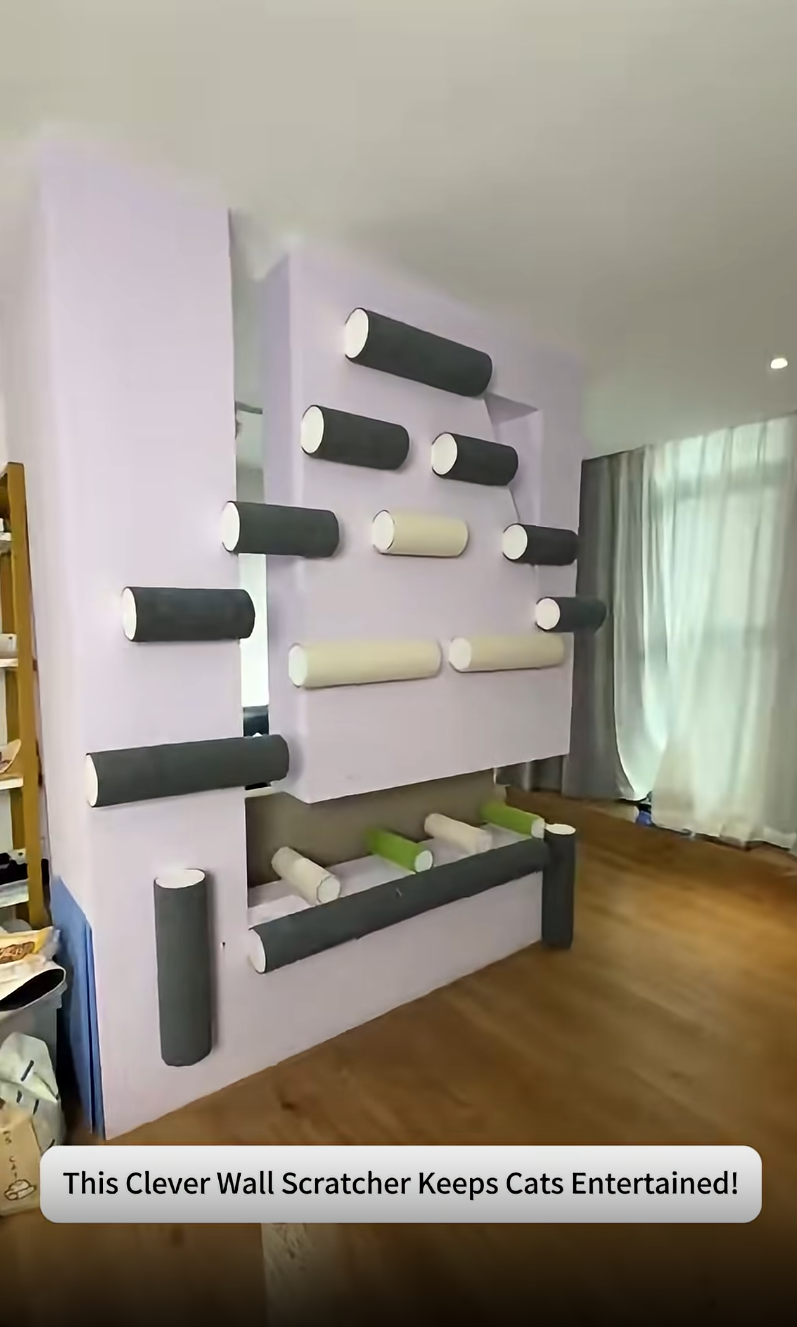
A peel-and-stick wall cat playground that turns empty vertical space into a scratchable climbing route
The Glampawstore Stick-On Cat Climbing Tree DIY Wall Cat Playground is a modular set of wall-mounted scratch tubes designed to give cats a place to climb, grip, scratch, and perch without taking over your floor with a bulky cat tree. Instead of one fixed structure, this system uses individual rounded tubes with adhesive backing, so you can build a custom route that fits your wall, your cat’s agility level, and your room’s layout.
The Standout Appeal & Why It Caught Our Attention
Most cat scratchers solve one problem at a time: they either protect furniture, or they offer climbing, or they act as decor. This setup is interesting because it combines all three in a surprisingly clean way. The rounded tube shape gives cats something closer to a branch-like climbing surface, while the modular wall layout lets owners create anything from a simple vertical scratching lane to a full geometric climbing wall.
- Uses vertical space intelligently, which is especially valuable in apartments or smaller homes.
- Looks more architectural than pet-store bulky, with soft rounded forms and contemporary green or gray color options.
- Encourages natural behavior like stretching, clawing, jumping, and elevated perching.
Visually, it stands out because it feels halfway between a cat tree and a wall installation. That makes it far more flexible than conventional carpet-covered towers that only fit one footprint and one room arrangement.
Key Features & How It Works
From the images, each module appears to be a cylindrical scratch tube with a textured outer wrap for claw traction and a flat rear surface that sits securely against the wall. The back is fitted with heavy-duty peel-and-stick adhesive panels, allowing each section to mount without visible brackets in the featured setup.
- Modular individual tubes: Each piece can be placed horizontally, vertically, or diagonally to form climbing paths, scratch zones, or step-like transitions.
- Rounded scratch surface: The curved exterior gives cats multiple attack angles for scratching and improves grip while climbing.
- Flat-backed construction: Unlike a full round log, the rear appears flattened so the unit can sit flush against the wall.
- Textured woven exterior: The outer material appears ribbed and durable, giving claws purchase while also adding a softer, more furniture-friendly look than rough rope.
- Adhesive-backed installation: The protective film shown being peeled away suggests a strong pre-applied adhesive strip designed for direct mounting.
- Configurable layouts: The system can mimic tree trunks, branch patterns, zig-zag climbs, ladder arrangements, or perimeter wall runs.
- Multi-color aesthetic options: The visual examples show green, gray, and lighter neutral tones that can be mixed for more custom-looking builds.
The big design idea here is simple but smart: instead of forcing a cat to use one central tower, it creates a distributed activity zone across the wall. That means one piece can function as a scratch post near the floor, while higher pieces become climbing aids or elevated pathways.
Practical Everyday Uses
This type of product is especially useful for cat owners trying to redirect destructive scratching while also giving indoor cats more exercise and environmental enrichment.
- For apartment cats with excess energy: A vertical arrangement creates a mini climbing course that helps active cats burn energy indoors without requiring a large floor-standing tree.
- For furniture protection: Placing a lower tube near a cat’s favorite scratching corner can redirect clawing away from sofas, bed frames, or door trim.
- For multi-level cat rooms or custom pet walls: These modules can be integrated with shelves, hide boxes, bridges, or window perches to create a more complete feline obstacle route.
It also makes sense for owners who already have cat shelves but want to add grippier transition zones so cats can climb between levels instead of only jumping.
Things To Consider Before Buying
As clever as the concept is, success depends heavily on where and how you install it. This is not a one-size-fits-all accessory, so a little planning matters.
- Check wall surface compatibility: Adhesive mounting tends to work best on smooth, clean, sealed walls. Textured paint, dusty surfaces, loose wallpaper, or damp areas may reduce holding strength.
- Think about your cat’s size and confidence: Lightweight, agile cats may use steeper routes more easily than larger or more cautious cats.
- Plan spacing carefully: If modules are too far apart, some cats may ignore the layout or struggle to transition between pieces.
- Consider long-term removability: Strong adhesive can potentially affect paint or wall finish during removal, so renters should verify this first.
- Use height responsibly: If building a tall climbing route, make sure the arrangement leads to safe landing zones or connected platforms.
For buyers who prefer more permanent hardware-mounted solutions, similar Amazon alternatives often use screw-in anchors, sisal-covered logs, or hook-and-loop systems. But if your goal is a cleaner-looking DIY wall cat playground with more visual freedom, this Glampawstore design is a notably inventive take on indoor cat enrichment.