
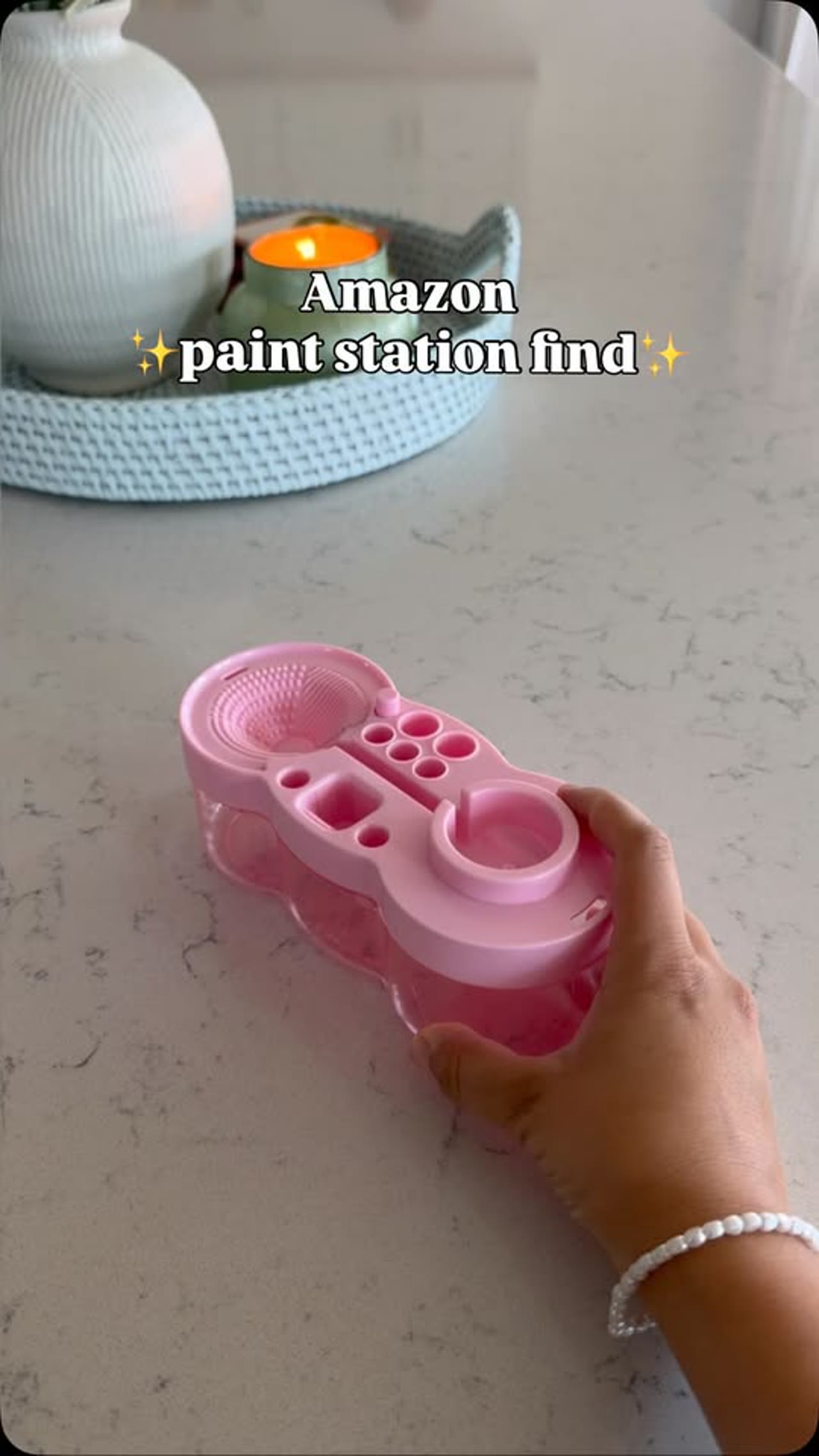
A self-refreshing paint rinse station that keeps brush water cleaner for longer
This compact tabletop paint station combines a gravity-fed clean water reservoir, a dirty water catch tank, and a side palette into one small organizer. Instead of constantly walking to the sink or swirling brushes in the same cloudy cup, it gives hobby painters a neater way to rinse, mix, and park brushes in one place.
The Standout Appeal & Why It Caught Our Attention
Most brush cups are passive containers: once the water turns murky, your brush is just getting dirtier with every rinse. This design is more thoughtful. It separates clean water storage from waste water collection, so the washing basin can be refreshed without replacing the whole setup. That makes it especially appealing for watercolor, gouache, acrylic detailing, kids’ crafts, and nail-art style miniature painting where frequent color changes matter.
- All-in-one layout keeps rinsing, mixing, and brush storage in one footprint.
- Cleaner workflow helps reduce muddy colors caused by contaminated rinse water.
- Desk-friendly format feels more like a dedicated paint station than a random cup and plate.
Key Features & How It Works
The unit appears to be made from impact-resistant ABS plastic with a clear upper bottle that holds roughly 250ml of fresh water. The bottle mounts upside down into the top of the station, where water gravity-feeds into the rinse area as needed. A spring-loaded drain mechanism sends used water down into the lower waste tank, allowing the basin to refill with cleaner water from above.
- Water cycle system: clear top reservoir feeds fresh water into the wash well; dirty water is flushed into the bottom chamber.
- Textured cleaning basin: the rinse area includes raised scrubbing ribs and dots to work paint out of bristle cores more effectively than a smooth cup.
- Removable paint palette: a hinged or detachable multi-well tray sits on the side for organizing several colors at once.
- Brush holder slots: multiple circular openings let brushes stand upright, which helps with drying and keeps tips from getting crushed on the table.
- Compact waste tank: the pink lower chamber collects dirty rinse water for later emptying into a sink.
- Small accessory well: the square textured compartment can help with extra scrubbing or holding a small tool.
The overall mechanism is clever because it turns a messy, repetitive painting task into a more controlled station: rinse, scrub, drain, and continue painting without constantly resetting your workspace.
Practical Everyday Uses
This is most useful for people who paint in short sessions and want less cleanup friction.
- Kids’ art tables: Parents can set up a contained painting area with fewer spills and less need to replace dirty rinse cups every few minutes.
- Hobby and craft painting: Great for watercolor cards, gouache sketching, miniature details, ceramic touch-ups, or acrylic craft projects where brush cleanliness affects color accuracy.
- Small-space creators: If you paint at a kitchen counter, dorm desk, or shared workspace, this keeps tools consolidated instead of spreading cups, palettes, and brushes across the surface.
Things To Consider Before Buying
This is a smart organizer, but it is still a small-format rinse station, so expectations should match the size.
- Capacity is limited: the reservoir is convenient, but heavy painters using large brushes may still need to refill and empty it regularly.
- Best for water-based media: it makes the most sense for watercolor, gouache, and water-thinned acrylics rather than solvent-based paints.
- Cleaning the station matters: to keep the drain path working smoothly, dried paint should not be left sitting in the channels or waste tank for long.
- Brush size compatibility: the holder holes and wash basin are better suited to small and medium brushes than oversized wash brushes.
- Unbranded listings vary: since this is commonly sold by different third-party sellers, check photos and dimensions carefully to confirm you are getting the version with the palette, drain button, and dual-tank design.