
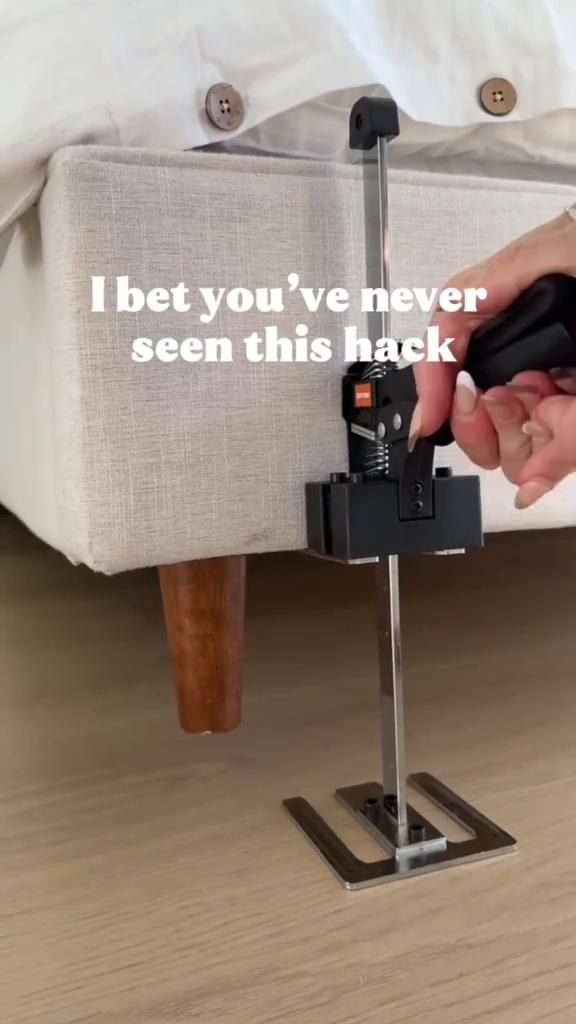
A one-person lifting tool that turns heavy furniture moves into a controlled, precise job
This labor-saving arm jack is a compact mechanical lifting tool designed to raise beds, couches, cabinets, and other bulky household items without needing a second person. Instead of awkwardly wedging your fingers under a frame or balancing furniture on improvised blocks, it uses a ratcheting hand lever and a thin steel lifting plate to create steady, incremental lift exactly where you need it.
The Standout Appeal & Why It Caught Our Attention
What makes this tool so compelling is how it solves a very specific but very common problem: many home tasks only require a few centimeters of lift, but that small gap is usually the hardest part. Sliding a rug under a bed, placing furniture sliders, adjusting a cabinet, or lifting a heavy frame to level it normally becomes a two-person struggle. This jack turns that into a repeatable, mechanical action you can do solo.
- Single-person operation for jobs that usually require someone to hold, lift, or stabilize.
- Compact vertical design lets it work close to bed frames, sofas, and low-clearance furniture.
- More controlled than prying tools because the lift happens in small ratcheted steps rather than one sudden heave.
Key Features & How It Works
The design is straightforward but smart. A flat steel footplate slides under the furniture edge, while the lower base stays planted on the floor. Repeated squeezes of the handle drive a spring-loaded ratcheting mechanism upward along the vertical steel guide bar, gradually lifting the load.
- Thin lifting plate: Helps the tool slip under upholstered bed frames, cabinets, and other low-clearance items.
- Ratcheting trigger handle: Converts hand pressure into incremental upward lift, reducing strain compared with deadlifting by hand.
- Vertical steel guide bar: Keeps the lifting motion aligned and stable during use.
- Wide floor base: Distributes force on hard flooring and helps the jack stay upright while loaded.
- Controlled lowering release: Most versions include a release lever or plate so the furniture can descend slowly instead of dropping abruptly.
- Metal-heavy construction: The visible steel bar and base suggest a tool built for compression strength and repeated household use.
This is the kind of tool where the engineering matters more than appearance: the leverage, ratchet spacing, and low-profile contact point are what make it genuinely useful.
Practical Everyday Uses
This tool shines in those annoying in-between tasks where furniture is too heavy to lift comfortably, but not heavy enough to justify professional movers.
- Sliding a rug under a bed: Lift one side of the bed just enough to pull an area rug underneath without dismantling the room or asking for help.
- Installing furniture sliders: Raise a couch, dresser, or cabinet corner-by-corner so sliders can be placed underneath for easier repositioning.
- DIY leveling and fitting: Useful when aligning base cabinets, nudging heavy storage units, or holding a door or panel at the right height during installation.
It is especially handy for renters, solo homeowners, DIYers, and anyone regularly rearranging rooms or working with heavy furniture on hard floors.
Things To Consider Before Buying
Before picking one up, it is worth checking whether the tool matches the type of furniture and flooring in your home.
- Clearance matters: The footplate still needs enough space to slide under the object, so very low furniture may require a small starting gap.
- Weight capacity varies by seller: Similar-looking models are sold under different brands, so check the stated load rating rather than assuming all versions are identical.
- Best for lifting, not long-term support: It is ideal for raising an item temporarily while you place a rug, shim, or slider, but it is not a substitute for proper stands or supports.
- Use carefully on delicate surfaces: On soft wood or sensitive flooring, consider a protective pad if you are concerned about pressure marks.
- Controlled release takes attention: Lowering is safer than dropping by hand, but users should still keep fingers clear and release the load gradually.
If your goal is to make small, precise lifts on heavy household items without turning it into a two-person job, this is one of those deceptively simple tools that can save a surprising amount of effort.