
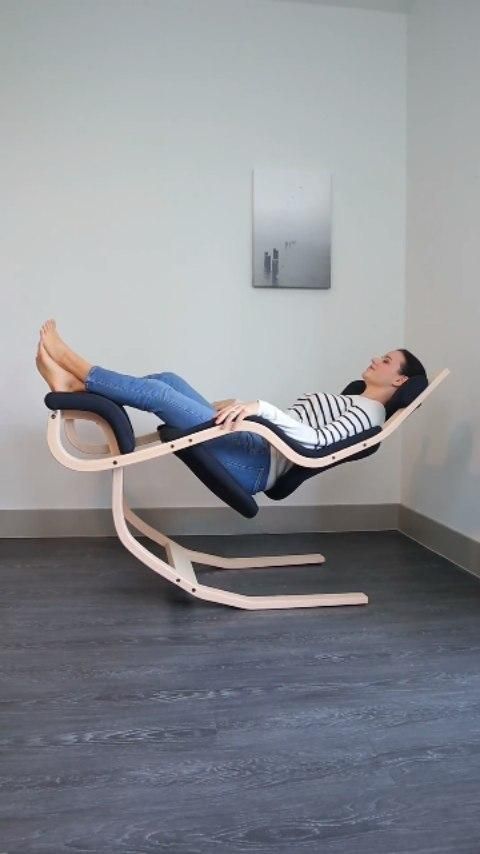
An ergonomic chair that shifts from active kneeling work to near weightless recline
The Varier Gravity Balans, originally designed by Peter Opsvik in 1983, is one of those rare furniture pieces that genuinely changes how you use a chair. Instead of locking you into one posture, it is built around movement and body positioning, letting you transition from a forward-leaning kneeling setup to an upright perch and then all the way into a deeply reclined, legs-elevated zero-gravity position.
The Standout Appeal & Why It Caught Our Attention
Most ergonomic chairs try to solve comfort with levers, mesh tension, and lumbar adjustments. The Gravity Balans takes a more radical route: it changes the entire relationship between your body and gravity. Its curved wooden frame and suspended cushions are designed so your weight naturally guides the chair into different positions, rather than forcing you to manually configure it.
- Four-position concept: It supports kneeling, upright sitting, reclined lounging, and a fully extended zero-gravity posture.
- Movement-led ergonomics: The chair encourages subtle shifting instead of static sitting, which is a major part of its long-term appeal.
- Iconic Scandinavian design: The bentwood frame and minimal upholstery make it look more like a design object than a conventional office chair.
Key Features & How It Works
The chair uses a sculptural ash wood frame with a sled-like rocking base and multiple upholstered support zones. Rather than relying on mechanical recline hardware, the user changes position by shifting body weight forward or backward.
- Kneeling position: Lean forward and the chair becomes an active work seat, with your shins supported on the lower pads to open the hip angle and reduce the slumped posture common in desk chairs.
- Upright seated position: Shift slightly back and it supports a more traditional upright posture, with the option to place feet on the floor or use the shin support.
- Reclined position: Continue leaning back and the long upholstered body support cradles the spine while the headrest takes over upper-body support.
- Zero-gravity mode: In its deepest recline, the legs are elevated above the heart, creating the floating sensation this chair is known for. In this position, the frame can gently rock with small body movements and even breathing.
- Material choices: Common versions use natural or lacquered ash paired with fabric or leather upholstery, balancing warmth, resilience, and a premium furniture-grade finish.
- Integrated support layout: Instead of one flat seat and one backrest, the chair uses separate pads for shins, seat, back, and head to distribute pressure across different postures.
Practical Everyday Uses
This is not just a statement chair for a design-forward room. It has very specific use cases for people who alternate between focus and recovery throughout the day.
- Home office work: Someone who gets restless in a standard desk chair can use the forward kneeling position for typing, reading, or focused laptop work while maintaining a more open posture.
- Post-work decompression: After long hours at a desk, the reclined and zero-gravity positions create a dedicated place for reading, listening to music, meditating, or simply taking pressure off the lower back.
- Multi-purpose living spaces: In a studio, office, or minimalist apartment, it can function as both an ergonomic task chair and a lounge recliner without needing two separate pieces of furniture.
Things To Consider Before Buying
The Gravity Balans is highly distinctive, but it is also a serious furniture purchase with a specific feel and footprint. It rewards the right buyer, especially one who values posture variation and design, but it is not a universal replacement for every chair.
- There is a learning curve: First-time users often find the deep recline unusual until they understand how to shift weight smoothly.
- Desk compatibility matters: It works best with setups that allow room for the forward kneeling position and the chair’s longer rocking base.
- It takes space: This is not a compact office chair; the extended frame needs open floor area, especially if you plan to use all reclining positions.
- Premium pricing: New models are expensive compared with mainstream ergonomic seating, so buyers should think of it as a long-term design and wellness investment.
- Best for posture variety, not constant tasking: If you need a highly adjustable rolling office chair for all-day desk work, this serves a different purpose. Its strength is dynamic posture switching, not conventional workstation adjustability.