
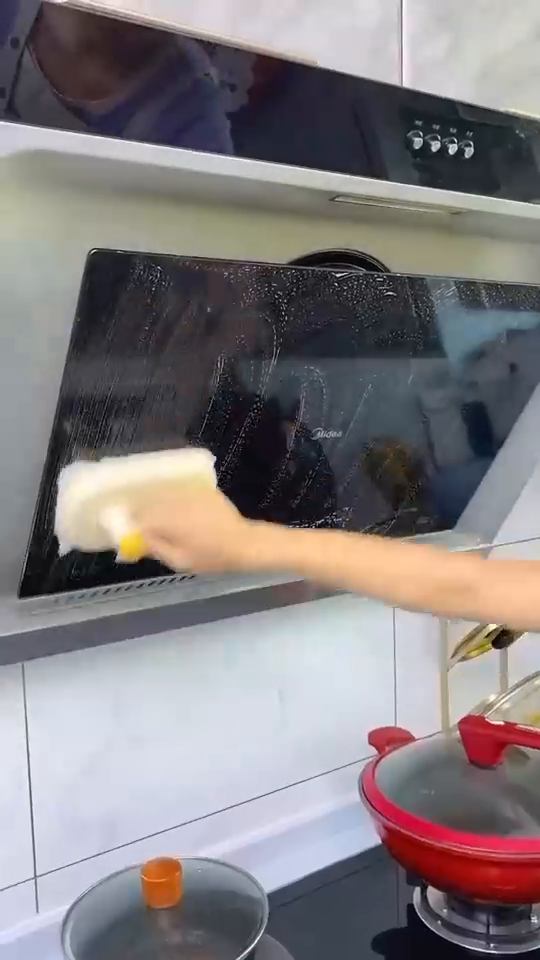
A hands-off surface scrubber that turns messy wipe-downs into a cleaner, quicker routine
This disposable wipe cleaning brush is a simple but genuinely smart household tool: instead of gripping a soggy rag or greasy paper towel by hand, you attach a replaceable cloth sheet to a flat handheld base and clean with a proper handle. The result is better reach, less direct contact with grime, and more even pressure across countertops, stovetops, tiles, glass panels, and other flat household surfaces.
The Standout Appeal & Why It Caught Our Attention
What makes this tool interesting is its combination of disposable convenience and scrubber-style control. A normal cleaning rag bunches up, slips around, and forces your fingers into oil, soap, or dirty water. This design solves that by giving the wipe a rigid platform and a raised grip, so the user can clean broad surfaces with smoother strokes and less mess.
- Hands stay cleaner because the wipe sits under the base instead of in your palm.
- Better pressure distribution helps lift grease and splashes more evenly than a loose cloth.
- Multi-surface practicality makes it useful in kitchens, bathrooms, and even living-room tabletops.
It feels like a hybrid between a sponge mop, a countertop scrubber, and a disposable dusting system—scaled down for everyday household wipe-downs.
Key Features & How It Works
From the visuals and provided context, this is a flat rectangular cleaning brush with a top handle, a yellow release/locking detail, and replaceable cloth wipes that fasten to the underside, likely through a hook-and-loop/Velcro-style attachment system. The cleaning head appears broad enough to cover a good amount of surface area in one pass while still being compact enough for sinks, stovetops, and backsplash tiles.
- Ergonomic top handle: Lets you push downward without bending your wrist awkwardly, especially useful on counters and vertical wall tiles.
- Disposable or replaceable cloth sheets: The wipes appear to be pre-cut to fit the base, making swap-outs quick after greasy or dirty jobs.
- Flat low-profile head: Helps the tool glide across smooth surfaces like quartz counters, ceramic tile, glass range hoods, and glossy cooktops.
- Textured cleaning cloth compatibility: The wipes shown appear slightly embossed, which can help with grabbing residue rather than just smearing it.
- No direct hand contact with grime: Particularly useful when cleaning oil splatter, food spills, soap residue, or sink-edge buildup.
- Dry or damp use potential: It can likely be used with dry wipes for dust/light debris or dampened wipes for degreasing and stain removal.
The overall mechanism is straightforward: attach a fresh cloth to the base, wipe the surface with broad strokes, then remove and discard the dirty sheet when finished. That simplicity is exactly why it works well in fast daily cleaning routines.
Practical Everyday Uses
This is the kind of tool that becomes most useful in homes where surfaces get dirty often and nobody wants to do a full sponge-and-bucket cleanup every time.
- Kitchen grease control: Ideal for wiping oil splatter from countertops, stovetops, backsplash tiles, and range hood glass after cooking.
- Bathroom quick cleans: Useful for sink surrounds, vanity counters, mirror-adjacent tile, and other areas where you want to avoid touching wet residue directly.
- Furniture and tabletop maintenance: Handy for coffee tables, dining surfaces, and glossy cabinets where a flat wipe head leaves a more uniform clean than a crumpled rag.
It especially suits users who want a fast, disposable cleanup method for daily messes rather than a deep-cleaning brush that needs rinsing after every use.
Things To Consider Before Buying
Before picking one up, it is worth checking how the wipe system is designed and whether the replacement cloths are easy to source.
- Refill compatibility matters: Some versions use proprietary wipe sizes, while others can work with generic disposable cloths or paper towels.
- Best on flat surfaces: The broad base is excellent for counters and glass, but less effective in tight corners, grout lines, or heavily textured areas.
- Not a heavy-duty scraper: For burnt-on residue or thick crusted grease, you may still need a dedicated scrub pad or degreaser first.
- Attachment strength is important: A weak hook-and-loop surface can cause wipes to shift during use, so build quality makes a difference.
- Disposable cost over time: The tool itself is simple, but ongoing wipe replacement is part of the ownership equation.
If your goal is quick, hygienic, low-contact surface cleaning, this style of brush makes a lot of sense—especially in kitchens where small greasy messes happen constantly.