
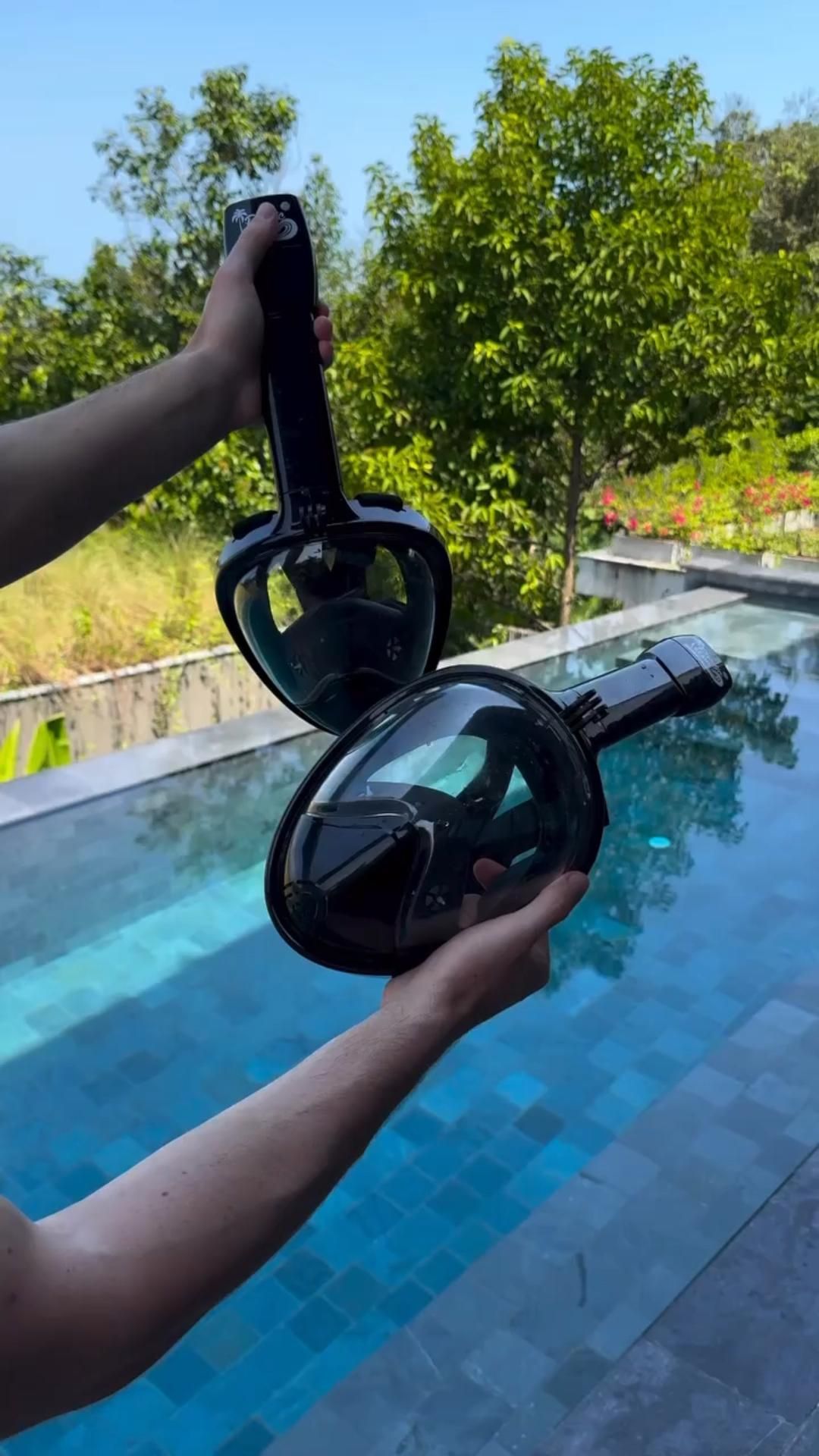
A snorkel mask that adds its own air supply for longer underwater exploring
This is a compact full-face snorkel system with an attached mini air tank, designed for people who want more freedom than a standard snorkel without stepping all the way into full scuba gear. The core idea is simple but clever: breathe from the snorkel at the surface to conserve tank air, then switch to stored air when submerged for short underwater sessions that feel far less restrictive than constant breath-hold diving.
The Standout Appeal & Why It Caught Our Attention
What makes this setup interesting is how it bridges the gap between casual snorkeling and light underwater breathing gear. A normal snorkel only works at the surface, and freediving limits you to one breath at a time. This design combines a panoramic mask, a surface snorkel, and a small compressed-air cylinder into one integrated rig, giving recreational swimmers a more self-contained way to explore reefs, coves, rock walls, and shallow marine life.
- Hybrid breathing concept: surface snorkel for air-saving, onboard tank for underwater breathing.
- Compact form factor: much smaller and less intimidating than traditional scuba equipment.
- Travel-friendly appeal: built for boat days, beach trips, and spontaneous swim stops.
Key Features & How It Works
From the visuals and transcript, this appears to be a Lung Tank system with a black cylindrical mini tank mounted to the side of a full-face mask. The mask uses a large clear visor for wide forward visibility, while the front breathing module appears integrated into the nose-mouth area for sealed air delivery.
- Mini compressed-air tank: the side-mounted cylinder stores breathing air for short underwater use, with the transcript claiming up to around 10 minutes depending on depth, breathing rate, and user behavior.
- Automatic snorkel shutoff: when submerged, the snorkel closes so water does not enter through the top tube; at the surface, it reopens so you can breathe ambient air again and preserve tank capacity.
- Full-face panoramic mask: the broad visor improves visibility compared with smaller dive masks and creates a more approachable experience for users who dislike mouthpiece-only snorkeling.
- Integrated regulator-style airflow path: the central breathing assembly appears to route air directly into the mask while managing exhalation and separation from incoming airflow.
- Refillable tank system: the transcript references a triple-filtered high-pressure hand pump, allowing the tank to be refilled away from a dive shop.
- Accessory mounting: several frames show an action camera mounted on top, suggesting a built-in or compatible camera mount for recording underwater sessions.
- Portable build: the matte black cylinder, compact joints, and minimal hose routing suggest a design focused on low bulk and easier handling in the water.
Practical Everyday Uses
This is not everyday in the kitchen or garage, but for the right kind of traveler it can become a repeat-use vacation tool rather than a one-time novelty.
- Boat excursions and island hopping: ideal for jumping in from a boat to inspect reefs, rock formations, or anchored swim spots without carrying a full scuba setup.
- Resort and beach snorkeling: useful for swimmers who want to linger underwater longer while observing fish, coral, or underwater terrain in relatively shallow water.
- Action-camera exploration: especially appealing for travelers who want hands-free underwater footage from a mask-mounted camera while staying more mobile than with traditional dive gear.
Things To Consider Before Buying
This type of gear deserves more caution than a normal snorkel. It is best treated as specialized breathing equipment, not a toy.
- Training matters: check whether the brand provides clear safety guidance, depth limits, and breathing-use instructions before taking it into open water.
- Runtime varies: advertised underwater time depends heavily on depth, exertion, and how calmly you breathe. Real-world duration may be shorter than social video claims.
- Refill logistics: confirm whether the hand pump is included, how long refilling takes, and what maintenance the filtration system requires.
- Fit and seal: full-face masks only work well when the facial seal is correct. Buyers should verify sizing, strap adjustment, and facial-hair compatibility.
- Use environment: this is better suited to shallow recreational exploration than deep diving, rough surf, or technical underwater use.
- Local rules and transport: compressed-air gear may have travel, boating, or destination-specific restrictions, so it is worth checking before flying or using it in regulated marine areas.