
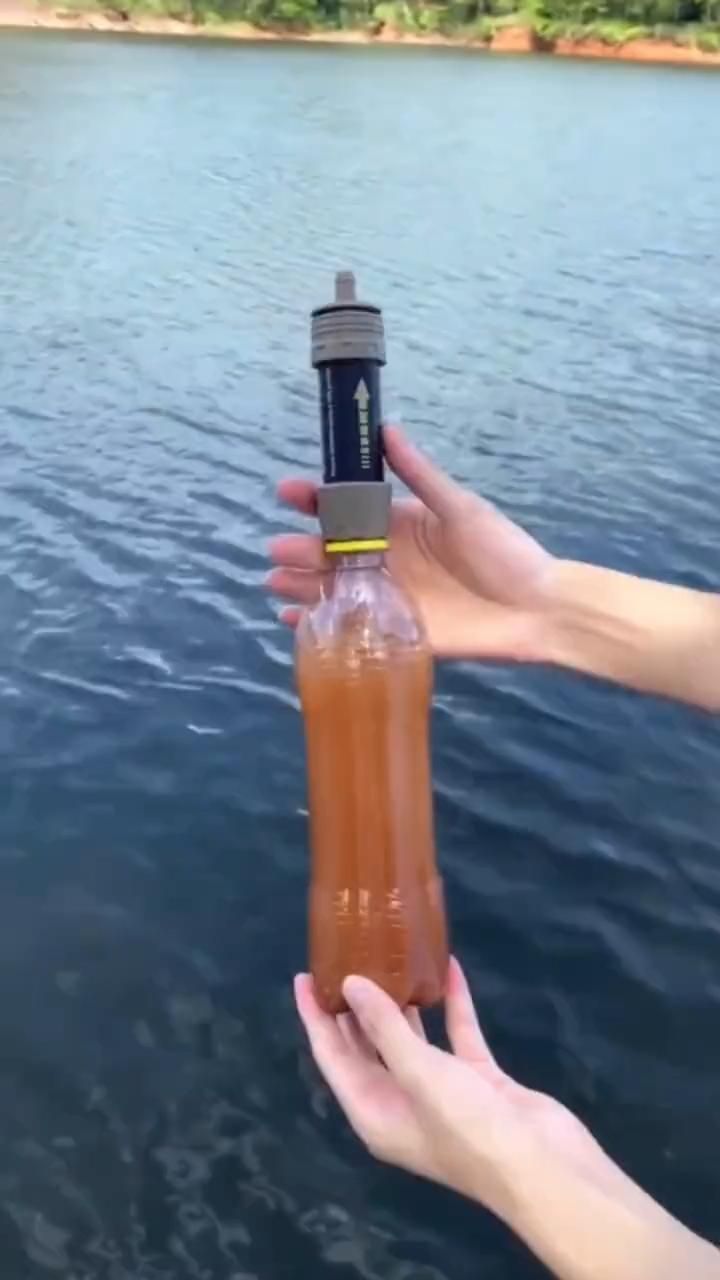
A pocket-size filter that turns questionable freshwater into drinkable water almost anywhere
This compact portable water filtration system is built for the moments when carrying enough clean water is impractical or impossible. From the images, it’s being threaded directly onto a standard plastic bottle filled with muddy lake water, then used inline to dispense visibly clearer water into a cup. That simple setup is exactly why filters in the Sawyer Mini class have become staples for hikers, emergency kits, and travel preparedness: they offer multiple ways to access safer water without bulky pumps or heavy purification gear.
The Standout Appeal & Why It Caught Our Attention
What makes this style of filter so compelling is its versatility-to-size ratio. Instead of being locked into one format, it can function as a drinking straw, a bottle-mounted squeeze filter, or part of a gravity-fed filtration setup. That flexibility matters in the real world. A rigid purifier that only works with proprietary bottles is limiting; a compact threaded filter that adapts to common water containers is much more useful when conditions are unpredictable.
- Ultralight survival logic: small enough to stash in a backpack, glovebox, tackle bag, or emergency bin.
- Low-tech reliability: no batteries, charging, or electronics to fail outdoors.
- Field adaptability: works with widely available disposable bottles and simple camp setups.
Key Features & How It Works
Based on the provided context, this is a 0.1-micron hollow fiber membrane filter, the same core filtration approach used in leading backcountry filters. Water is forced through microscopic tubes that block harmful contaminants such as bacteria and protozoa, including organisms commonly cited like E. coli and Giardia. The dark cylindrical body and threaded ends are designed for inline flow, with directional markings indicating the correct filtration path.
- 0.1-micron hollow fiber filtration: typically rated to remove 99.99999% of bacteria and protozoa from freshwater sources.
- Bottle compatibility: the threaded end can attach to many standard plastic water bottles for squeeze-style filtering.
- Straw-style use: can be used directly at the water source when you need immediate hydration.
- Gravity system potential: can be integrated into a hanging reservoir setup for camp use.
- Back-flush maintenance: clean water can be pushed backward through the filter to clear trapped sediment and restore flow rate.
- Compact rugged housing: the narrow cylindrical form is easy to grip, pack, and protect.
The images also show an important practical truth: filtration is not the same as cosmetic clarification. A good hollow fiber filter is primarily about microbiological safety from freshwater pathogens, while muddy or tannin-stained water may still retain some color depending on sediment load and what exactly is in the source water.
Practical Everyday Uses
This is the kind of tool that earns its place because it solves several problems at once: weight, preparedness, and access to water when taps are nowhere nearby.
- Backpacking and hiking: refill from streams or lakes instead of carrying your full water supply for the entire route.
- Emergency preparedness: useful during boil-water advisories, storm outages, or disaster kits where stored water may run low.
- Fishing, paddling, and overlanding: ideal for day trips where space is limited but access to freshwater is available.
Things To Consider Before Buying
Before choosing a filter like this, it’s worth understanding both its strengths and its limits. It is highly practical, but only when used correctly and matched to the right water source.
- Freshwater use only: these filters are generally intended for lakes, rivers, and streams, not saltwater.
- Not a chemical purifier: hollow fiber filters target bacteria and protozoa, but may not address viruses, dissolved chemicals, or heavy industrial contamination.
- Flow rate depends on maintenance: muddy water can clog the membrane faster, so regular back-flushing is essential.
- Check thread compatibility: while many standard bottles fit, not every bottle neck is identical.
- Protect from freezing: if water inside the membrane freezes, the filter can be damaged internally even if the housing looks fine.
For buyers who want a lightweight, non-electric, field-ready water safety tool, this style of filter remains one of the smartest pieces of outdoor kit you can carry.