
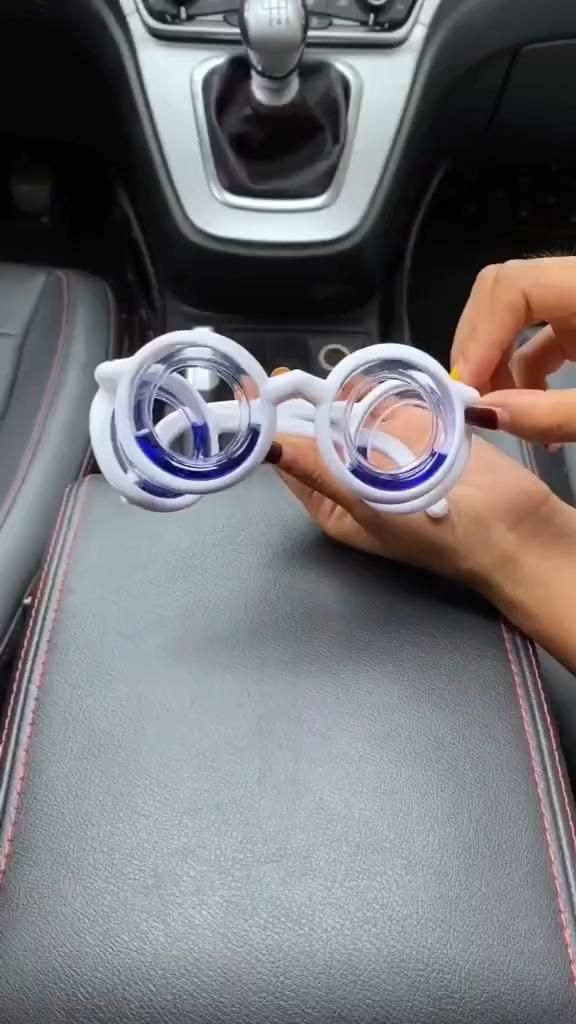
A screen-free way to calm motion sickness by reshaping what your eyes see
These unusual motion sickness relief glasses use liquid-filled circular lenses to create an artificial horizon around your field of view. Instead of blocking vision like sleep masks or relying on medication, they work by helping your eyes and inner ear agree on movement—especially useful in cars, buses, and other moving vehicles where nausea tends to build quickly.
The Standout Appeal & Why It Caught Our Attention
What makes these glasses interesting is that they solve a very specific problem with a purely physical design. Motion sickness often happens when your inner ear senses motion but your eyes are focused on a relatively stable interior, such as a phone screen or car seat. These glasses add visible liquid lines around the eyes, giving the brain extra motion cues without electronics, batteries, or drugs.
- Non-medicated approach for people who want to avoid drowsiness from anti-nausea tablets.
- Distinctive ring-lens design that stays open in the center so the wearer can still see ahead.
- Travel-friendly concept that can be put on only when symptoms start to appear.
Key Features & How It Works
From the visuals, these glasses feature a white round frame with multiple circular chambers around the eyes. The chambers appear to contain a blue-tinted liquid, which shifts with vehicle movement. That moving liquid acts like a visual level, signaling acceleration, braking, and turning in real time.
- Liquid-filled peripheral rings: The fluid moves as the car moves, creating a dynamic horizon reference.
- Open central viewing area: Unlike fully tinted or sealed goggles, the middle remains clear so the user can still look forward and interact normally.
- Lightweight plastic frame: The build appears simple and low-tech, which is part of the appeal—there is very little to set up or maintain.
- Wraparound temple arms: Designed like novelty round eyewear, but with a functional anti-nausea purpose.
The core mechanism is straightforward: by giving your eyes a moving reference that matches the motion your body feels, the glasses may reduce the sensory mismatch that triggers queasiness.
Practical Everyday Uses
These are especially useful for people who feel fine at first, then suddenly get nauseous once a trip starts involving turns, stop-and-go traffic, or screen use.
- Back-seat passengers: A practical option for adults or kids who feel sick during city driving, mountain roads, or long family trips.
- Phone users in transit: Helpful for passengers who want to check messages or maps without immediately triggering nausea.
- Occasional travelers: Useful to keep in a glove box, tote bag, or travel pouch for taxis, buses, road trips, and shuttle rides.
Things To Consider Before Buying
These glasses are clever, but they are not magic for every user or every type of motion sickness. Fit, comfort, and expectations matter.
- Effectiveness varies: Some people get noticeable relief, while others may need to combine them with looking out the window or taking breaks.
- Bulky visual style: The circular fluid chambers are intentionally oversized, so they are more functional than discreet.
- Best for passengers: They are generally intended for riders, not drivers, since any unusual visual aid could be distracting behind the wheel.
- Check frame size: If buying online, confirm dimensions and temple fit, especially for children or smaller faces.
For anyone who regularly dreads car rides but wants a drug-free, reusable solution, this is one of the more inventive physical tools in the motion-sickness category.