
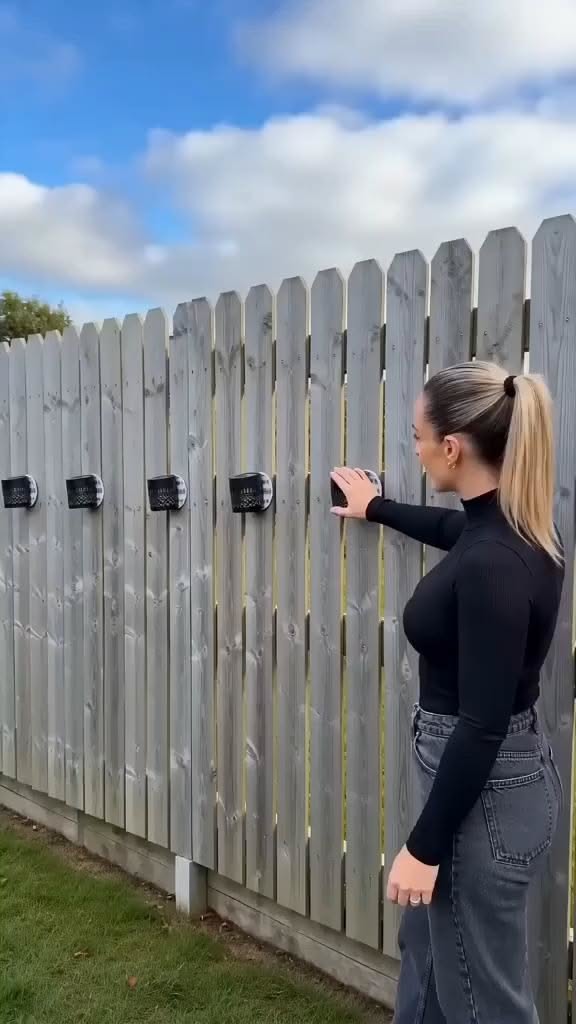
A solar fence light that turns a plain wall into colorful nighttime garden art
This outdoor solar mandala wall light is more than a basic fence lamp. Instead of simply casting a small pool of light downward, it projects a large decorative mandala-style pattern across fences, walls, and patio boundaries, creating ambient lighting that feels closer to outdoor decor than utility hardware. The visual effect is the real draw: one compact fixture can transform a blank timber fence into a vivid focal point after dark.
The Standout Appeal & Why It Caught Our Attention
Most solar fence lights are designed for visibility first and atmosphere second. This one flips that formula. Its appeal comes from combining wire-free solar convenience with a projected ornamental light pattern that spreads far beyond the size of the lamp itself. That makes it especially interesting for renters, homeowners, or garden decorators who want a dramatic evening look without trenching cables, hiring an electrician, or installing bulky floodlights.
- Decor-first lighting: creates a statement wall effect rather than a narrow beam.
- Compact fixture, oversized visual impact: the lamp body stays discreet while the projection fills a large section of fence.
- Outdoor mood lighting: adds warmth and personality to patios, seating areas, side yards, and garden borders.
Key Features & How It Works
From the images, the lamp appears to use a cylindrical black housing with a decorative cutout shell and a front projection face. A top-mounted solar panel charges the internal battery during the day, allowing the unit to run automatically at night without external wiring. The projected mandala effect likely comes from an internal LED paired with a patterned lens or filter that spreads colored light outward in a radial design.
- Solar-powered operation: designed for daytime charging and nighttime illumination.
- Fence or wall mounting: sized for direct installation on wooden fencing, garden walls, or patio partitions.
- Mandala projection effect: throws a large floral or kaleidoscopic pattern onto vertical surfaces.
- Ambient multicolor styling: the visible projections show rich tones like blue, pink, yellow, orange, and green.
- Weather-oriented outdoor build: enclosed body suggests intended use in open-air garden conditions.
- Low-clutter installation: no visible cables, plugs, or separate transformer boxes.
The shape also suggests a design that balances light output and ornament: the body itself looks decorative in daylight, while the real transformation happens after sunset when the projection expands across the fence.
Practical Everyday Uses
This type of light is most useful for people who want their outdoor space to feel finished and inviting at night, not just illuminated.
- Fence makeover without renovation: ideal for upgrading a long, plain wooden fence that looks empty after dark.
- Patio ambiance: useful behind outdoor sofas, dining sets, or conversation areas where soft decorative light feels more relaxing than harsh security lighting.
- Garden entertaining: a strong fit for evening gatherings, seasonal decor, or creating a visually memorable backdrop for outdoor dinners and social spaces.
Things To Consider Before Buying
As with most solar lighting, performance depends heavily on placement and expectations. This is a decor-focused light, so buyers should think about charging conditions and projection space before installing multiple units.
- Sun exposure matters: the solar panel needs a location with decent daytime light to deliver strong nighttime runtime.
- Best on broad vertical surfaces: the projection effect works most clearly on fences, walls, or panels with enough uninterrupted space.
- Brightness vs. atmosphere: this is better suited to ambient decorative lighting than task lighting or security illumination.
- Spacing affects the final look: if installing several units in a row, check distance between lights so the mandala patterns feel intentional rather than overcrowded.
- Color and pattern may vary by model: similar-looking versions can differ in lens design, projection sharpness, and weather sealing.