
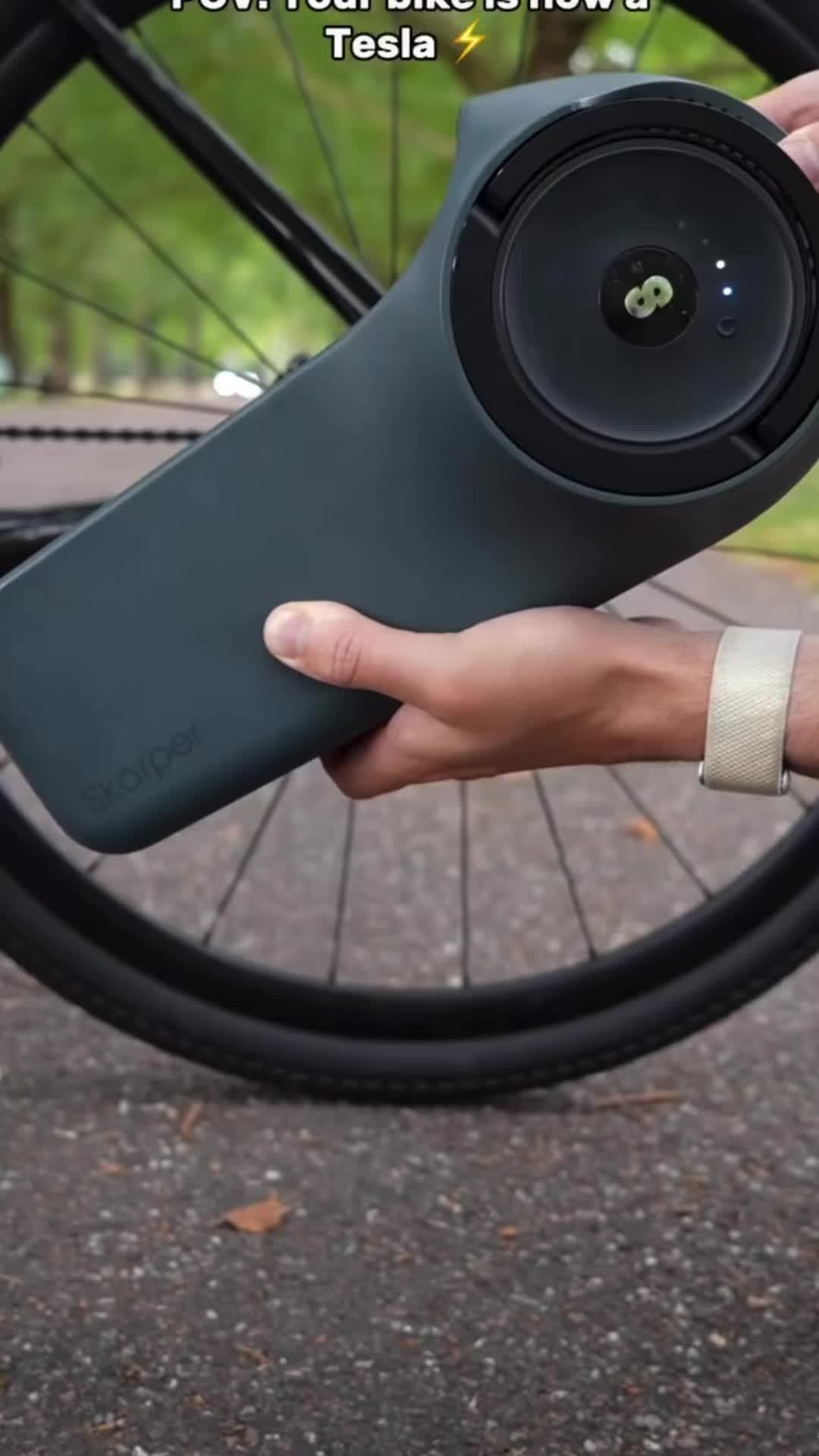
A removable drive unit that turns a normal bike into an e-bike in seconds
The Skarper eBike Drive System is one of the more elegant bicycle electrification ideas we’ve seen: instead of replacing the whole bike or stuffing a bulky hub motor into the wheel, it uses a click-on motor and battery module that mounts at the rear triangle and drives the wheel through Skarper’s proprietary DiskDrive interface. The result is a cleaner, more modular way to add electric assist only when you actually want it.
The Standout Appeal & Why It Caught Our Attention
Most e-bike conversions ask you to commit. You swap wheels, route cables, mount a battery, and end up with a bike that permanently looks and behaves like an e-bike. Skarper takes a different route. Its appeal is the ability to keep a traditional bicycle largely intact, then add power on demand with a single detachable unit.
- Direct rear-wheel drive via the brake disc area is the real engineering hook here. Rather than relying on a friction roller or a conventional hub motor, the system interfaces with a dedicated rotor-style drive component.
- Fast on/off usability makes it especially interesting for riders who want assistance for commuting or hills, but still want a lighter, cleaner bike when riding unassisted.
- Minimal visual clutter is a major part of the design philosophy. The dark, smooth housing and integrated circular drive face look more like a premium bike accessory than a DIY conversion kit.
- The fact that it was developed with Red Bull Advanced Technologies suggests a serious focus on packaging, weight, and drivetrain efficiency rather than just adding raw motor power.
Key Features & How It Works
From the images and provided product context, the Skarper system consists of a few coordinated parts that work together to create pedal-assist power without a full bike rebuild.
- Main click-on drive unit: This is the large matte-finished module that houses the motor, gearbox, and battery. It mounts near the rear wheel and appears shaped to sit low and close to the chainstay for balanced weight distribution.
- DiskDrive technology: The rear brake rotor is replaced with Skarper’s proprietary drive-compatible disc. Once the main unit is clipped into place, it can transfer power directly through that disc interface to drive the rear wheel.
- Pedal sensor: A compact sensor mounts near the crank area to detect pedaling input, allowing the system to provide pedal-assist behavior rather than acting like a simple throttle-only add-on.
- Quick-mount frame clip: The installation includes a dedicated mounting point on the bike so the drive unit can be attached and removed quickly.
- Three speed settings: The transcript indicates 3 assist modes, giving riders a way to choose between lighter support and stronger boost.
- Range and runtime: Reported figures mention up to 50 km of range and around 2.5 hours of battery life, which positions it well for urban rides, short commutes, and recreational loops.
- Fast charging: User-provided info highlights that it is designed to be fast-charging, an important detail for riders who want to top up between trips rather than leave the bike plugged in overnight.
- Integrated status lights and control button: The circular face shows small LED indicators, useful for checking battery or mode status at a glance.
Visually, the system looks intentionally refined: a dark grey composite or metal-bodied enclosure, a circular motor interface with a clean ring detail, and a compact accessory sensor that avoids the exposed-cable look common in many conversion kits.
Practical Everyday Uses
This is the kind of product that makes the most sense for riders who already like their current bike and don’t want to replace it with a dedicated e-bike.
- Urban commuting: Ride to work with electric assist in the morning, especially if your route includes bridges, headwinds, or stop-start traffic. Then remove the drive unit when storing the bike indoors or carrying it upstairs.
- Weekend fitness with optional help: Keep the feel of a normal bike for exercise rides, but use assist on steeper climbs or longer return legs when fatigue sets in.
- Mixed-use ownership: Ideal for someone who wants one bike to do two jobs: a lightweight analog bike on some days, and a practical assisted commuter on others.
Things To Consider Before Buying
As clever as the concept is, this is not a universal no-thought upgrade. Buyers should check compatibility and expectations carefully.
- Brake and frame compatibility matter: Because the system relies on a proprietary rear disc interface, your bike needs to be compatible with the required DiskDrive rotor setup and mounting geometry.
- It is a premium conversion option: At around £1,495, this sits far above basic conversion kits, so the value proposition is really about convenience, engineering, and removability.
- Weight distribution changes: Even though it is designed to be compact, the unit adds mass near the rear wheel. Riders should expect the bike to feel different compared with a fully unassisted setup.
- Best suited to riders who already own a quality bike: This makes more sense if you want to preserve a bike you already enjoy, rather than buying a low-cost donor bike just to electrify it.
- Range depends on terrain and assist level: Hills, rider weight, tire pressure, and how aggressively you use the higher assist modes will all affect real-world distance.
For the right rider, though, Skarper offers something unusually compelling: e-bike performance without permanent e-bike commitment.