
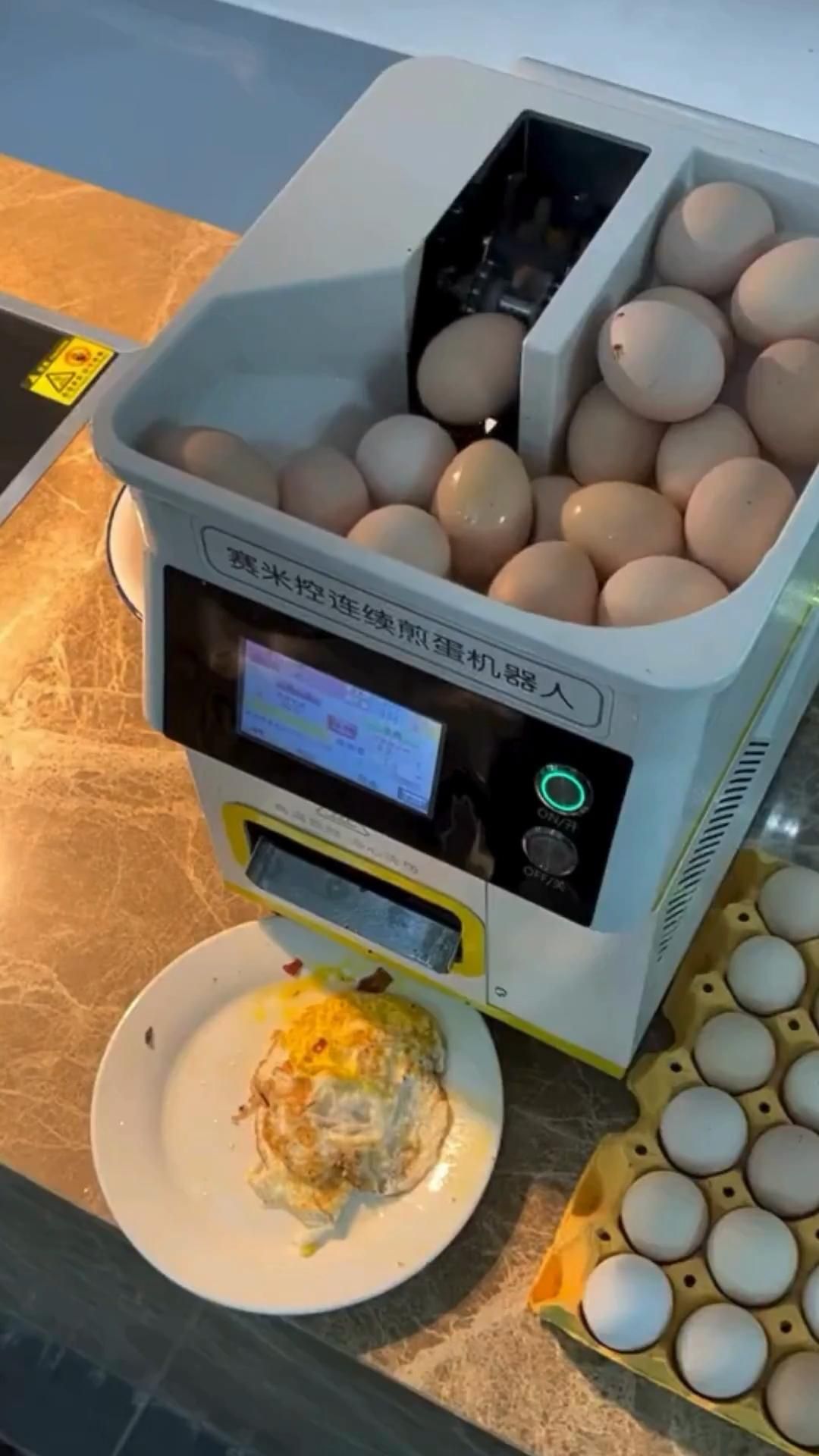
An automatic egg fryer that cracks, cooks, and plates eggs with almost no hands-on work
This compact countertop machine is built for one very specific job: turning whole shell eggs into ready-to-serve fried eggs in a fast, repeatable flow. Instead of having someone stand over a griddle cracking eggs one by one, the unit feeds eggs from a top hopper, breaks them internally, cooks them on a heated surface, and drops the finished egg onto a plate below. For breakfast stalls, buffet lines, and high-volume kitchens, that kind of automation is exactly the appeal.
The Standout Appeal & Why It Caught Our Attention
What makes this machine interesting is not just that it fries eggs, but that it automates the most inconsistent part of the process: shell handling, portion consistency, and timing. A human cook can absolutely fry an egg well, but doing it dozens of times in a rush creates variation in doneness, shape, and speed. This machine is designed to reduce that variability with a dedicated egg-feeding path, enclosed cracking mechanism, and controlled heating cycle.
- Purpose-built workflow: whole eggs go in at the top, finished fried eggs come out at the front.
- Commercial rhythm: ideal for repetitive breakfast service where speed matters more than chef-style customization.
- Compact automation: it packs hopper, cracking system, heating chamber, and controls into a relatively small vertical footprint.
Key Features & How It Works
Based on the visible design and the provided product context, this appears to be a Chinese-made continuous egg frying robot with a top-loading hopper and front dispensing outlet. The body uses a white metal housing with ventilation slots on the side, a black front control panel, a small digital display, and illuminated push-button controls. The Chinese label visible on the unit reads as a continuous egg frying robot, which aligns with the machine’s function shown in the frames.
- Top egg hopper: multiple whole eggs are loaded into the upper tray, allowing semi-batch feeding instead of single-egg loading.
- Guided feed channel: a narrow vertical lane appears to separate and advance eggs one at a time toward the cracking section.
- Internal cracking mechanism: the machine likely splits the shell inside the enclosed chute, then releases the contents onto a heated cooking plate while discarding or separating shell fragments internally.
- Heated cooking zone: user-supplied context indicates double-sided heating, which helps the egg set faster than a standard open pan and explains the quick output.
- Fast cycle time: approximately 30 seconds per egg is the claimed benchmark, with commercial throughput around 80 to 120 eggs per hour.
- Digital interface: the front screen likely handles temperature and timing adjustments, and may allow selection between softer sunny-side output and more thoroughly cooked eggs.
- Front dispensing slot: cooked eggs slide or drop directly onto a waiting plate, reducing spatula work and keeping the serving motion simple.
- Ventilated metal chassis: side vents suggest active heat management for continuous operation in a kitchen environment.
Practical Everyday Uses
This is not a novelty kitchen toy. It makes the most sense anywhere eggs are cooked repeatedly and quickly, especially when labor is limited or consistency is important.
- Breakfast kiosks and street-food counters: one operator can keep serving eggs while handling toast, sauces, packaging, or customer orders instead of standing at a pan cracking shells.
- Hotels, canteens, and buffet prep: the machine can produce a steady stream of similar-looking fried eggs for service periods where volume matters.
- Small restaurants testing automation: for businesses with a narrow breakfast menu, it can reduce repetitive prep work and help standardize output between staff shifts.
Things To Consider Before Buying
As clever as the concept is, this is still a specialized commercial appliance, so buyers should check the practical details before assuming it will fit every kitchen.
- Power requirements: confirm voltage, plug type, and wattage, especially for imported Chinese units that may ship in 220V configurations.
- Cleaning routine: any machine that cracks raw eggs internally needs careful sanitation. Ask how shell waste, cooked residue, and grease are accessed and cleaned.
- Output style: these machines prioritize speed and consistency, but the finished eggs may look more utilitarian than hand-fried eggs from a skillet.
- Counter space and ventilation: even though the footprint is compact, you still need room for egg trays, plating space, and safe heat clearance.
- Service and spare parts: with niche imported equipment, replacement heating parts, sensors, or cracking components may be harder to source locally.
If your goal is high-volume fried eggs with minimal manual cracking and pan work, this kind of automatic egg fryer is a genuinely useful piece of food-service automation rather than a gimmick.